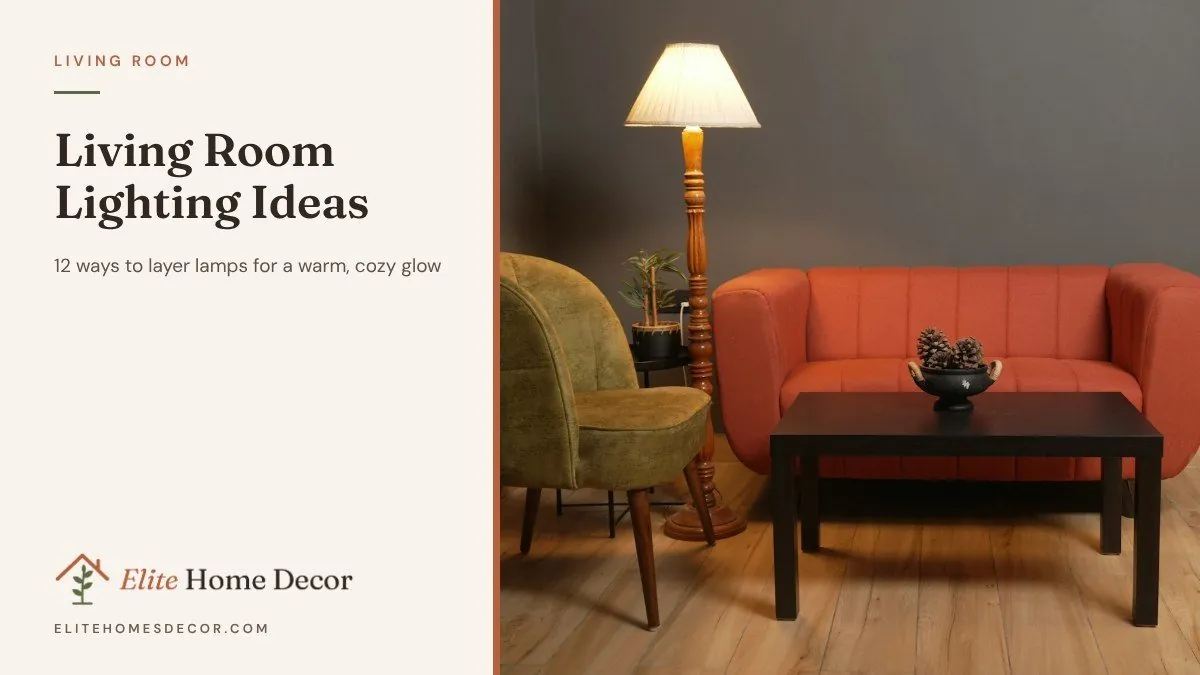
Lighting changes a living room more than almost any piece of furniture. The same room can feel flat and harsh under a single ceiling light, or warm and inviting with a few well-placed lamps. Designers light rooms in layers, and you can do the same with plug-in lamps and the right bulbs, even in a rental with no overhead fixture at all.
These 12 living room lighting ideas show you where to place lamps, which bulbs to choose and how to create a glow that works for reading, watching TV and relaxing. For the theory behind it, see how to light a room in layers.
The Three Layers of Living Room Lighting
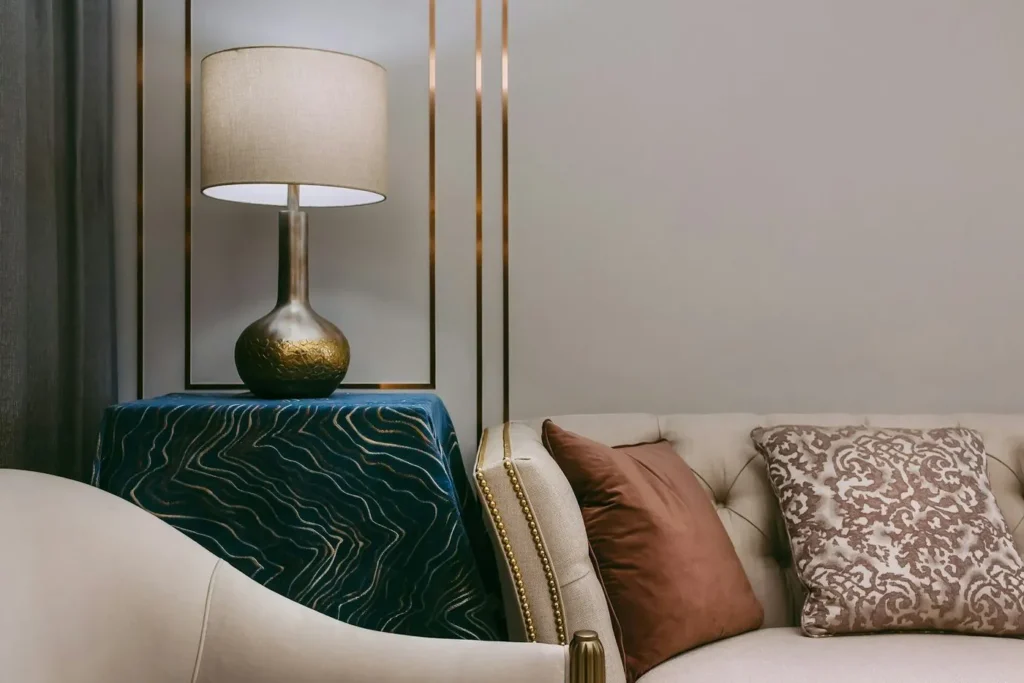
- Ambient light: the general light that fills the room, from a ceiling light, floor lamps or several table lamps.
- Task light: focused light for reading or hobbies, such as an adjustable floor lamp by a chair.
- Accent light: soft light that highlights art, shelves or plants and adds depth.
A cozy living room uses all three, so no single light has to do everything.
1. Use At Least Three Light Sources
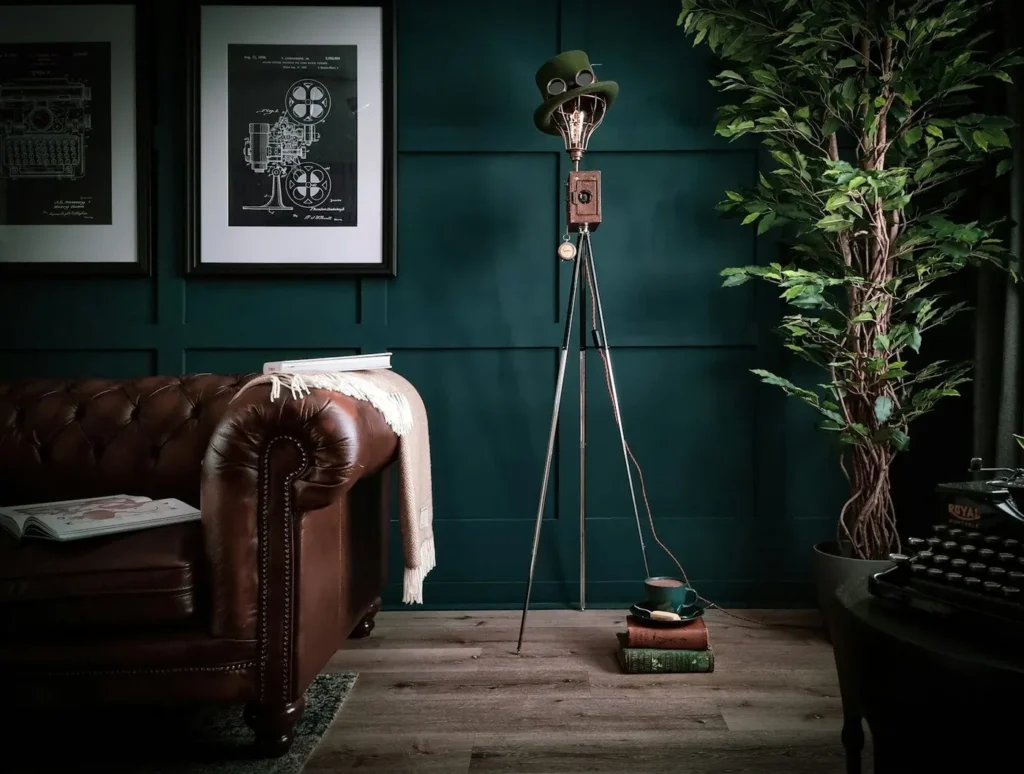
Aim for at least three lamps in different parts of the room, placed in a rough triangle. This spreads light evenly, removes dark corners and means you rarely need the overhead light in the evening.
2. Put a Floor Lamp Beside the Sofa
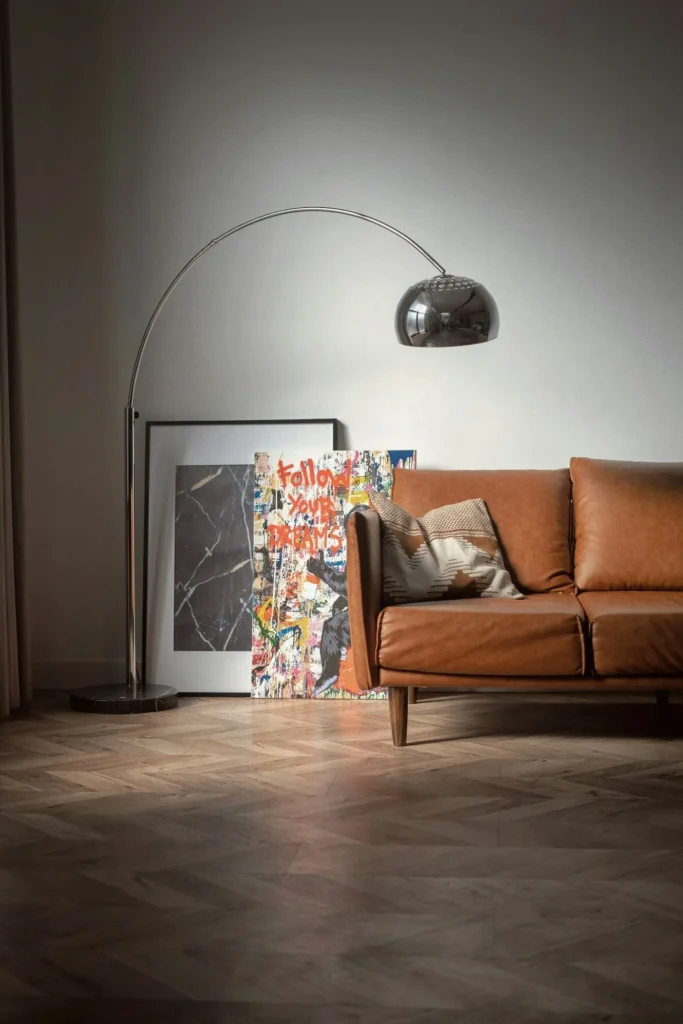
A floor lamp at one end of the sofa gives both ambient and reading light. An arc lamp can reach over the sofa to light a coffee table, while a slim tripod or column lamp suits a tight corner.
For reading, the bottom of the shade should sit roughly at shoulder height when you are seated, so the light falls on the page without shining in your eyes.
3. Add Table Lamps on Side Tables
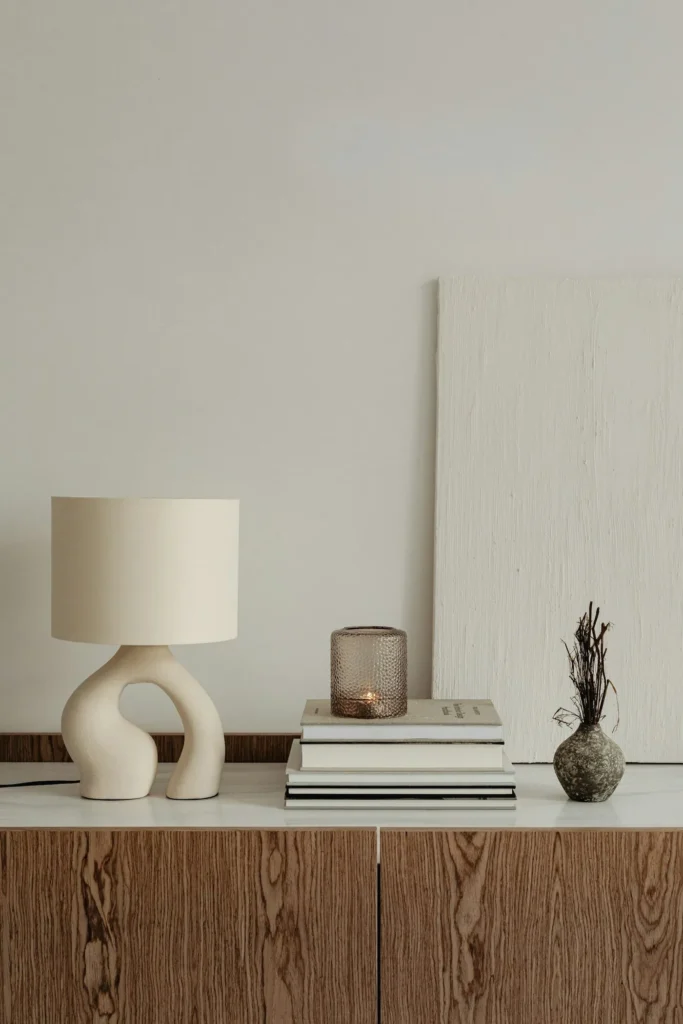
Table lamps at eye level when seated create the most flattering light. A matching pair either side of the sofa feels classic and balanced; mismatched lamps of similar height feel more relaxed. Fabric, linen and paper shades soften the light.
As a guide, the lamp and table together should reach about 58 to 64 inches from the floor, so the bottom of the shade sits close to eye level when you are seated.
4. Choose Warm Bulbs
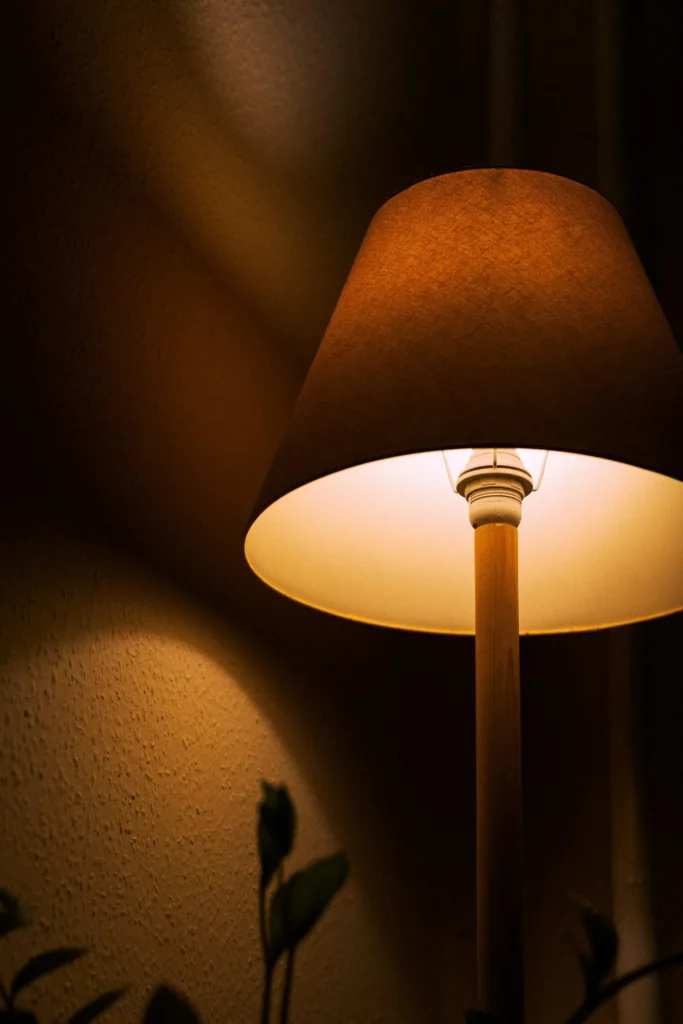
The color of light matters as much as the lamp. For a cozy living room, choose bulbs around 2700K, often labelled “warm white” or “soft white”. Cooler 4000K or “daylight” bulbs are better for kitchens and workspaces. Keep the same color temperature throughout the room so the light looks consistent.
5. Install Dimmers or Smart Bulbs

Dimming lets one lamp do several jobs: bright for cleaning or reading, low for films and evenings. Plug-in dimmer switches and smart bulbs that dim from your phone work in rentals without any wiring.
6. Light a Living Room With No Overhead Light
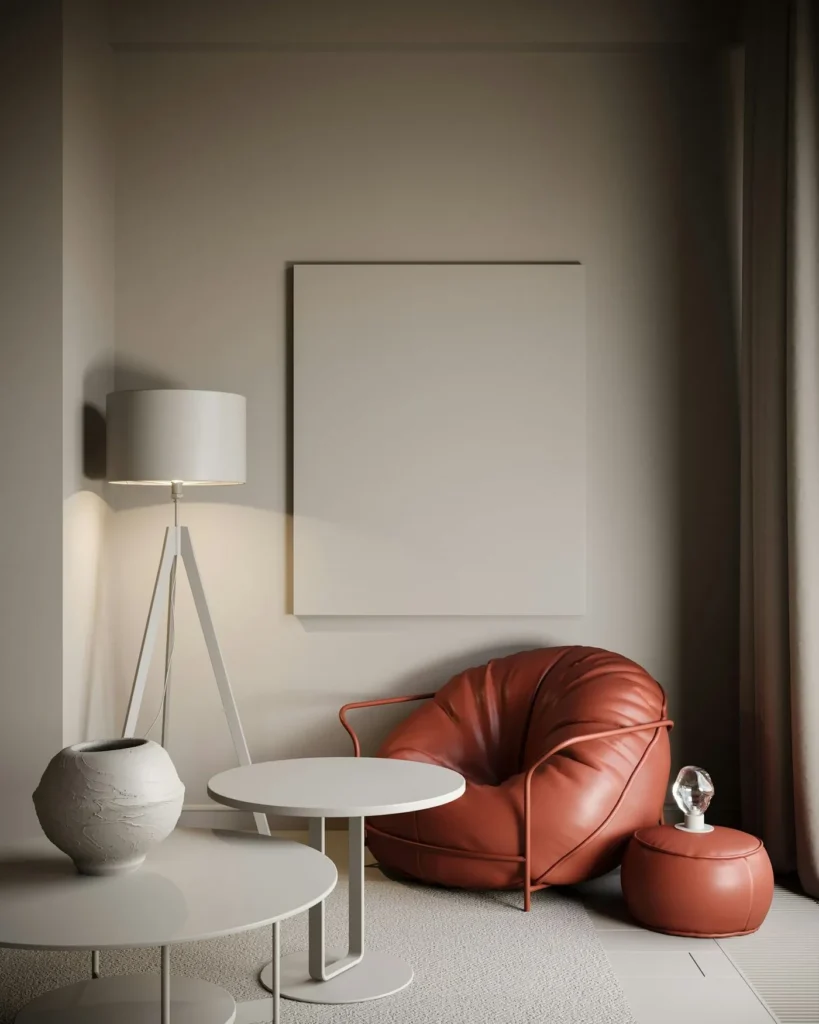
Many rentals and older homes have no ceiling light in the living room. Use a combination of one tall floor lamp for ambient light, two table lamps for warmth and one accent light. Plug some into a switched outlet if you have one, so you can turn them on from the door.
7. Add Plug-In Wall Sconces
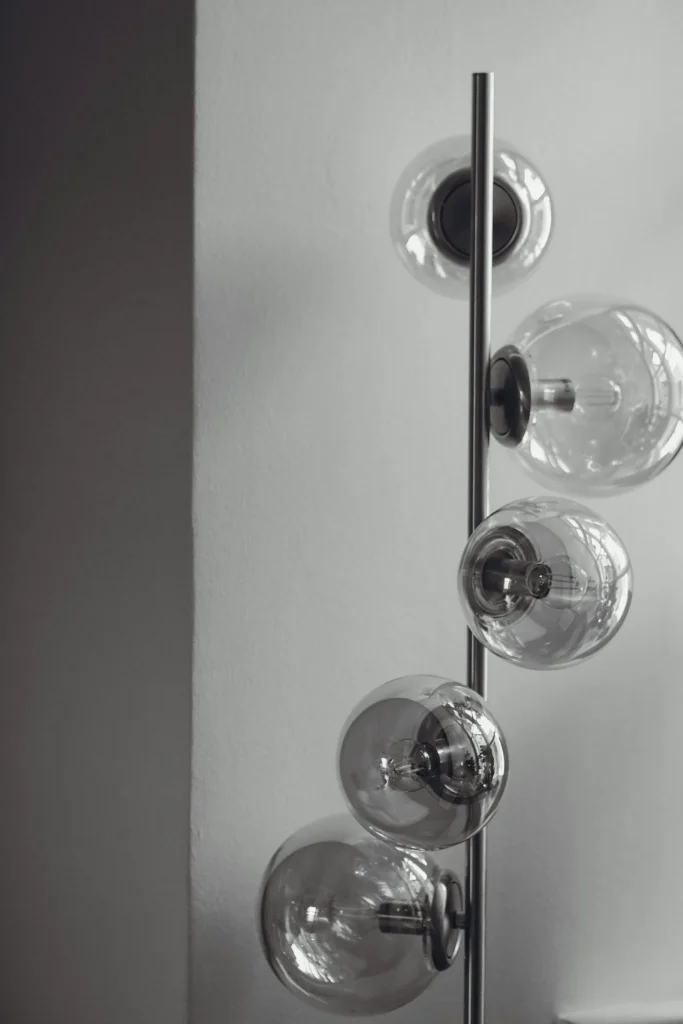
Wall sconces free up table space and add light at a different height. Plug-in versions with a neat cord cover or a fabric cord look intentional and need no electrician, so they are ideal for renters.
8. Highlight Art With a Picture Light
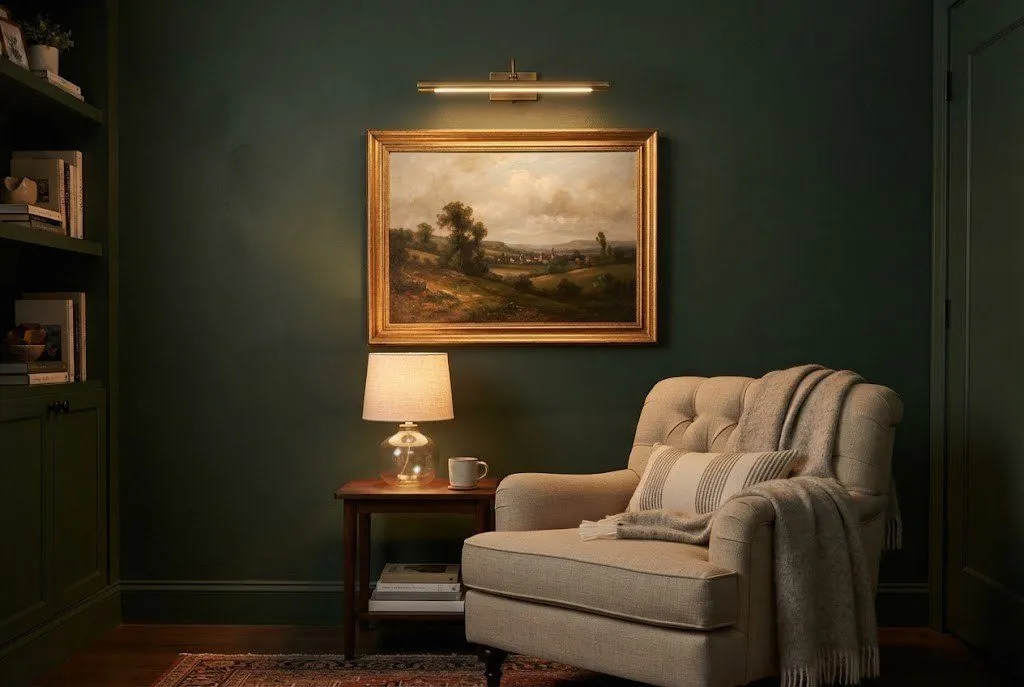
A picture light above a favorite painting or print makes it a focal point in the evening. Battery-powered LED picture lights are easy to install and need no wiring.
9. Light Shelves and Cabinets
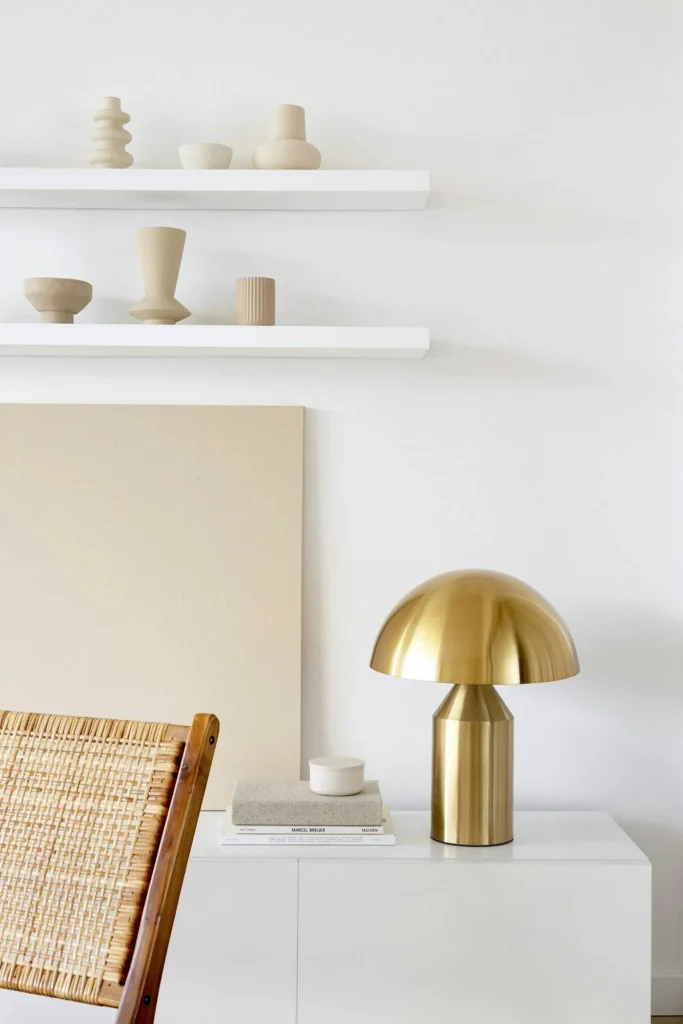
Small LED strips or puck lights inside a bookcase or glass cabinet add a soft accent glow and show off books and objects. Choose warm white and hide the light source so you see the glow, not the bulb.
10. Reduce Glare Around the TV

Watching TV in a dark room can strain your eyes. A soft, warm light behind or beside the TV, such as a bias LED strip or a low lamp nearby, makes the room more comfortable for viewing without causing glare on the screen.
11. Use Candles and Lanterns
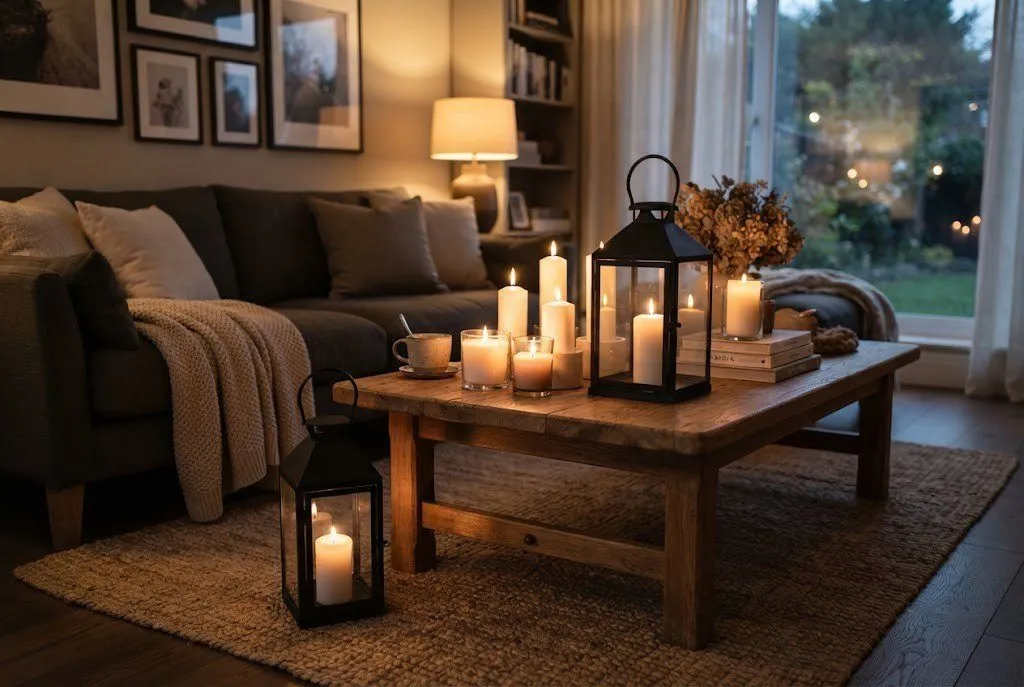
Candlelight adds a flickering, cozy layer that no lamp can copy. Group candles on a tray on the coffee table or put lanterns on the floor beside the fireplace. Use flameless candles where they might be forgotten or near children and pets. See more ways to make your living room feel cozy.
12. Choose Shades Carefully

Shades shape the light. Drum shades send light up and down; tapered shades focus it downward; paper and linen shades glow softly; opaque metal shades create pools of light. Mixing shade types adds interest while keeping the room warm.
How Many Lumens Do You Need?
Brightness is measured in lumens. As a rough guide, a living room needs about 10 to 20 lumens per square foot of floor in total. For a 12 by 15 foot room (180 square feet), that is roughly 1,800 to 3,600 lumens spread across all your lights.
A standard 60-watt-equivalent LED bulb gives about 800 lumens, so three or four lamps with these bulbs provide comfortable evening light, and dimmers let you lower it when you want a cozier mood.
Common Living Room Lighting Mistakes
- Relying on one ceiling light. It flattens the room and creates harsh shadows.
- Mixing bulb colors. Warm and cool bulbs in the same room look patchy.
- Lamps all at the same height. Vary heights for depth.
- Exposed bare bulbs at eye level. They cause glare; use shades or diffusers.
- Trailing cables across walkways. Plan lamps near sockets or use cord covers.
Living Room Lighting Checklist
- At least three light sources at different heights.
- Warm bulbs (around 2700K) throughout.
- One dimmable or smart light.
- A reading light by each main seat.
- One accent light for art, shelves or plants.
Frequently Asked Questions
How should I light my living room? Layer ambient, task and accent lighting with at least three lamps at different heights, warm 2700K bulbs and a dimmer if possible.
How do you light a living room with no ceiling light? Use a tall floor lamp for general light, two table lamps for warmth and one accent light, such as a plug-in sconce or shelf light.
Where should a floor lamp go in a living room? Beside or slightly behind one end of the sofa or next to a reading chair, so the light falls over your shoulder.
What color temperature is best for a living room? Around 2700K, often labeled warm white or soft white.
How many lamps should a living room have? At least three, placed at different heights and in different parts of the room.
Final Thoughts
Great living room lighting is layered: ambient, task and accent, with warm bulbs and at least three lamps. Turn off the overhead light in the evening and let lamps create the glow. For the rest of the room, see our complete guide to living room decor ideas.


Leave a Reply