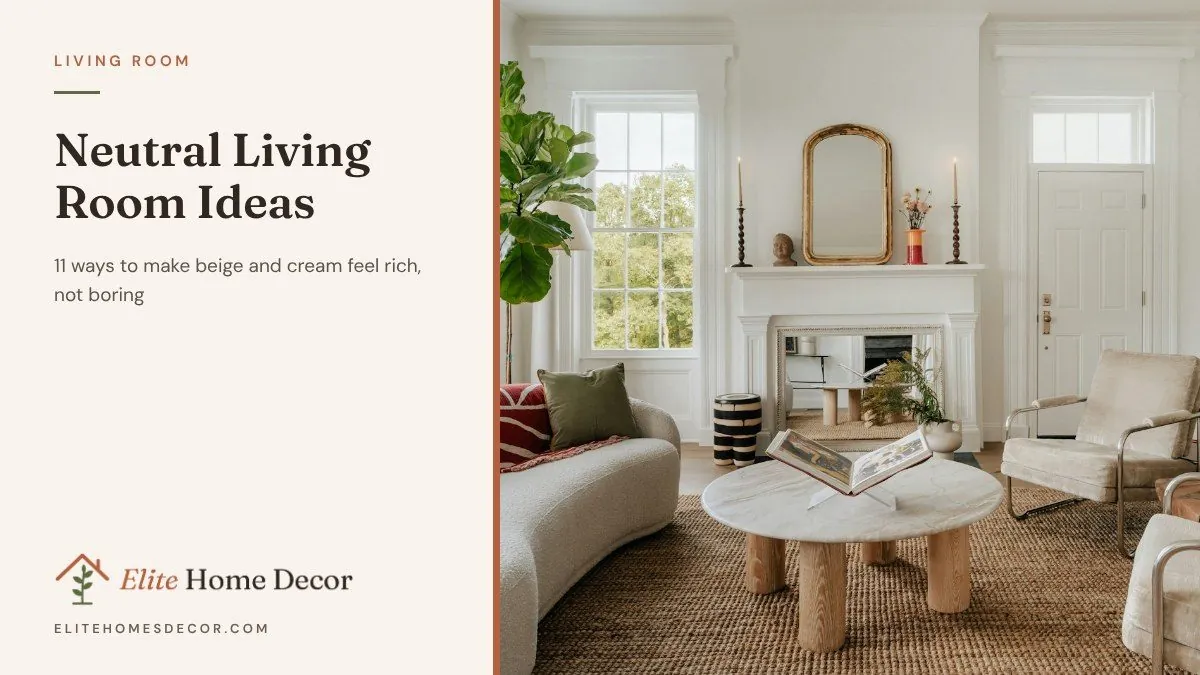
Neutral living rooms are popular for good reason. Cream, beige, sand and taupe are calm, easy to live with and work with almost any furniture. But a neutral room can also look flat, as if everything blends into one beige blur. The difference between boring and beautiful is not color. It is contrast, texture and a few carefully chosen accents.
These 11 neutral living room ideas show you how to keep the calm of a neutral palette while giving the room depth and character.
1. Choose Warm or Cool Neutrals, Then Stick to Them
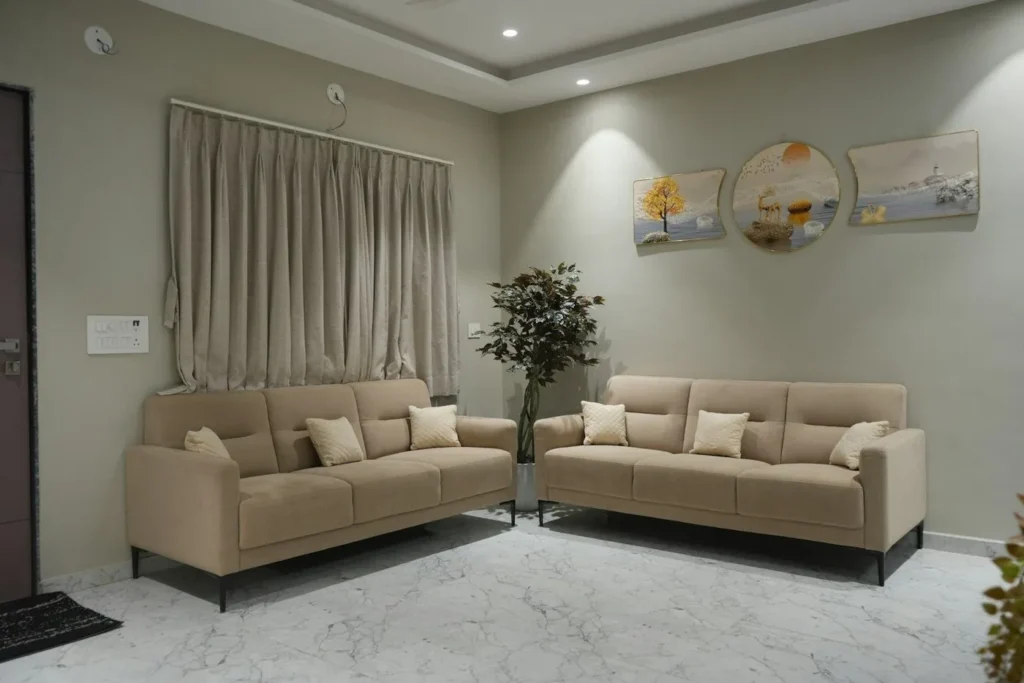
Neutrals have undertones. Warm neutrals (cream, beige, sand, caramel) lean yellow or red and feel cozy. Cool neutrals (grey, stone, greige with blue undertones) feel crisper. Mixing the two often looks muddy. Hold paint and fabric samples next to each other in daylight and pick one family. For combinations that work, see our color combinations for a living room.
A quick way to see an undertone is to hold the sample next to a sheet of plain white printer paper. A warm neutral will look slightly yellow, peach or pink beside it; a cool one will look slightly blue, green or grey.
2. Use Three Shades of the Same Neutral

Tone-on-tone decorating is what makes neutral rooms look designed. Use a light shade on the walls, a mid shade on the sofa or rug and a darker shade in cushions, a throw or an armchair. The variation in depth adds interest even though the color stays calm.
3. Layer at Least Five Textures
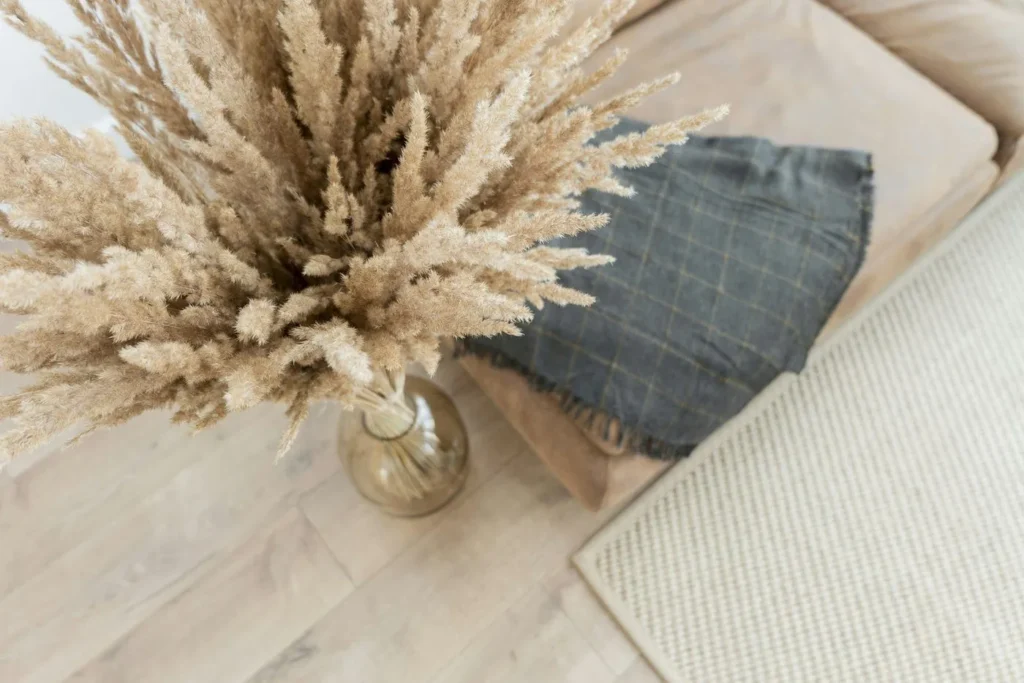
Texture does the job color does in a bold room. Aim for at least five in the seating area: for example, a linen sofa, a bouclé chair, a chunky knit throw, a jute rug and a smooth ceramic vase. Rough next to smooth and soft next to structured keeps the eye moving.
Good texture combinations for a neutral room include linen with bouclé, wool with leather, jute with velvet and rattan with smooth ceramic. Repeat each texture at least twice so the room feels planned.
4. Bring In Natural Wood

Wood warms a neutral room instantly. A wooden coffee table, side tables, picture frames, a bowl or exposed shelves add color variation and a natural grain that no paint can match. Mix one or two wood tones rather than matching everything exactly.
5. Add Black Accents
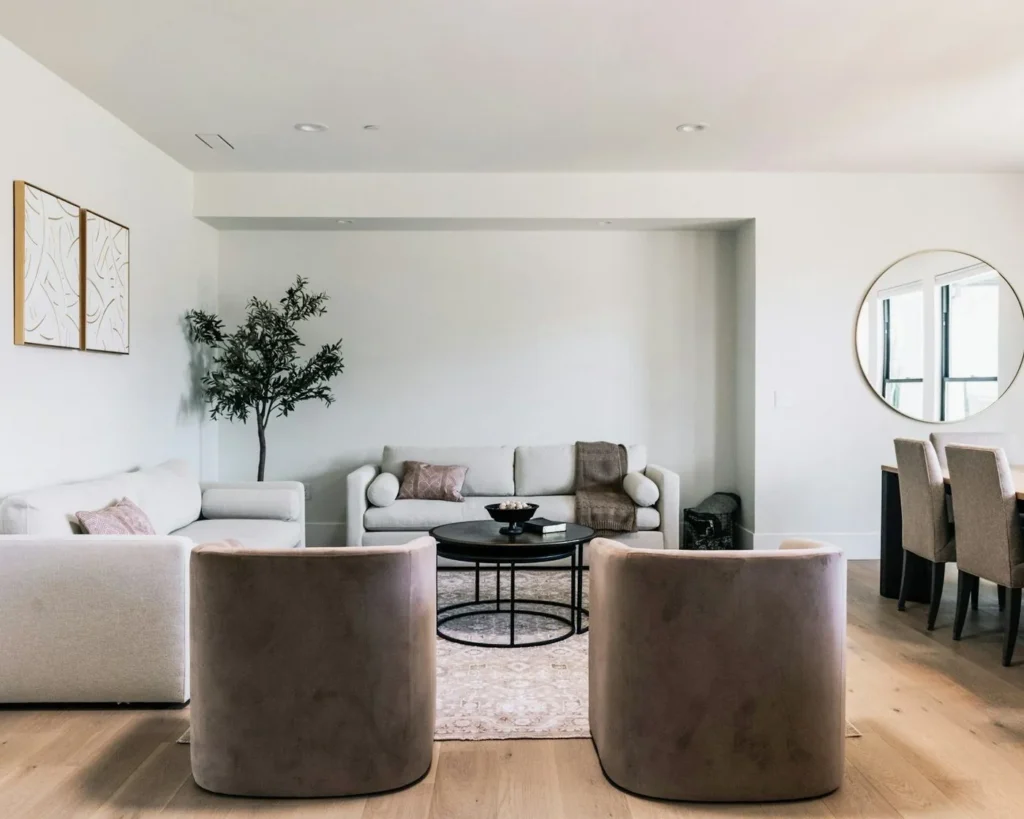
A little black gives a neutral room definition. Use it in thin doses: black picture frames, a metal lamp base, the legs of a side table or a black vase. A few black accents act like an outline, so the softer colors around them look intentional.
6. Mix Shapes and Curves

When color is quiet, shape becomes more noticeable. Pair a straight-lined sofa with a round coffee table, a curved armchair or an arched mirror. Rounded forms make a neutral room feel softer and more inviting.
7. Bring In Plants

Green is the easiest accent color in a neutral living room because it feels natural, not loud. A large floor plant such as an olive tree, fiddle-leaf fig or rubber plant adds height, while smaller plants on shelves and side tables soften corners.
8. Add Subtle Pattern
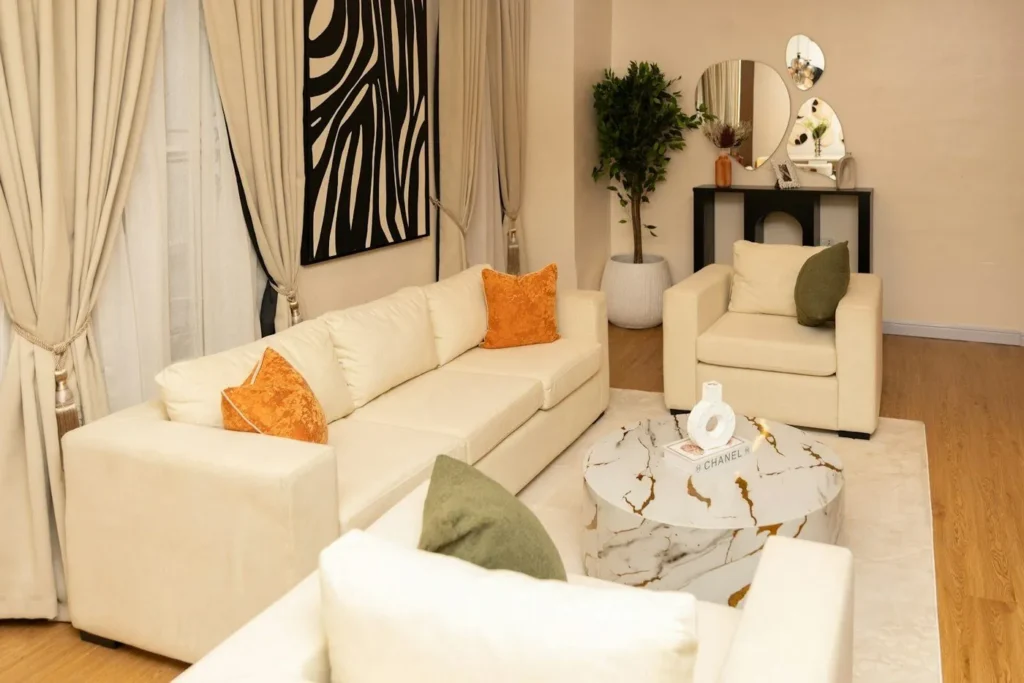
Pattern does not have to be bold. A striped or checked cushion, a textured rug with a low-contrast design or a small-print throw adds movement while staying in the neutral family. Our guide to throw pillow combinations shows how to mix patterns at the sofa.
9. Choose Art With Depth

Art is a good place for a little more contrast. Abstract pieces in charcoal, terracotta, ochre or muted green bring color without breaking the calm. A large piece above the sofa, or a small grouping, gives the eye a focal point.
10. Use Warm, Layered Lighting

Neutrals can look grey and flat under cold light. Use warm white bulbs and several lamps at different heights so the evening light picks out texture. Linen and paper lamp shades diffuse the light softly and suit the neutral look.
Aim for at least three light sources in the evening, and choose bulbs of around 2700K. See living room lighting ideas for how to layer lamps.
11. Add One Pop of Color, If You Want It
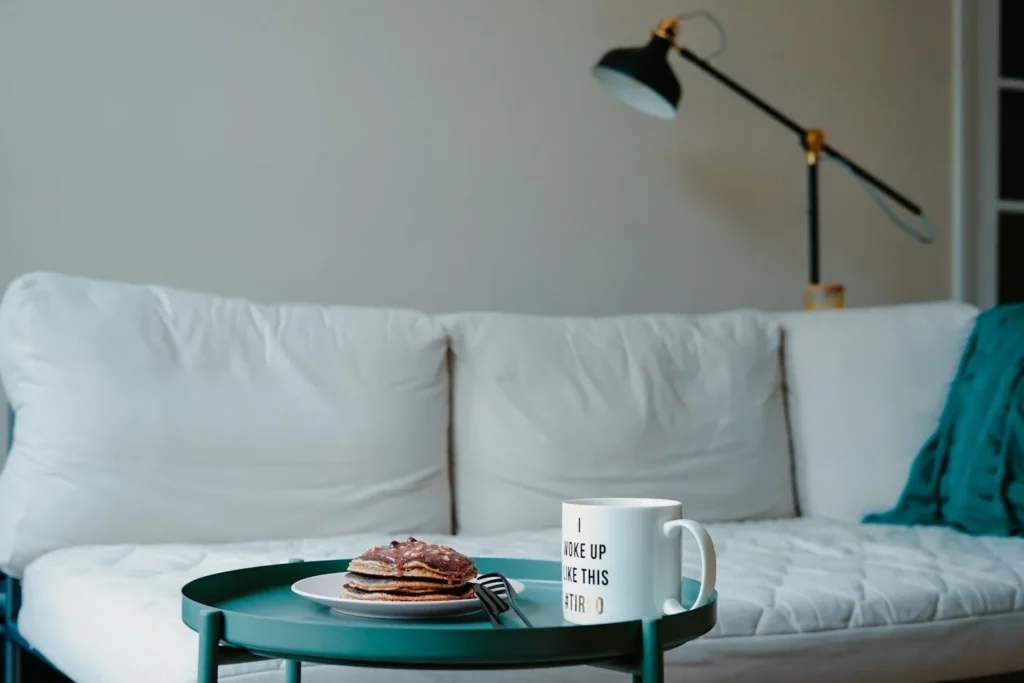
A neutral room makes a perfect backdrop for a single accent color. Choose one, such as rust, olive, dusty blue or blush, and repeat it two or three times: a cushion, a vase and a piece of art. Swap the accent seasonally to change the mood without repainting.
Neutral Living Room Palette Examples
- Warm and soft: cream walls, oatmeal sofa, camel leather, natural oak, olive green plants.
- Light and airy: soft white walls, linen-white sofa, light jute rug, pale oak, touches of black.
- Rich and moody: mushroom or taupe walls, chocolate velvet, walnut wood, brass, deep green accents.
How to Style a Neutral Sofa
The sofa is usually the largest neutral piece in the room, so it sets the tone.
- Add four or five cushions in two or three shades of the same neutral.
- Include at least two textures, such as linen and knit.
- Fold a chunky throw over one arm.
- Add one patterned cushion, such as a subtle stripe or check, to give the eye something to rest on.
Neutral Living Room Mistakes
- Mixing warm and cool neutrals. The room can look muddy.
- Only one texture. Without contrast, neutrals look flat.
- No dark accents. A little black or dark wood gives the room definition.
- Cold lighting. Neutrals look grey and dull under cool bulbs.
- Everything the same height. Vary heights with lamps, plants and art.
Seasonal Neutral Updates
A neutral room is easy to update through the year. Add sage and blush in spring, linen and greenery in summer, rust and olive in fall, and cream knits and evergreens in winter. For a calm festive look, see neutral Christmas living room decor.
Frequently Asked Questions
How do I make a neutral living room not boring? Layer different textures, use three shades of the same neutral, add natural wood, a few black accents, plants and art with some depth.
What colors go with a beige living room? Cream, white, camel, brown, olive green, terracotta, black and soft blue all work well with beige. Choose one or two and repeat them.
Should a neutral living room have warm or cool tones? Either works, but choose one family. Warm neutrals feel cozier, while cool neutrals feel crisper and more modern.
Is a neutral living room still in style? Yes. Warm neutrals, natural materials and layered textures remain popular because they are calm and timeless.
How do I add color to a neutral living room? Choose one accent color and repeat it in cushions, art and a vase. See our living room color palettes.
Final Thoughts
A neutral living room feels rich when it has contrast in shade, texture and shape, plus a few natural and dark accents. Start with your undertone, layer textures, and let wood and plants bring warmth. For the rest of the room, see our complete living room styling guide.


Leave a Reply