
A small living room can feel calm, stylish and surprisingly roomy. The secret is not owning less furniture at all costs. It is choosing pieces at the right scale, letting light travel, and using every bit of vertical space. These 14 small living room decorating ideas work in apartments, terraced houses and compact family homes alike.
1. Choose Furniture With Visible Legs

Sofas, chairs and consoles raised on slim legs let you see the floor underneath, and more visible floor makes a room read as larger. Look for a sofa with a low, slim profile and narrow arms; bulky rolled arms eat up seating space without adding comfort.
2. Pick a Smaller Sofa (or a Loveseat Plus a Chair)

Measure before you buy. In many small living rooms, a loveseat plus one accent chair seats the same number of people as a big sectional and leaves room to walk. Keep at least 24 inches for walkways in tight spaces; Homes & Gardens’ clearance guide suggests 30–36 inches where you can.
3. Use a Large Mirror to Bounce Light

Place a large mirror opposite or beside a window. It doubles the daylight and creates the illusion of depth. A tall floor mirror leaned against the wall works well in rentals because it needs no drilling.
4. Keep the Walls Light and Consistent
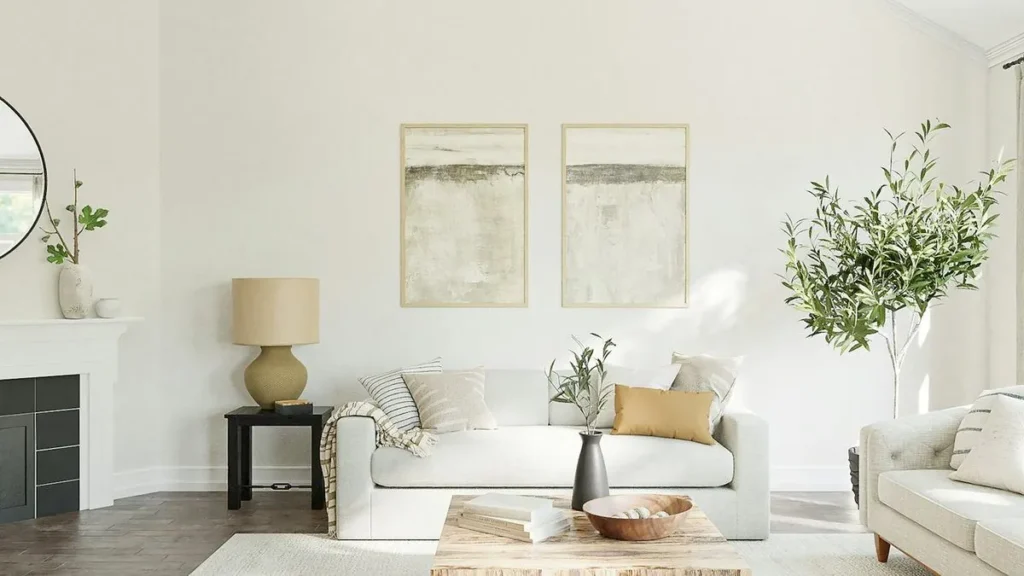
Pale, warm colors such as soft white, light greige or pale sage help walls recede. Painting the trim and walls the same color (or close shades) removes visual breaks, so the room feels wider. If you love dark colors, use them on one feature wall or in textiles rather than all four walls.
5. Size Up the Rug

It sounds backwards, but a slightly larger rug makes a small room look bigger, because it groups the furniture into one zone. In a small living room, a 5’ × 8’ or 6’ × 9’ rug with the sofa’s front legs on it usually looks better than a tiny rug floating in the middle. See the Ruggable size guide for room-by-room sizing.
6. Go Vertical With Shelving

When floor space is limited, build up. Tall, narrow bookcases, wall-mounted shelves above the sofa or a shelf running around the room at door height give you storage without stealing floor space. Keep the lower shelves for closed boxes and the upper shelves for lighter decor.
7. Hang Curtains High and Wide
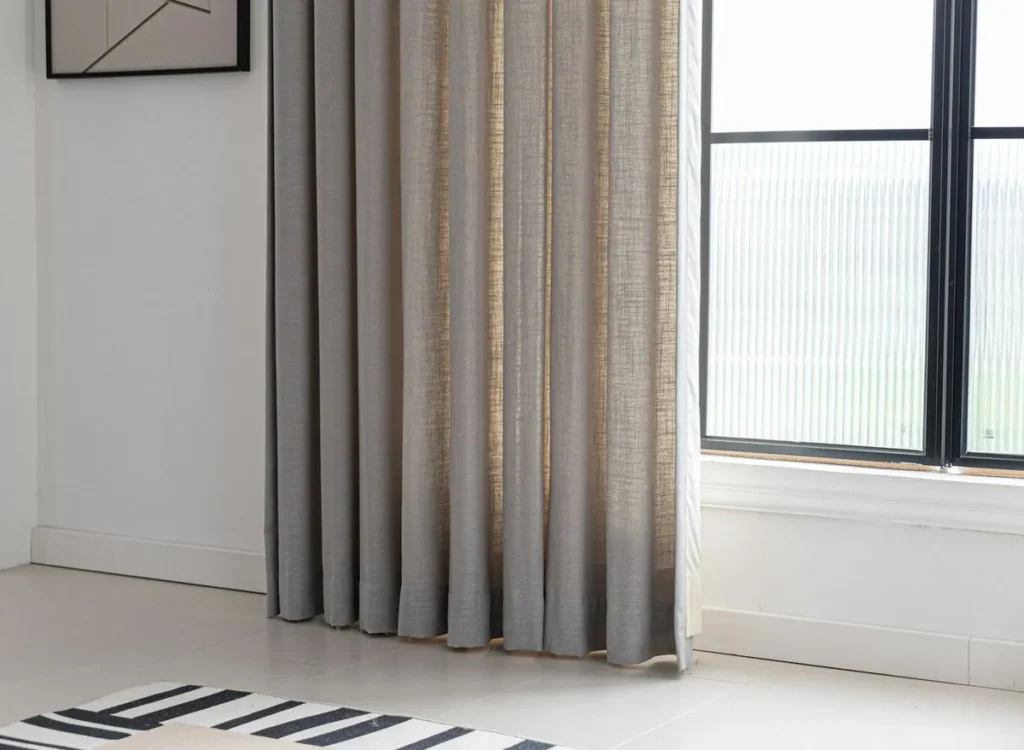
Mount curtain rods close to the ceiling and extend them past the window frame on each side. Floor-length curtains in a color close to the wall make ceilings look taller and windows look bigger.
8. Choose Multi-Functional Furniture
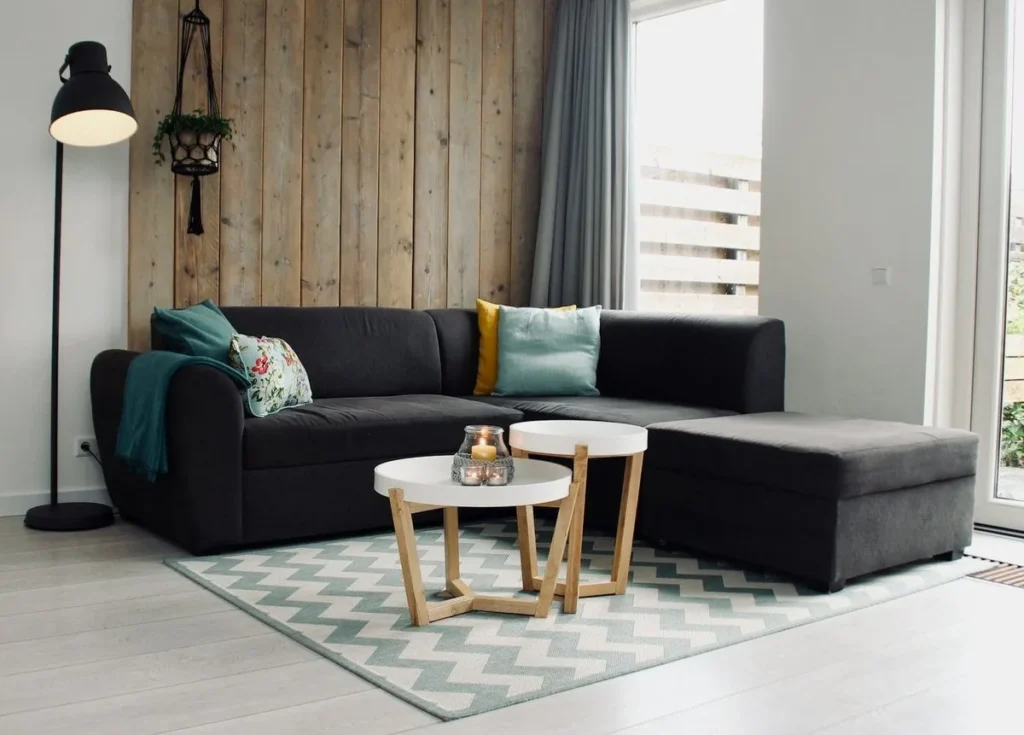
Every piece should earn its place:
- A storage ottoman works as a footrest, extra seat and blanket box.
- Nesting tables tuck away when you do not need them.
- A console table behind the sofa doubles as a desk.
- A sofa bed turns the living room into a guest room.
9. Use a Round Coffee Table

A round or oval coffee table is easier to walk around and has no sharp corners to bump into. Glass, acrylic or slim metal tables add even less visual weight. Keep it 14–18 inches from the sofa.
10. Wall-Mount the TV
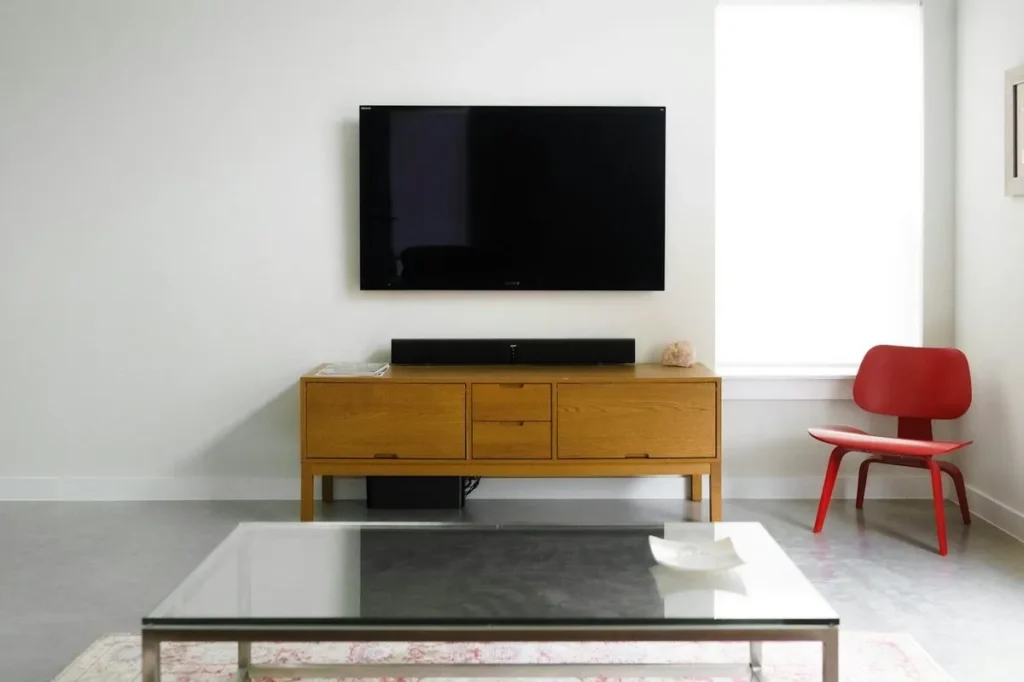
Mounting the TV frees up the surface below and lets you use a slimmer console, or none at all. Keep the center of the screen at roughly seated eye level, about 42–48 inches from the floor.
11. Light Every Corner

Dark corners make a room feel smaller. Add a floor lamp in one corner, a table lamp in another, and use warm 2700K–3000K bulbs. Wall sconces are great in small rooms because they take up no floor or table space.
12. Edit the Accessories
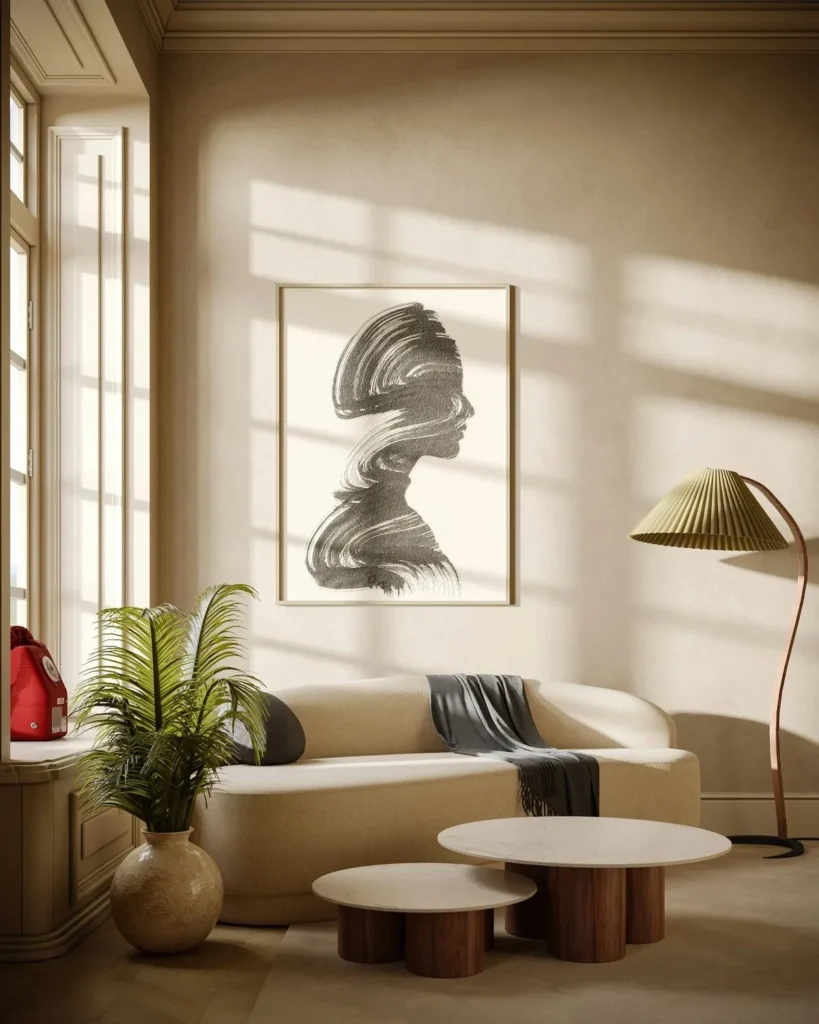
Small rooms show clutter quickly. Choose fewer, larger accessories: one big piece of art instead of five small frames, one large plant instead of a row of tiny pots. Put remotes, chargers and paperwork in a lidded basket.
13. Create Zones in an Open-Plan Space
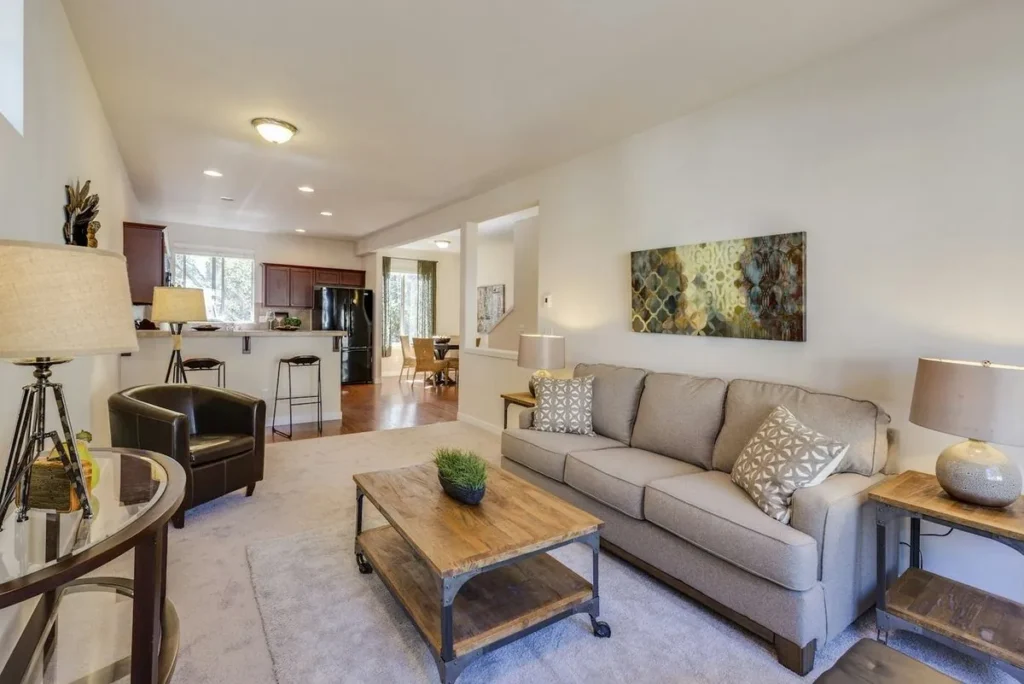
If your living room shares space with a kitchen or dining area, use a rug to define the seating zone, a pendant or floor lamp to mark it, and the back of the sofa as a soft divider. An open bookcase can separate zones without blocking light.
14. Bring the Outside In

Plants and natural materials make small spaces feel fresher. Choose one tall plant for a corner and a trailing plant for a high shelf, so they do not take up valuable surfaces.
Sample Small Living Room Layout
For a typical small living room of about 10 by 12 feet:
- An apartment-size sofa of 70 to 80 inches on the longest wall.
- One accent chair angled toward the sofa.
- A round coffee table of 30 to 36 inches across.
- A 5 by 8 foot rug with the front legs of the seating on it.
- A wall-mounted TV opposite the sofa, with a slim console or shelf below.
- A floor lamp in one corner and a table lamp or wall sconce on the other side.
See more layouts in how to arrange living room furniture.
Small Living Room Mistakes to Avoid
- Buying a sectional that blocks walkways.
- Pushing every piece against the walls (a little breathing room looks bigger).
- Using many tiny rugs and small accessories.
- Relying on a single ceiling light.
Frequently Asked Questions
What color makes a small living room look bigger? Light, warm colors such as soft white, cream, pale greige or pale sage reflect light and help walls recede. Matching the trim to the walls also helps.
Should a small living room have a big rug? Usually yes. A rug large enough for the front legs of your seating pulls the furniture together and makes the room look larger.
How do I arrange furniture in a small living room with a TV? Wall-mount the TV, place the sofa opposite it, add one chair at an angle, and keep at least 24 inches for walkways. Our furniture layout guide shows more options.
How do I make a small living room cozy? Use warm bulbs, a soft rug and a throw, and keep seating close together. See cozy living room ideas.
Can I use dark colors in a small living room? Yes. Dark colors can make a small room feel cozy and enveloping. Use them on all walls for a dramatic look, or on one wall and in textiles for a softer effect.
Final Thoughts
A small living room does not have to feel cramped. Choose furniture at the right scale, let light travel with mirrors and pale walls, and use vertical space for storage so the floor stays clear. Pick a few multi-functional pieces, keep accessories edited and light every corner. Even two or three of these changes can make your living room feel noticeably larger and calmer.
These ideas work in any compact room. For whole-home tips, read how to make a small room look bigger and our small space decorating ideas. Back to the main guide: living room decor ideas.

Leave a Reply