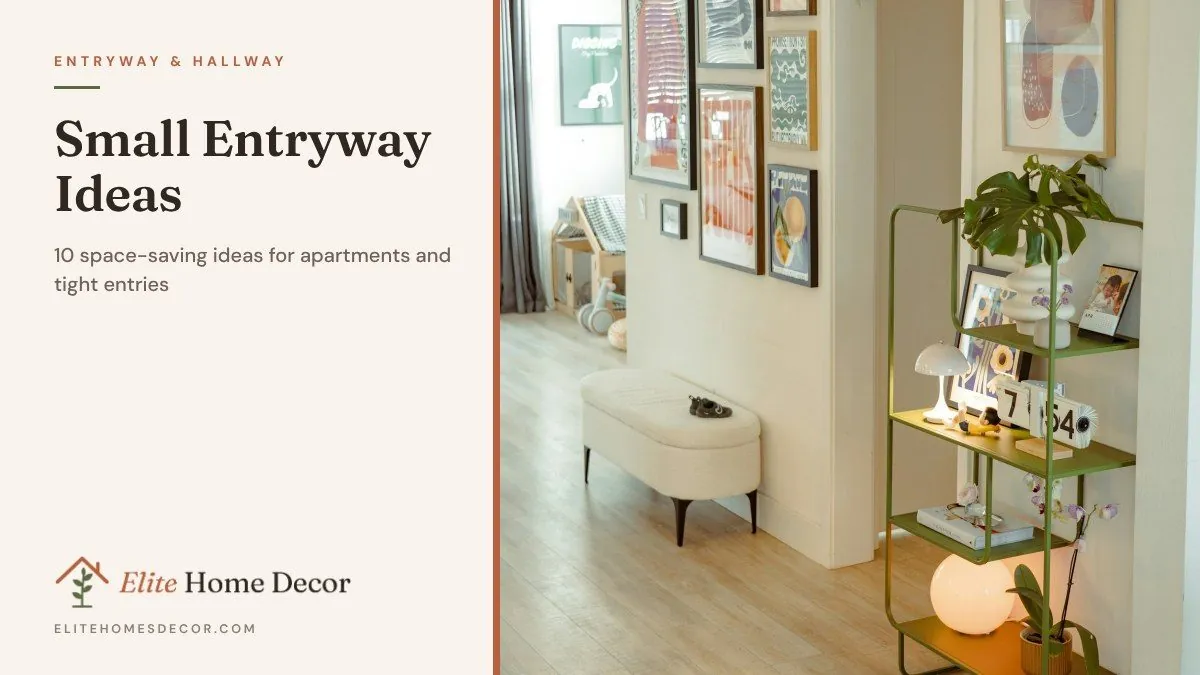
Many apartments open straight into the living room, with no real entryway at all. Coats end up on the sofa, shoes pile up by the door and keys go missing. Even a few square feet, set up well, can solve all of that.
These small entryway ideas help you create a practical drop zone in even the tightest spaces. Most of them use the walls rather than the floor, and many are renter-friendly.
Plan Your Drop Zone
Stand at your front door and decide where the “entry” will be, even if it is just one wall beside the door. Then list what it must hold: keys, mail, coats, bags, shoes and perhaps a dog lead or umbrella.
Measure the wall width and how far the door swings open. Keep at least 36 inches of clear walking space if you can, or a minimum of about 30 inches in very tight spots.
1. Use a Wall-Mounted Shelf Instead of a Table
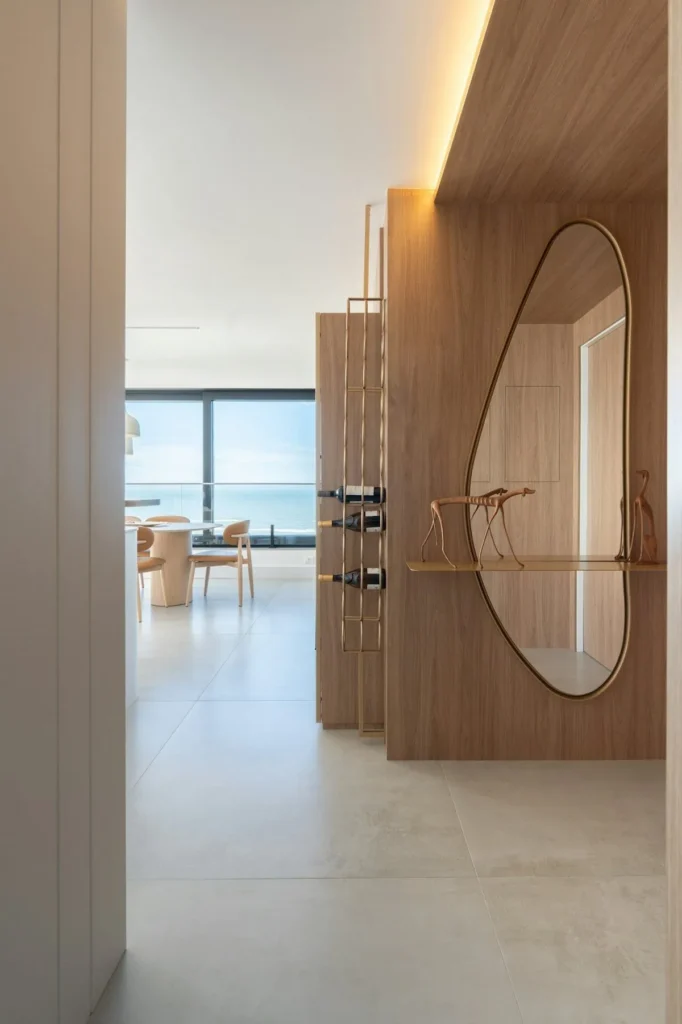
A floating shelf at console height holds keys and post without blocking the walkway. In entries narrower than about 42 inches, a shelf only a few inches deep keeps 36 inches clear, as shown in this console depth guide.
Mount the shelf about 30 to 36 inches from the floor, and add a small tray or bowl on top for keys.
2. Choose a Slim Console
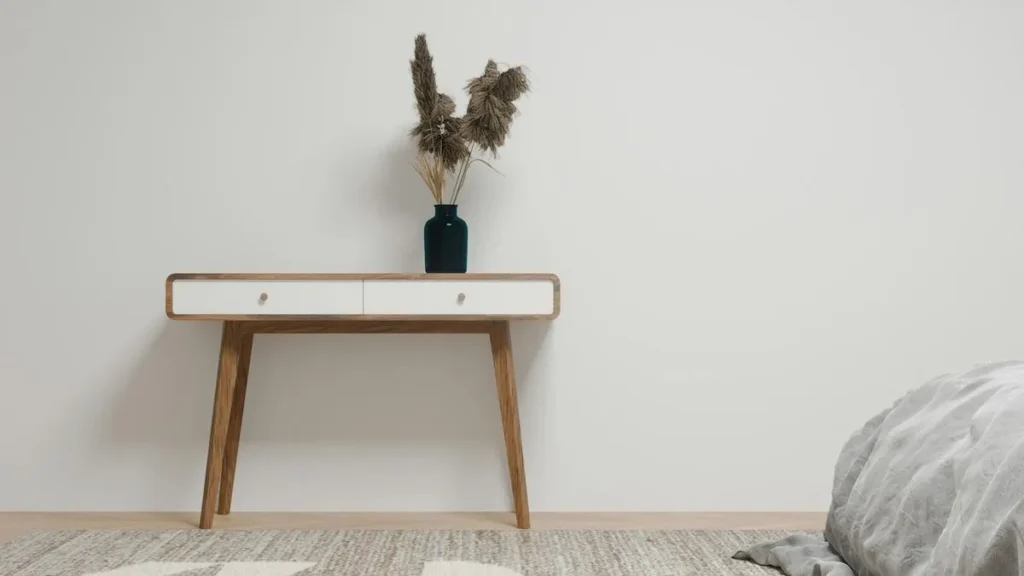
If you have space, a console 10 to 12 inches deep gives a surface without crowding. Look for one with a lower shelf for baskets, so the console holds storage as well as decor.
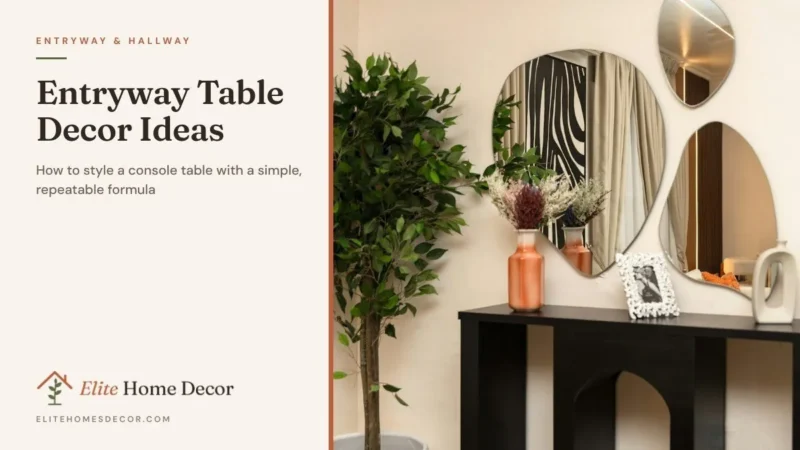
See entryway table decor ideas for how to style it.
3. Hang a Mirror
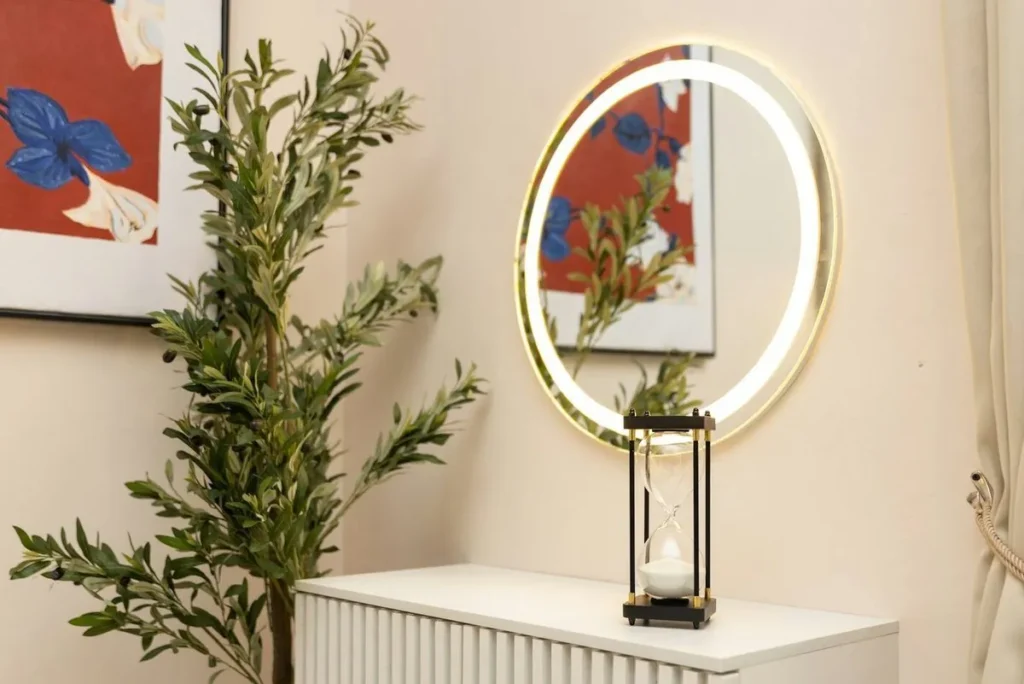
A mirror makes a small entry feel bigger and brighter. It also gives you a last look before you leave.
A tall, narrow mirror suits a slim wall, while a round mirror above a shelf softens straight lines. Choose a mirror with a shelf or hooks built in to save even more space.
4. Add Hooks Instead of a Coat Stand
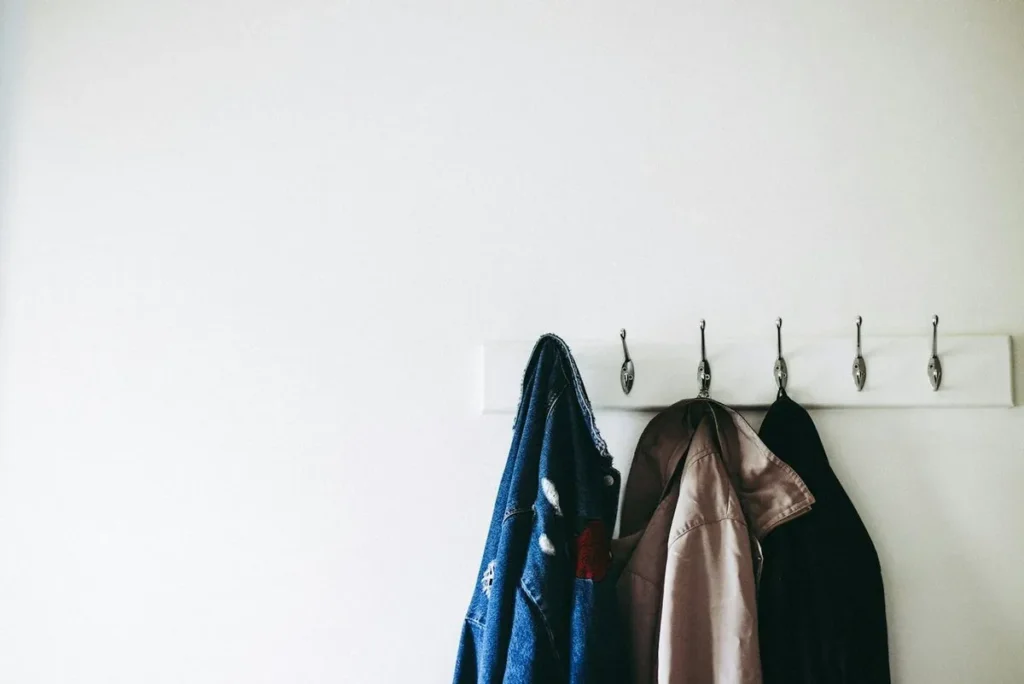
Wall hooks take no floor space. A row of three to five is usually enough. Hang them at about 60 to 66 inches from the floor for adults, and add a lower row for children if needed.
A peg rail looks neat even when only a few hooks are in use. Keep only the coats you wear this week on the hooks.
5. Use Floating Shoe Storage
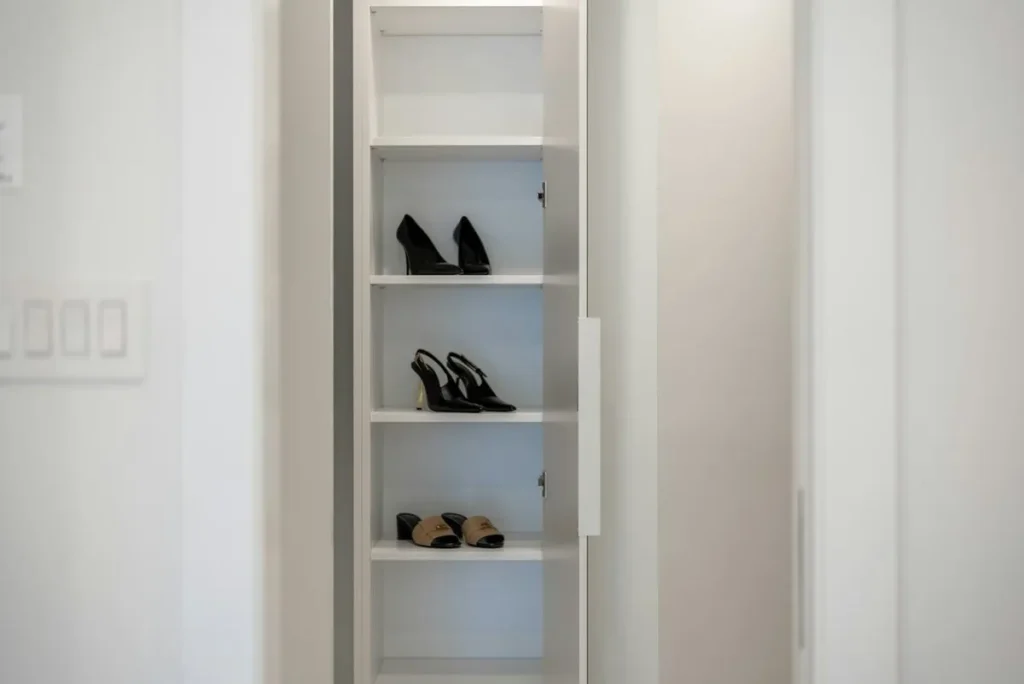
Wall-mounted or slim tip-out shoe cabinets hold shoes in about 7 to 9 inches of depth. See entryway shoe storage ideas.
The top of a tip-out cabinet can double as your key shelf, so one piece of furniture does two jobs.
6. Define a Zone With a Rug
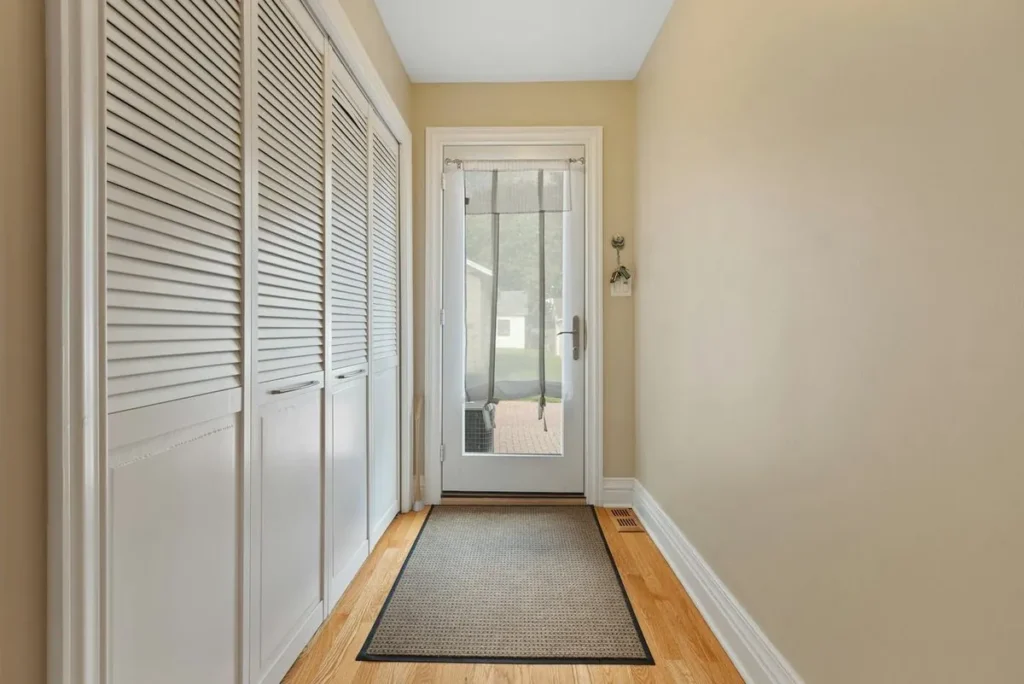
No entryway? A small rug by the door instantly marks the space as an entry. A rug of about 2 by 3 feet or a short runner works in most apartments.
Choose a washable, low-pile rug with a non-slip backing, and make sure the door can open over it.
7. Use the Back of the Door
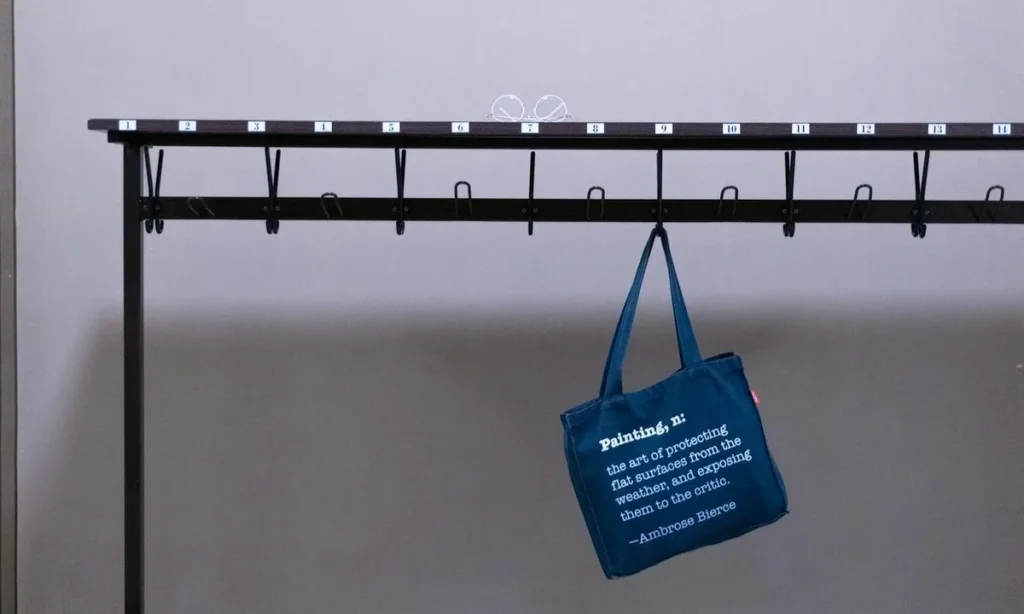
Over-door hooks hold bags, scarves and dog leads. An over-door organizer with pockets can also hold gloves, hats and sunglasses.
Check the door still closes properly, and choose padded hooks to protect the door finish.
8. Add a Small Stool
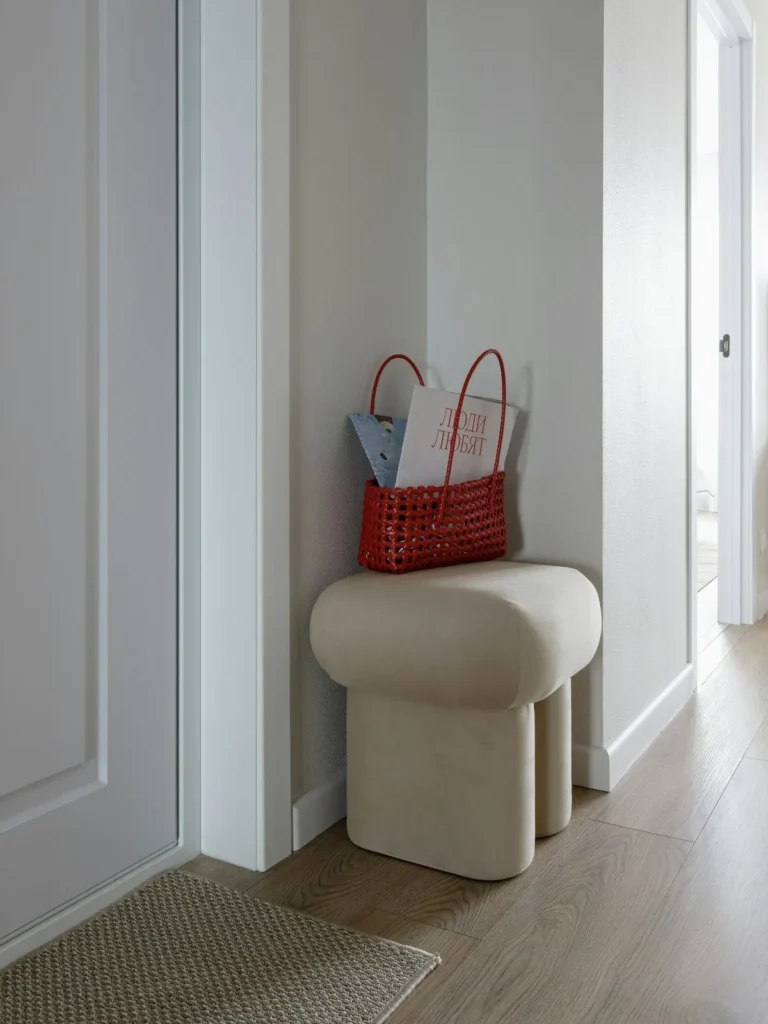
A compact stool slides under a shelf and gives you somewhere to sit while putting on shoes. A stool of about 16 to 18 inches high is comfortable for most people.
Choose one with a shelf or a lift-up seat for extra storage.
9. Light It Well
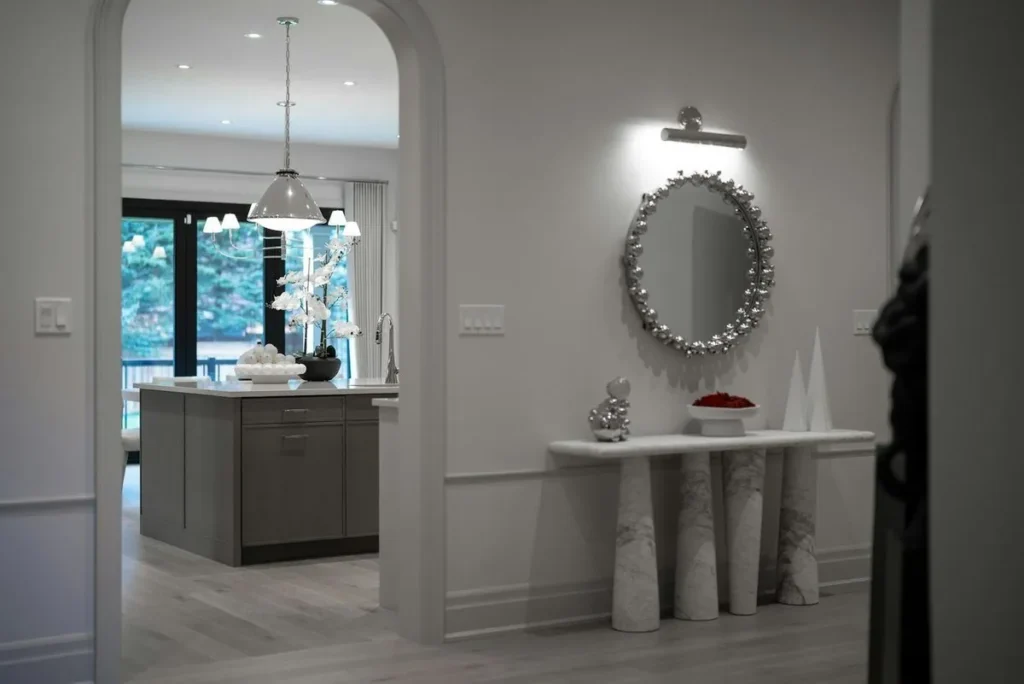
A plug-in wall sconce adds light without taking up surface space. Battery-powered motion-sensor lights are another renter-friendly option, switching on as you walk in.
Warm white bulbs make the entry feel welcoming at night.
10. Keep It Edited
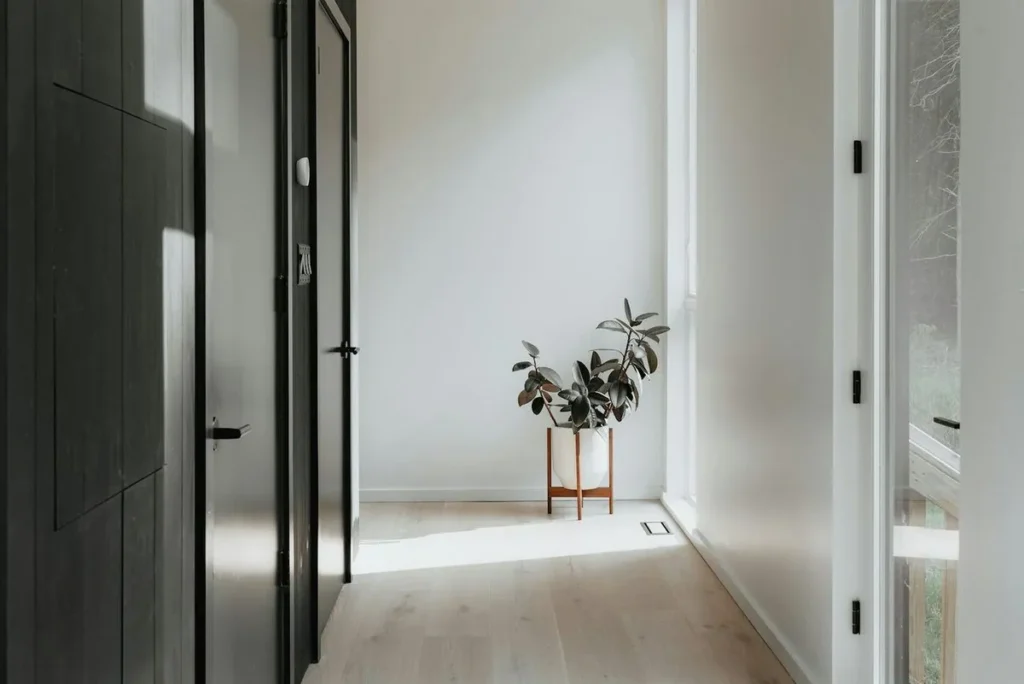
In a small entry, clutter shows fast. Keep only daily coats and shoes there and store the rest.
Spend two minutes each evening putting things back: keys in the bowl, shoes on the rack and bags on hooks.
Small Entryway Layout Example
For a single wall about 3 feet wide beside the door:
- A floating shelf at 32 inches with a key bowl.
- A mirror above the shelf.
- Three hooks to one side at about 64 inches.
- A slim shoe cabinet or two-tier rack below.
- A small washable rug at the door.
Renter-Friendly Small Entry Ideas
- Adhesive hooks rated for the weight of coats and bags.
- A leaning mirror instead of a hung one.
- A freestanding slim shoe rack.
- Battery or plug-in lights.
See renter-friendly decorating ideas for more.
Frequently Asked Questions
How do I create an entryway when I don’t have one?
Use a rug, a wall shelf, hooks and a mirror to mark the space by the door.
What can I put in a very small entryway?
A wall shelf, hooks, a mirror and slim shoe storage.
How deep should a shelf be in a small entryway?
About 6 to 10 inches is enough for keys and post without blocking the walkway.
How do I organize a small entryway with kids?
Add low hooks, one basket per child for shoes and a bench or stool for putting shoes on.
Final Thoughts
Even a few square feet by the door can work hard. Choose wall-mounted and slim pieces, use hooks and the back of the door, and define the zone with a small rug. Good lighting and a mirror make the space feel bigger, and a quick daily edit keeps it under control. Small changes here make every arrival and departure easier.
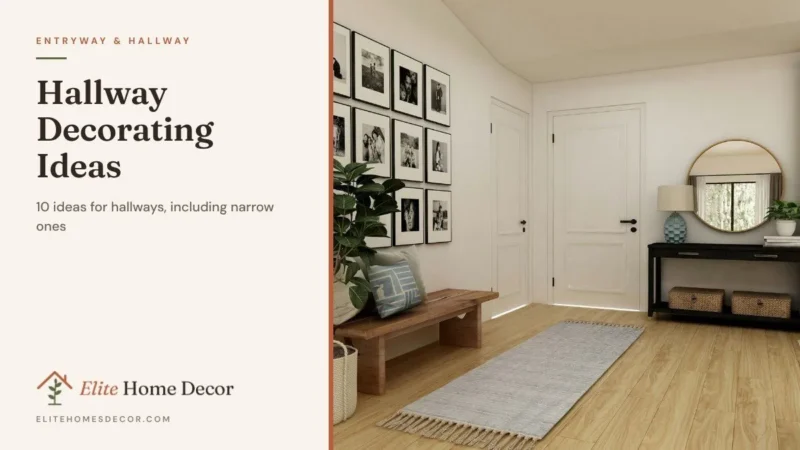
More space-saving ideas: small space decorating ideas and how to make a small room look bigger. Back to entryway decor ideas.

Leave a Reply