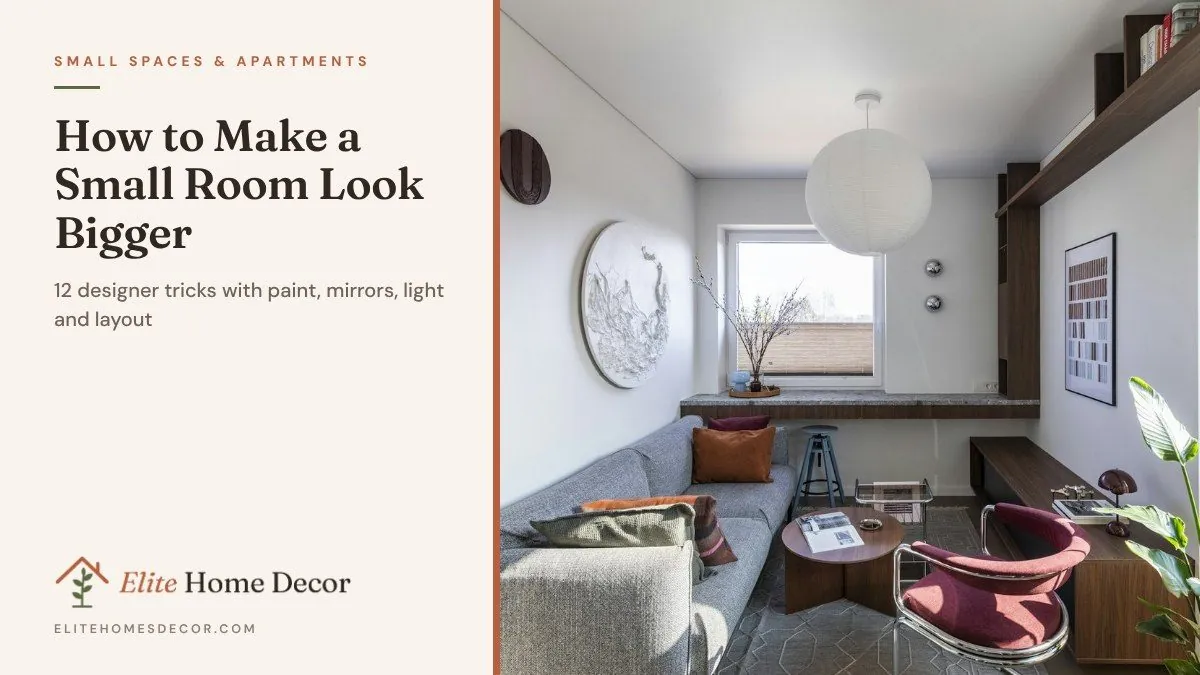
You can’t move walls, but you can change how big a room feels. Our sense of space depends on light, color, how much floor we can see and where our eyes are drawn. Change those, and a small room can feel noticeably larger without spending much at all.
These 12 tricks work in any small room, from bedrooms to living rooms, by improving light, reducing visual weight and drawing the eye upward. Start with the free ones, such as clearing clutter and moving furniture away from windows, then add the rest as your budget allows.
1. Paint Walls a Light, Warm Color

Soft whites and pale neutrals reflect light. Painting trim the same color removes visual breaks.
For an even bigger effect, paint the ceiling a shade lighter than the walls, or the same color, so the edges of the room blur. In north-facing rooms, choose warm whites with a slightly yellow or pink undertone, so the room doesn’t feel cold.
2. Use Large Mirrors

Place mirrors opposite or beside windows to double the light. A large mirror works better than several small ones.
A floor-length mirror leaned against the wall adds height and depth, and mirrored wardrobe doors can make a narrow bedroom feel twice as wide.
3. Hang Curtains High and Wide
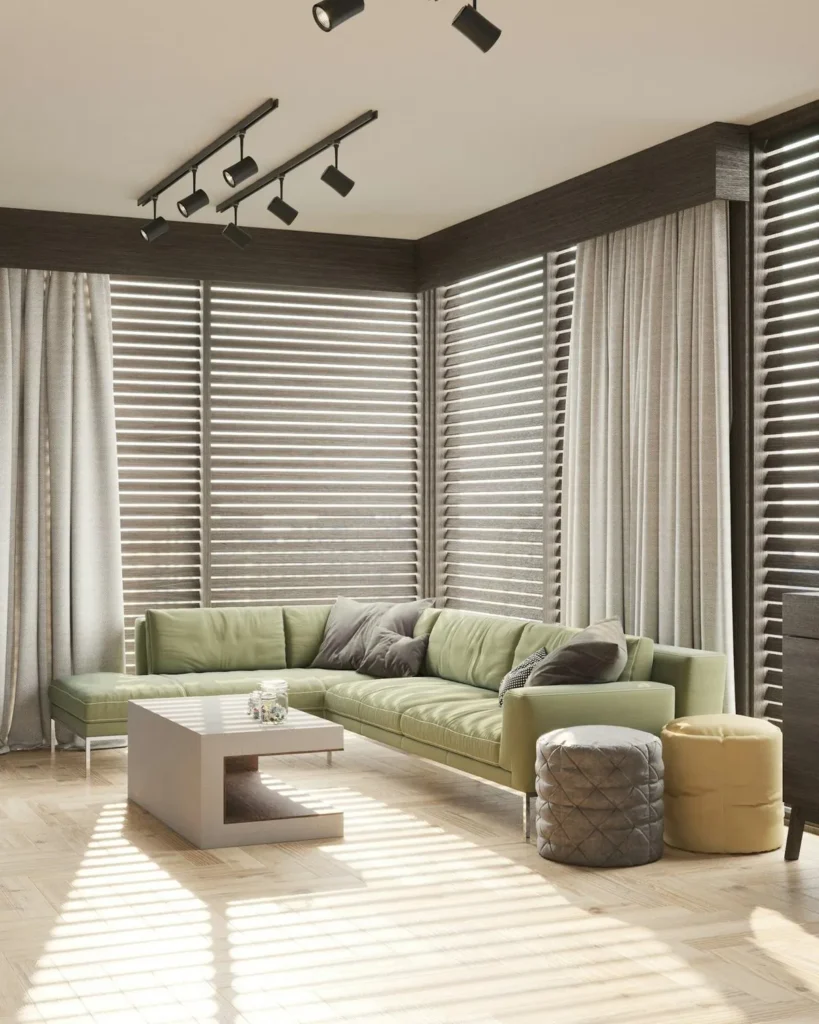
Mount the rod well above the window frame (about two-thirds of the way to the ceiling, or at least 4 to 6 inches above the trim) and extend it past the frame so curtains don’t cover the glass, as advised by Taskrabbit’s curtain guide. See how to hang curtains.
Choose curtains in a color close to the walls, so they blend in rather than cut the wall into sections.
4. Choose Furniture With Legs

Visible floor makes the room feel larger. Sofas, beds, dressers and TV units on slim legs let light pass underneath and make the room feel airier.
Furniture with slim arms and low backs also takes up less visual space than bulky, boxy pieces.
5. Use a Bigger Rug

A rug that fits the seating group makes the room feel unified, not chopped up. A tiny rug in the middle of the floor makes a room look smaller, because it breaks the floor into pieces.
In a small living room, a 5 by 8 or 6 by 9 foot rug with the front legs of the seating on it usually works well.
6. Add Vertical Lines

Tall bookcases, vertical stripes or floor-length curtains draw the eye up. Hanging art slightly higher in a gallery arrangement, or adding a tall plant in a corner, has the same effect.
Vertical lines make ceilings feel higher, which makes the whole room feel more spacious.
7. Choose Glass and Lucite
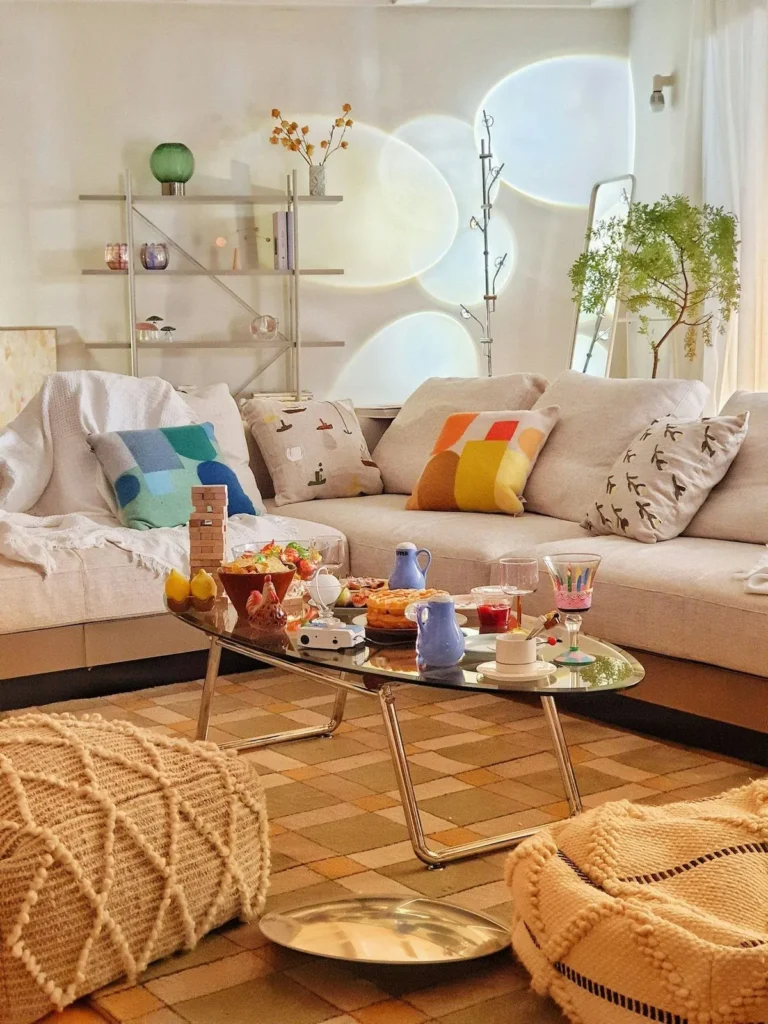
Transparent coffee tables and chairs take up no visual space. Glass side tables, acrylic chairs and glass-fronted cabinets let you see through them to the floor and walls beyond.
Mix them with warmer materials such as wood and textiles so the room doesn’t feel cold.
8. Keep Clutter Out of Sight

Clear surfaces make a room feel calmer and larger. Use closed storage such as drawers, lidded baskets and cupboards for everyday items, and keep only a few chosen pieces on display.
A quick evening reset, putting things back where they belong, keeps a small room feeling spacious.
9. Let in Natural Light

Use sheer curtains or blinds that open fully, and keep windows unblocked. Move tall furniture away from windows, and clean the glass inside and out.
A light-colored rug and pale bedding or upholstery near the window bounce daylight deeper into the room.
10. Use Fewer, Larger Pieces

One large artwork looks better than many small frames. The same goes for furniture: a single comfortable sofa looks calmer than several small chairs, and one large plant has more impact than a row of tiny pots.
Fewer pieces also mean more visible floor and wall, which makes the room feel bigger.
11. Layer Lighting

Light corners with lamps so the room feels evenly bright. Dark corners make a room feel smaller, because the eye reads them as the edges of the space.
Wall sconces and floor lamps add light without taking up table space. See layered lighting for how to combine ambient, task and accent light.
12. Keep Pathways Clear

Leave clear walkways (ideally 30 to 36 inches) so the room feels open. Pull furniture a few inches away from the walls rather than pushing everything flat against them, which can make a room feel like a corridor.
See how to arrange living room furniture for layouts that work in small rooms.
Quick Wins by Budget
- Free: declutter, move furniture away from windows, open curtains fully and rearrange for clear pathways.
- Low cost: warm bulbs, a large mirror and sheer curtains hung high.
- Bigger investment: furniture with legs, a larger rug and fresh light paint.
Mistakes That Make a Room Feel Smaller
- Dark, heavy curtains hung low.
- Lots of small accessories and frames.
- One overhead light leaving dark corners.
- Bulky furniture that blocks windows or walkways.
- Too many different colors and patterns.
Frequently Asked Questions
What color makes a small room look bigger?
Light, warm colors such as soft white, cream and pale greige.
Do mirrors really make rooms look bigger?
Yes. They reflect light and create a sense of depth, especially opposite a window.
Can dark colors work in a small room?
Yes. A dark color on all walls can make a small room feel cozy and enveloping, but it won’t make it look bigger. Use light colors if space is your main goal.
Does a big rug make a small room look bigger?
Usually yes. A larger rug unifies the furniture and makes the floor feel like one continuous space.
Final Thoughts
Making a small room look bigger is about light and flow. Use light colors, large mirrors and high curtains, choose leggy and see-through furniture, and keep clutter out of sight. A bigger rug, layered lighting and clear walkways finish the effect. Even two or three changes can make a noticeable difference.
See small living room decorating ideas, small bedroom ideas and how to choose a color palette for your home.


Leave a Reply