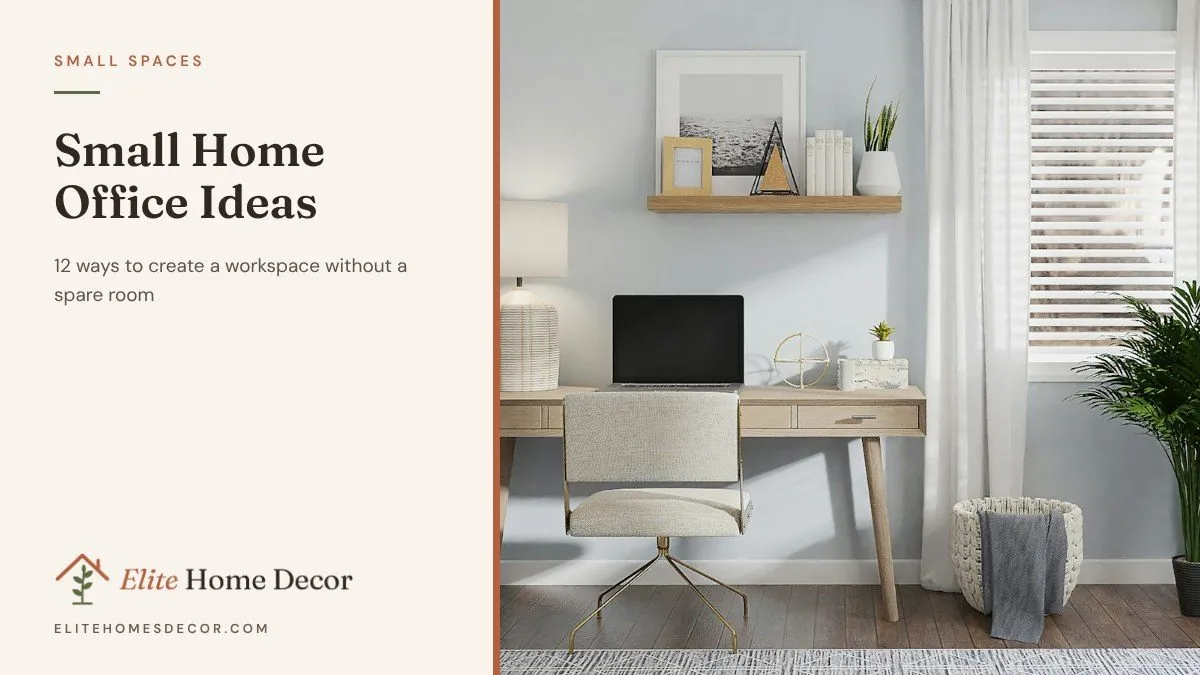
You do not need a spare room to have a proper place to work. A well-planned corner, an unused closet or even a wall in the living room can become a home office that helps you focus and then disappears at the end of the day.
These 12 small home office ideas show you where to fit a desk, how to make it comfortable and how to keep work from taking over the rest of your home. They suit apartments, studios and family homes alike. For more on making a small home work hard, see small space decorating ideas.
Before You Start: The Essentials

- A desk at the right height: around 28 to 30 inches tall suits most adults, with a chair you can adjust.
- Good light: daylight from the side and a task lamp for evenings.
- A power source close to the desk.
- A clear boundary between work and rest, even if it is just a box you put things into at night.
1. Claim a Corner
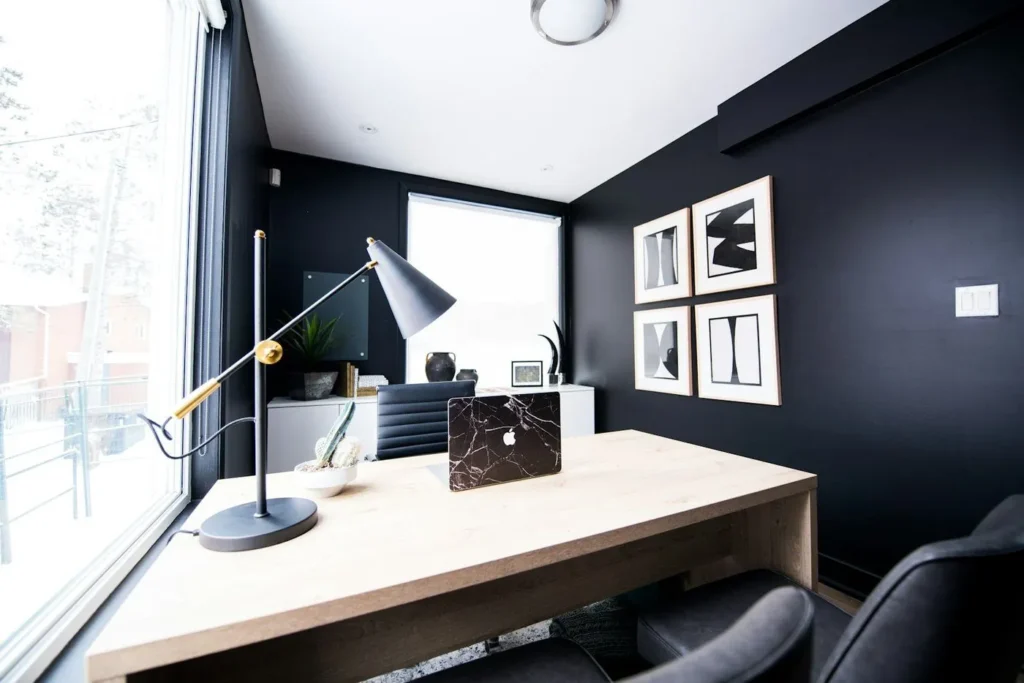
A corner is often the easiest spot for a desk because it is out of the way of walkways. A small corner desk or a narrow rectangular desk on one wall with shelves above makes efficient use of the space.
2. Create a Closet Office
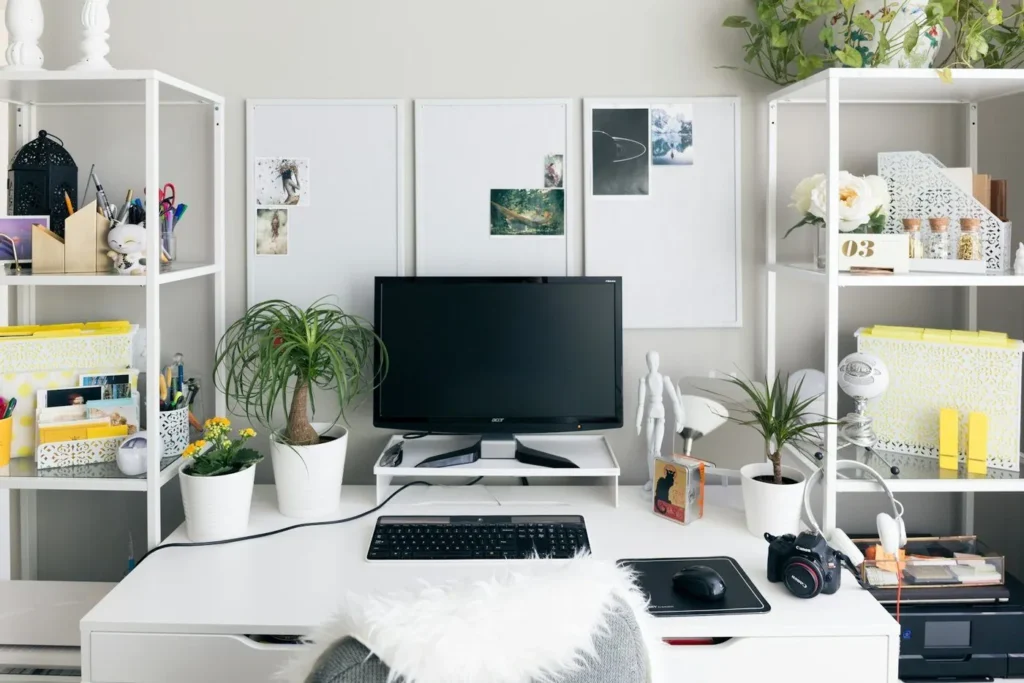
A “cloffice” turns a reach-in closet into a compact office. Remove the doors or replace them with a curtain, fit a desk surface at around 29 to 30 inches high, add shelves above and a task light. At the end of the day, close the curtain and the office disappears.
3. Use a Fold-Down Wall Desk

A wall-mounted fold-down desk takes up almost no space when closed. It is ideal for hallways, bedrooms and studios. Choose one with a small shelf inside for a laptop and stationery.
4. Work by the Window

Placing your desk beside a window gives you natural light and a view to rest your eyes. Position the desk so the window is to your side rather than directly behind your screen to reduce glare.
5. Add an Office to the Bedroom
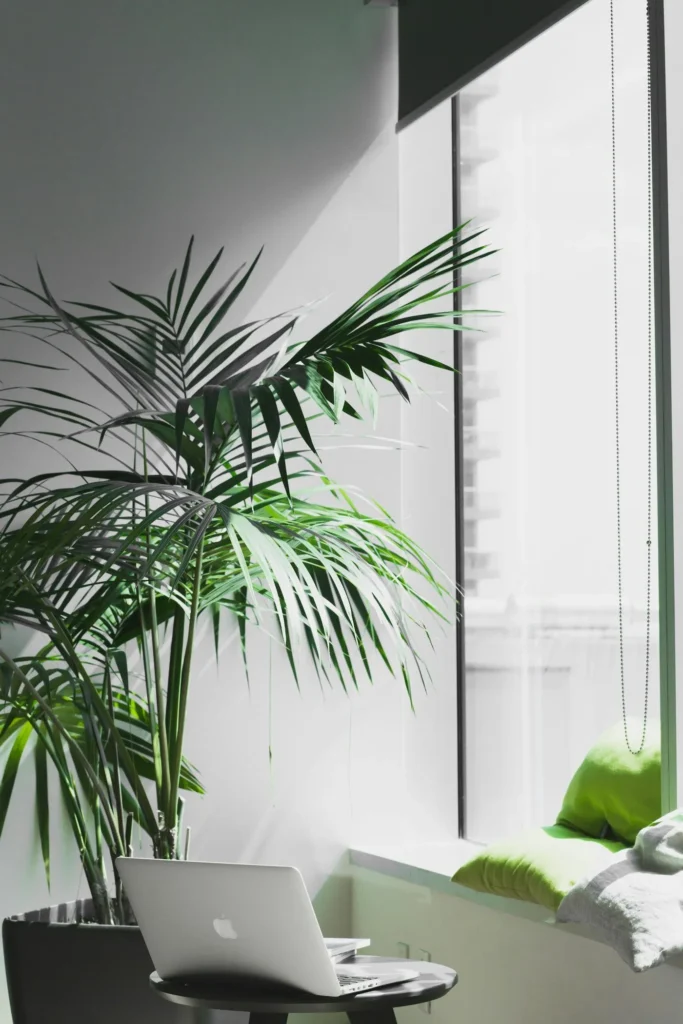
If the bedroom is the only option, face the desk away from the bed so work and rest feel separate. Choose a narrow desk that matches the bedroom furniture so it blends in, and store work items in closed boxes. Our guide to setting up a guest room covers rooms that do two jobs.
6. Use a Living Room Corner

In a living room, a slim desk behind the sofa or in a corner can become a workspace. Choose a desk that looks like a console table, and use a rug or a small shelf to define the work zone.
7. Try a Console Desk Behind the Sofa
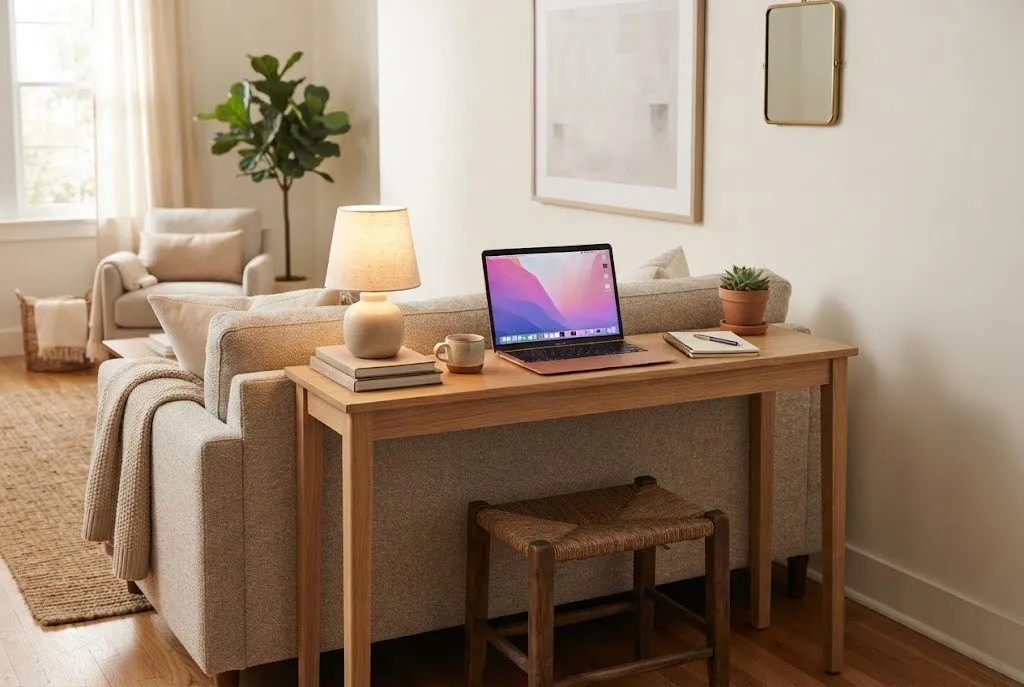
A console table behind the sofa, at desk height, doubles as a workspace. Pull up a chair when you need it and push it away afterwards. It is a smart solution in a studio layout.
8. Go Vertical With Storage
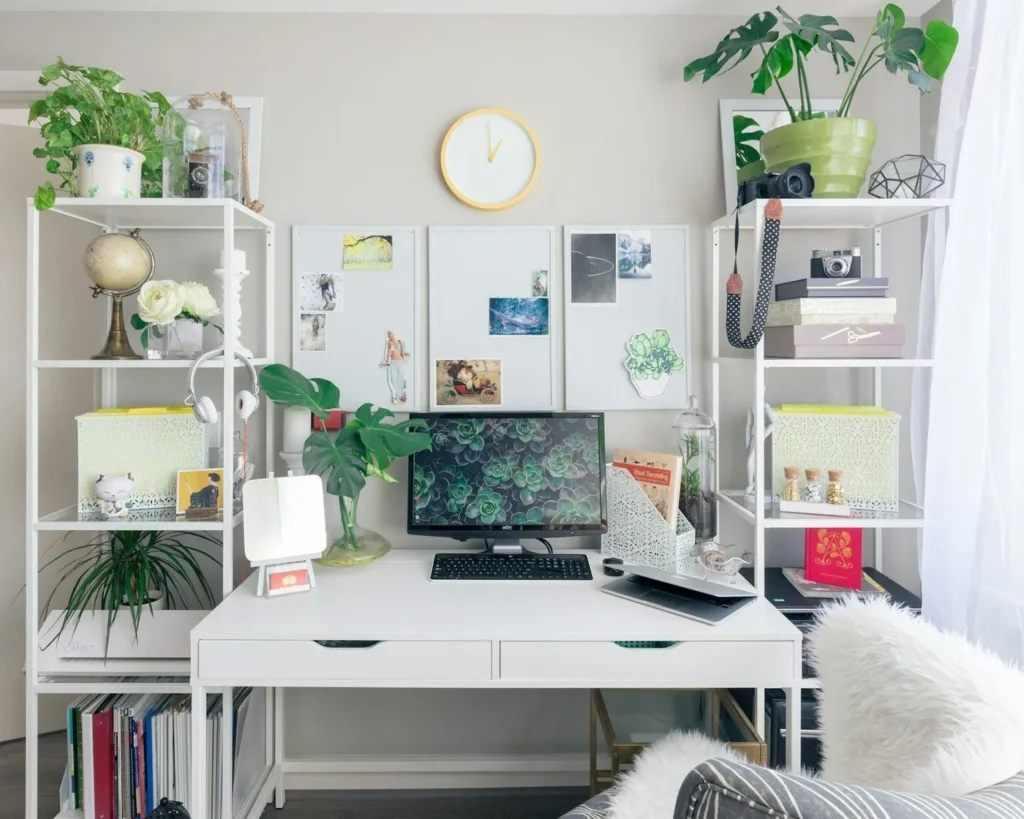
When floor space is limited, use the wall. Floating shelves, a pegboard and wall-mounted file holders keep supplies within reach without cluttering the desk. Keep the most-used items at arm’s length.
9. Choose Furniture That Folds or Nests
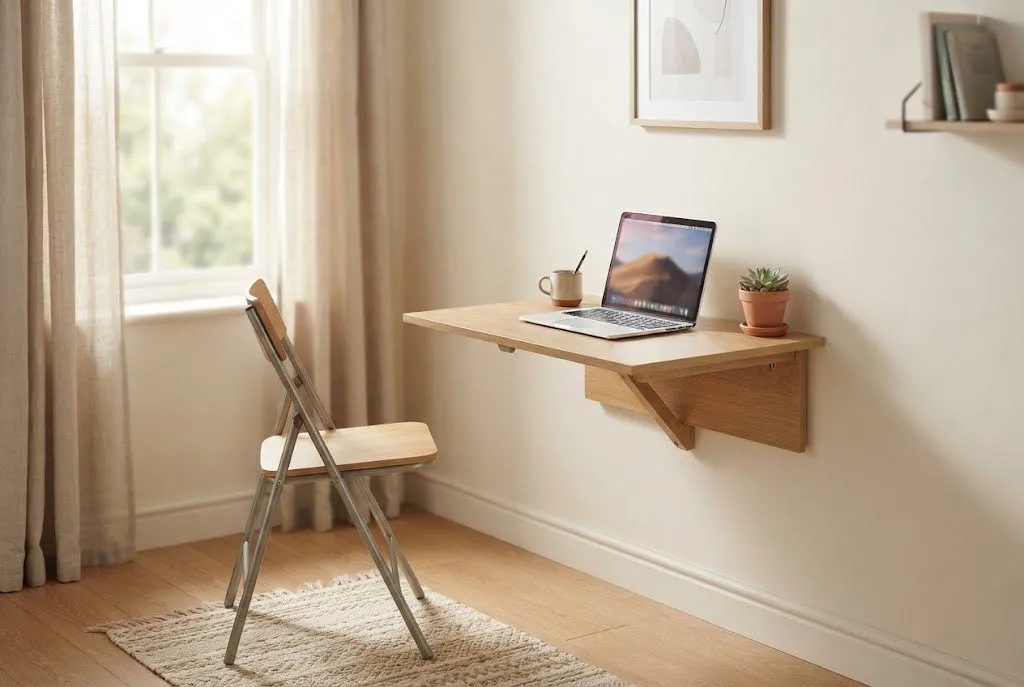
A folding chair, a nesting side table or a stool that slides under the desk keeps the area flexible. In very small homes, the dining table can be the office, with a box or cart for supplies that rolls away at mealtimes.
10. Light It Well
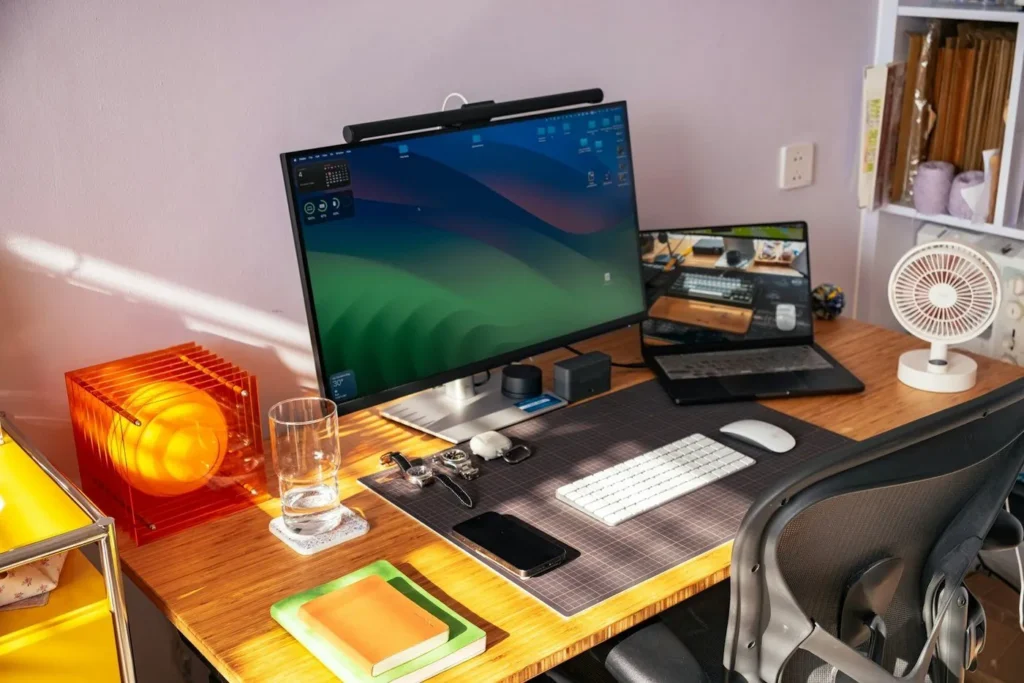
Good lighting reduces eye strain. Combine daylight with a desk lamp you can direct onto your work. Choose a neutral or slightly cool bulb (around 3000K to 4000K) for focus during the day. See how to light a room in layers.
11. Hide Cables
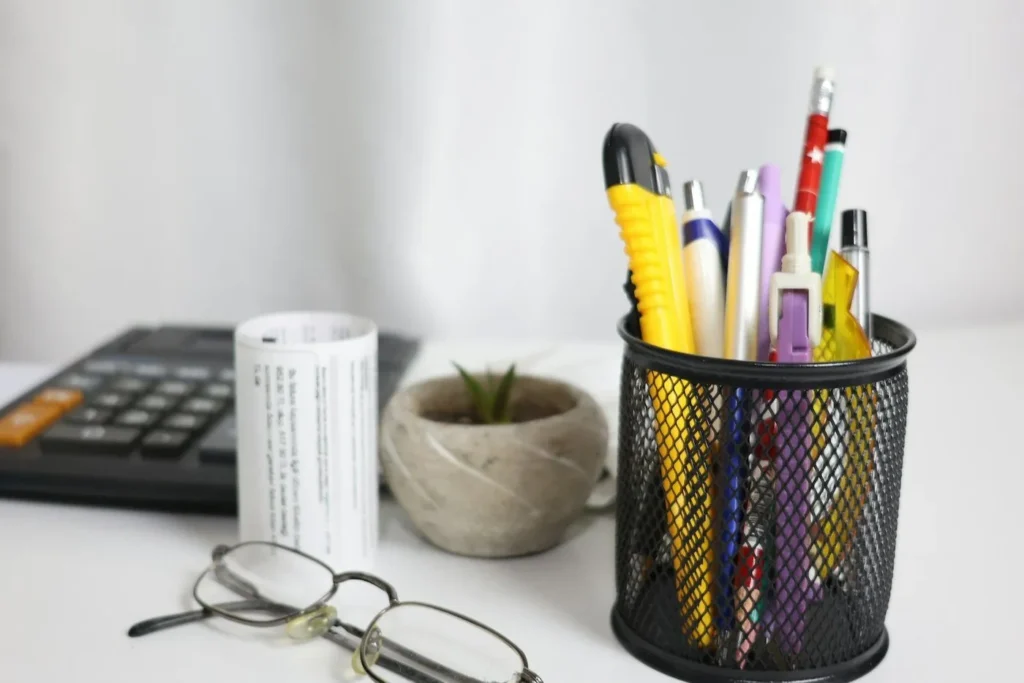
Loose cables make even a small desk look messy. Use a cable tray under the desk, cable clips and a single power strip. Wireless keyboards and mice help too.
12. Make It Pleasant

A plant, a favorite print and a comfortable chair cushion make the space somewhere you want to sit. Keep decoration minimal so the desk stays focused, but add enough personality to make it yours.
Make It Comfortable: Ergonomics Basics
A small office still needs to be comfortable for long days:
- Screen: the top of the screen at or slightly below eye level, about an arm’s length away. A laptop stand and a separate keyboard help.
- Chair: feet flat on the floor, knees at about 90 degrees and lower back supported. A small cushion can help on a dining chair.
- Desk: elbows at about 90 degrees when typing, with shoulders relaxed.
- Breaks: stand up and look away from the screen regularly.
Small Home Office Mistakes
- Facing a blank wall in a dark corner. Choose a spot with light if you can.
- Too much on the desk. Keep only what you use daily within reach.
- Ignoring cables. Tangled wires make a small space look messy.
- No way to put work away. A box, drawer or curtain helps you switch off.
Small Home Office on a Budget
You don’t need new furniture to start. Use the dining table with a box for supplies, a spare lamp and a cushion on a dining chair. Add a laptop stand and a separate keyboard for comfort, then invest in a good chair once you know the setup works.
Frequently Asked Questions
Where can I put a home office in a small apartment? In a corner, a converted closet, beside a window, behind the sofa or on a fold-down wall desk in a hallway or bedroom.
How do I separate work from home in a small space? Use a defined zone with a rug or shelf, face the desk away from the bed or sofa, and put work items away in a box or cabinet at the end of the day.
What size desk do I need for a small home office? A desk about 40 inches wide and 20 inches deep is enough for a laptop and notebook. Height is usually around 28 to 30 inches.
Can I put a desk in front of a window? Yes, but glare can be a problem. Placing the desk beside the window, with light coming from the side, is usually more comfortable.
How do I make a small home office feel bigger? Use a wall-mounted desk, vertical storage, light colors and good lighting, and keep the desk surface clear.
Final Thoughts
A small home office needs only the right spot, a comfortable desk and chair, good light and a way to put work away. Start with a corner, a closet or a fold-down desk and build from there. For more ideas, see our complete guide to small space decorating ideas.

Leave a Reply