
The bedroom is the one room where calm matters most. Color sets the mood before you even notice the furniture: soft, muted shades make a room feel restful, while very bright or high-contrast colors keep it lively. Choosing the right palette is one of the simplest ways to make your bedroom feel like a retreat.
These 10 bedroom color ideas are all calm and easy to live with, from light and airy to cozy and moody. Each one includes a simple combination for walls, bedding and accents. For the general method behind choosing colors, see our guide to choosing a whole-home color palette.
How to Choose a Calming Bedroom Color

- Go muted: colors with a little grey, brown or white mixed in feel softer than pure, saturated shades.
- Check the light: north-facing rooms get cooler light, so warmer colors help; south-facing rooms can take cooler shades.
- Test properly: paint large samples on two walls and look at them in the morning, afternoon and under lamps at night.
- Use the 60-30-10 rule: about 60% main color (walls), 30% secondary (bedding, curtains, rug) and 10% accent (cushions, art, accessories).
1. Soft Sage Green

Sage is a grey-green that feels natural and calm. It pairs beautifully with white bedding, natural oak and linen. Add terracotta or rust cushions as an accent for warmth.
2. Dusty Blue

Muted, greyish blues feel fresh and peaceful without the coldness of bright blue. Combine with crisp white bedding, light wood and touches of navy or ochre. Dusty blue works especially well in south-facing rooms with warm light.
3. Warm White and Natural Wood
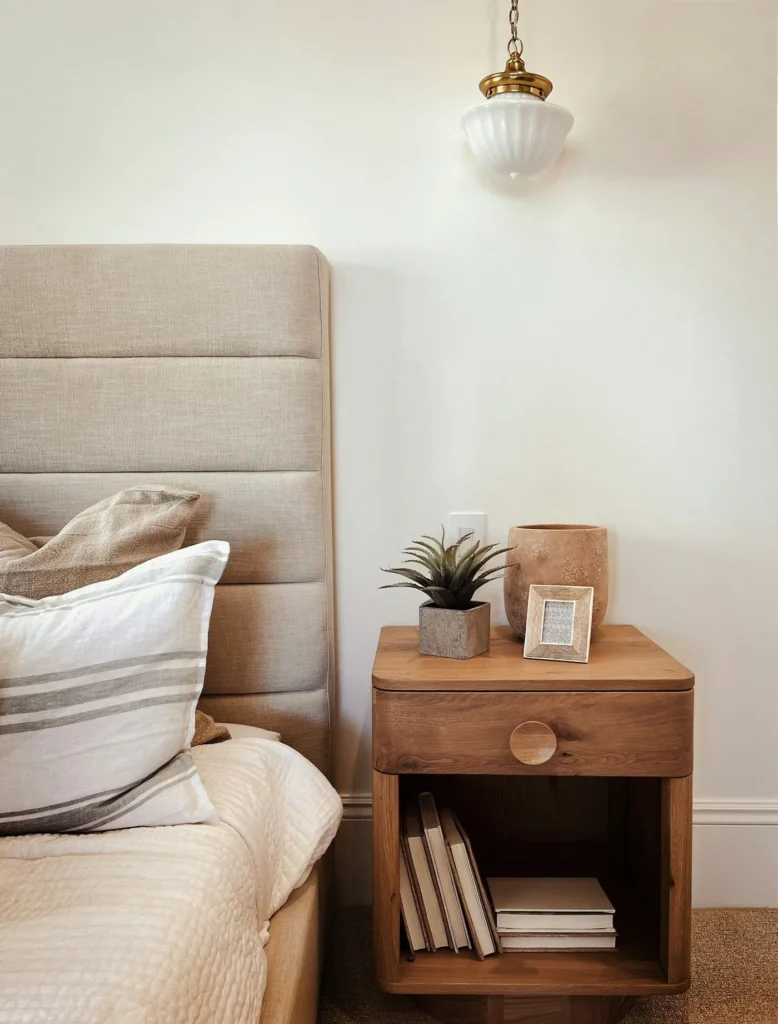
A warm white bedroom with natural wood furniture feels light, airy and timeless. Choose a white with a slightly creamy undertone rather than a stark, bright white. Layer cream, oatmeal and sand bedding for depth.
4. Greige

Greige, a blend of grey and beige, is a flexible neutral that suits almost any style. It is warmer than grey and cooler than beige. Pair it with white bedding, black accents and brass for a hotel-like look.
5. Blush and Clay

Soft pinks with an earthy, clay undertone feel warm and grown-up rather than sweet. Combine blush walls with rust, terracotta and cream bedding, plus natural rattan or wood.
6. Moody Navy

Dark colors can feel cozy and enveloping in a bedroom, especially one used mostly at night. Navy walls with white bedding, brass lamps and warm wood create a calm, cocooning room. Paint the ceiling a lighter shade if the room is small.
7. Earthy Terracotta

Terracotta and burnt orange bring warmth, especially in cool, north-facing bedrooms. Use it on one wall behind the bed, or in bedding and curtains against warm white walls. Pair with olive green and cream.
8. Soft Lavender Grey
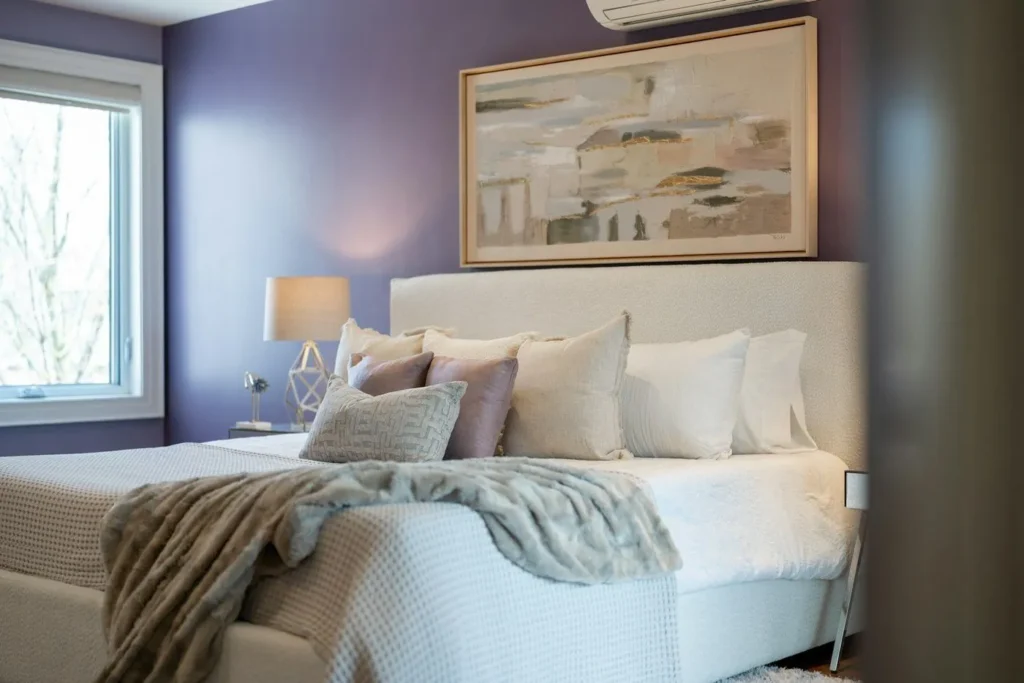
A greyed lavender is gentle and unexpected. It looks beautiful with white and pale grey bedding, silver or chrome accents and soft greenery. Keep it muted so it reads as calm rather than bright purple.
9. Charcoal and Linen

Charcoal walls with natural linen bedding in oatmeal and white feel sophisticated and calm. Add warm wood and a few brass touches to stop the room feeling cold.
10. Cream and Camel
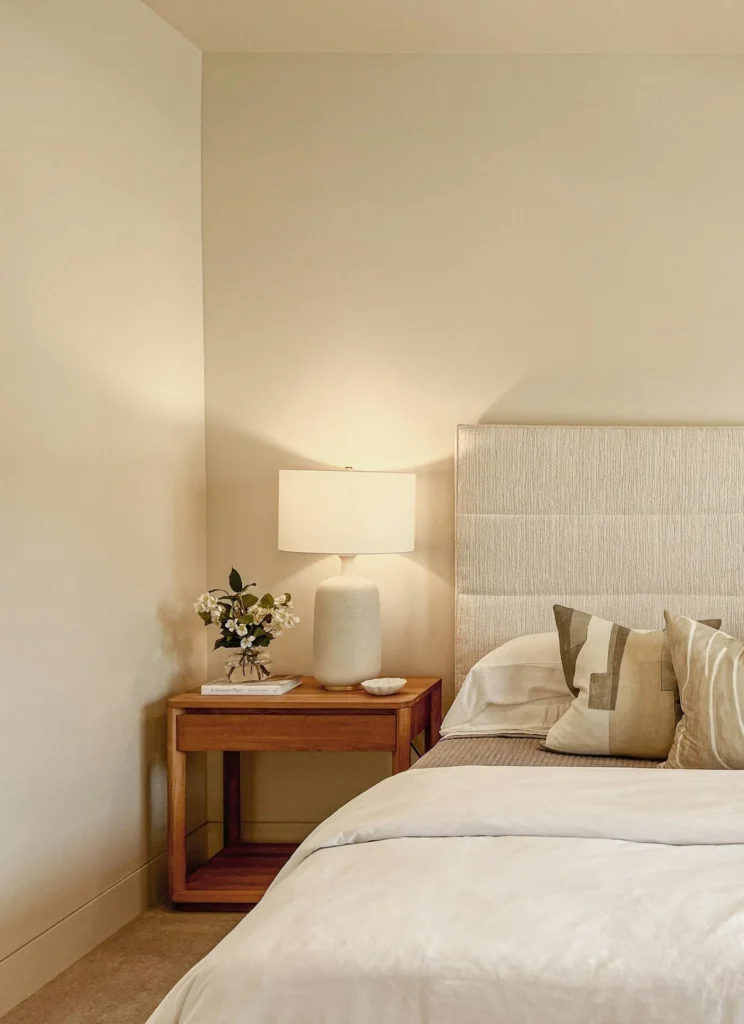
A tonal palette of cream, camel, tan and chocolate feels warm and layered. Combine cream walls, camel throws, a leather or wood headboard and textured bedding for a cozy, quiet bedroom.
Which Finish to Use
- Walls: matte or eggshell. Matte hides imperfections and feels soft; eggshell is a little more wipeable.
- Trim and doors: satin or semi-gloss, which stands up to knocks and cleaning.
- Ceiling: flat or matte, so it doesn’t reflect glare from lamps.
Bedding Combinations by Wall Color
| Wall color | Bedding | Accent |
|---|---|---|
| Sage green | White and oatmeal | Terracotta |
| Dusty blue | Crisp white | Ochre or navy |
| Greige | White and charcoal | Brass |
| Blush | Cream and rust | Rattan |
| Navy | White | Brass and warm wood |
| Terracotta | Cream | Olive |
Color and Sleep
Many people find softer, muted colors more restful in a bedroom, but there is no single “best” color for sleep. What matters most is that the room feels calm to you. Combine your color with good blackout curtains, warm bedside lighting and a clutter-free space for the most restful result.
Small Bedroom Color Tips

In a small bedroom, light colors make walls appear to recede, but a darker shade can also make a small room feel cozy and intentional. Whichever you choose, paint walls, trim and even the ceiling in similar tones so the edges blur and the room feels bigger. For layout ideas, see bedroom decor ideas.
Frequently Asked Questions
What is the most calming color for a bedroom? Many people find soft, muted shades such as sage green, dusty blue, warm white and greige the most calming. Choose the one you personally find restful.
What colors should I avoid in a bedroom? Very bright, saturated colors and stark, cold whites can make a bedroom feel less restful. If you love a bold color, use it as an accent instead.
Should a bedroom be light or dark? Either can feel calm. Light colors feel airy and bright; dark colors feel cozy and cocooning. Consider how you use the room and how much daylight it gets.
What color bedding goes with sage green walls? White, cream and oatmeal bedding look fresh with sage, with terracotta or rust cushions as an accent.
Can I paint my bedroom ceiling a color? Yes. A soft tint of the wall color, or the same color, makes the room feel cozy and enveloping.
How do I make a dark bedroom feel calm, not gloomy? Use warm lighting, light bedding, natural wood and brass accents to balance a dark wall color.
Final Thoughts
A calming bedroom palette starts with a muted main color, supported by bedding and textiles in related tones and a small accent. Test your samples in real light and use the 60-30-10 rule to bring it all together. For the rest of the room, see our guide to bedroom decor ideas.




Leave a Reply