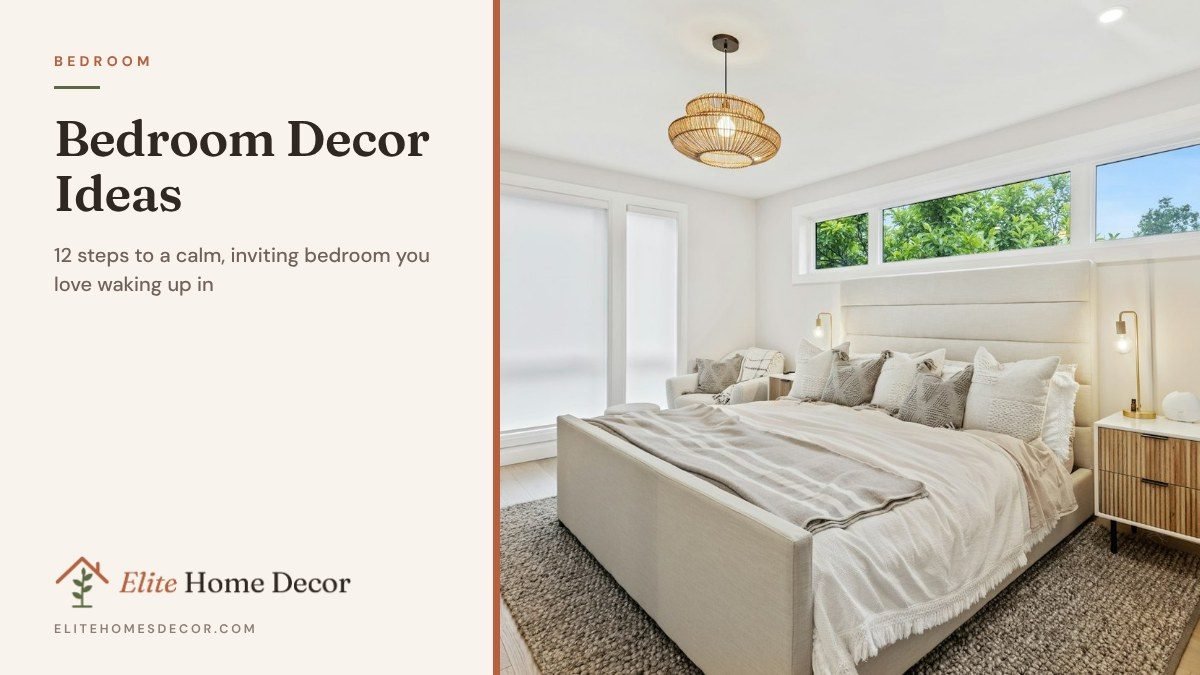
Your bedroom is the first room you see in the morning and the last one at night, so it deserves to feel calm, comfortable and personal. This guide walks you through decorating a bedroom in the right order, from where the bed goes to the final styling touches, with practical measurements you can use straight away.
1. Place the Bed First
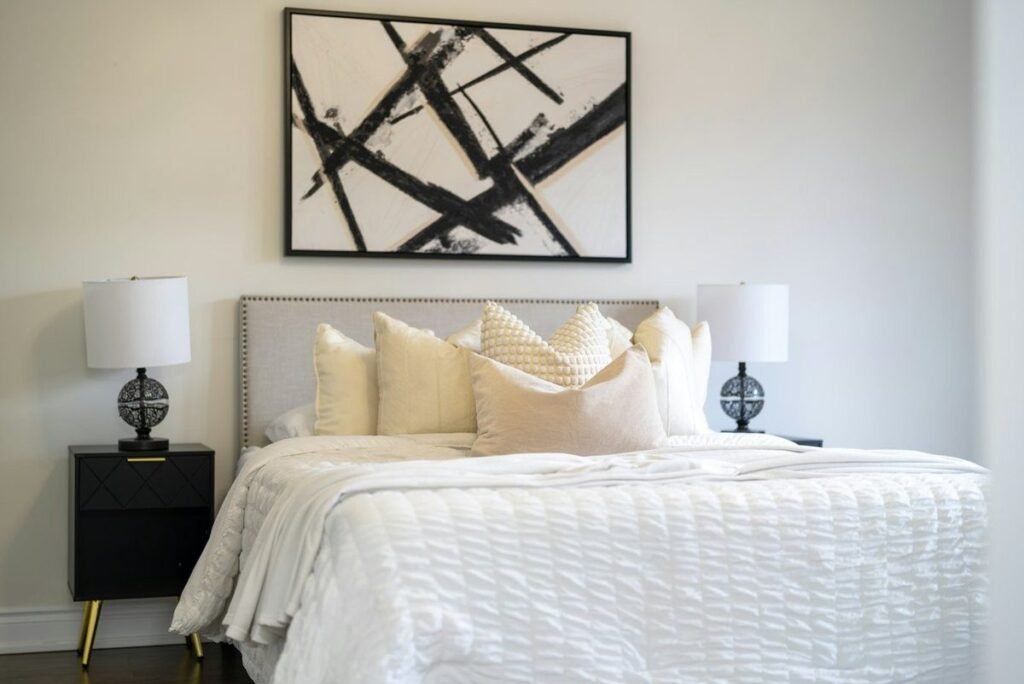
The bed is the anchor of the room. Center it on the wall you see when you walk in, if possible, and keep it away from the door’s swing path. Aim for at least 24–30 inches of walking space on each side and at the foot of the bed, so getting in and out never feels cramped.
2. Choose a Calming Color Palette

Soft, muted colors help a bedroom feel restful: warm white, greige, pale sage, dusty blue, mushroom or soft terracotta. Use the 60-30-10 rule as a guide: about 60% base (walls), 30% secondary (bedding and curtains) and 10% accent (cushions, art). Our how to choose a color palette include ready-made palettes.
3. Invest in Layered Bedding
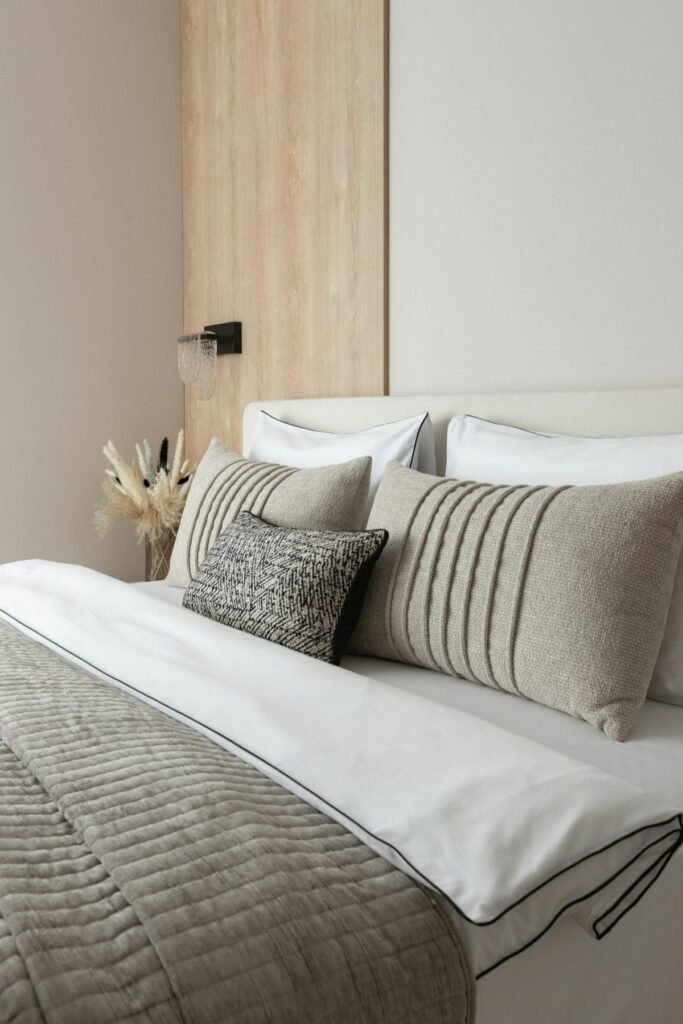
Bedding takes up more visual space than anything else in the room. Start with crisp sheets and a duvet, add a quilt or blanket folded at the foot, then sleeping pillows and one or two decorative cushions. Natural fabrics like cotton and linen look relaxed and feel breathable. See our step-by-step guide on how to style a bed.
4. Add Matching or Balanced Nightstands
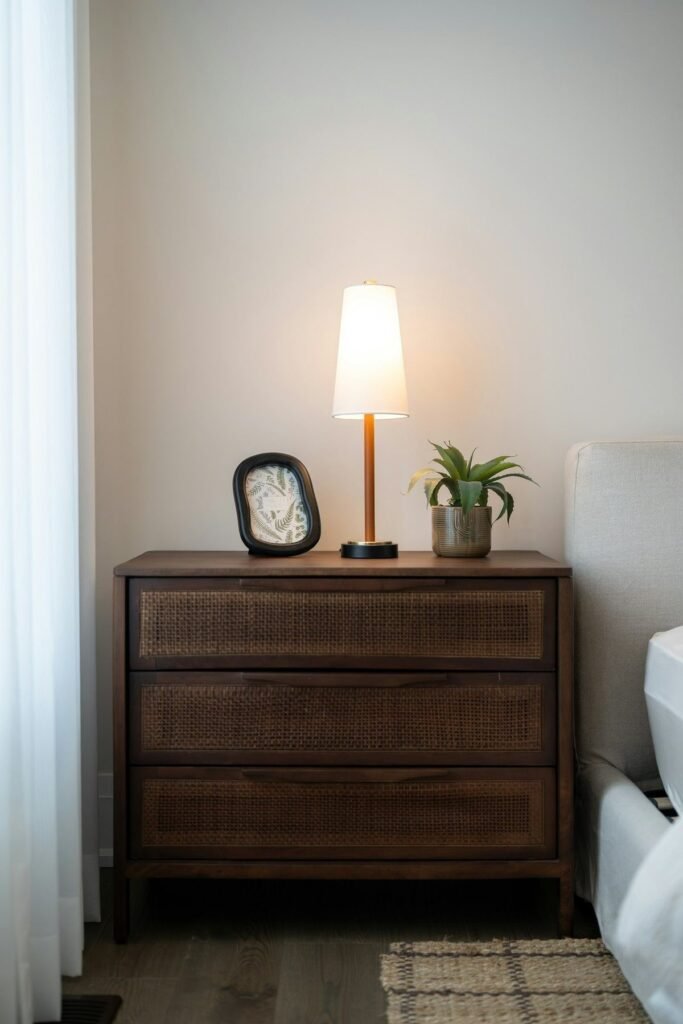
Nightstands should sit roughly level with the top of your mattress, give or take a couple of inches, so reaching a glass of water is easy. They don’t have to match, but they should feel balanced in size and visual weight.
5. Ground the Bed With a Rug
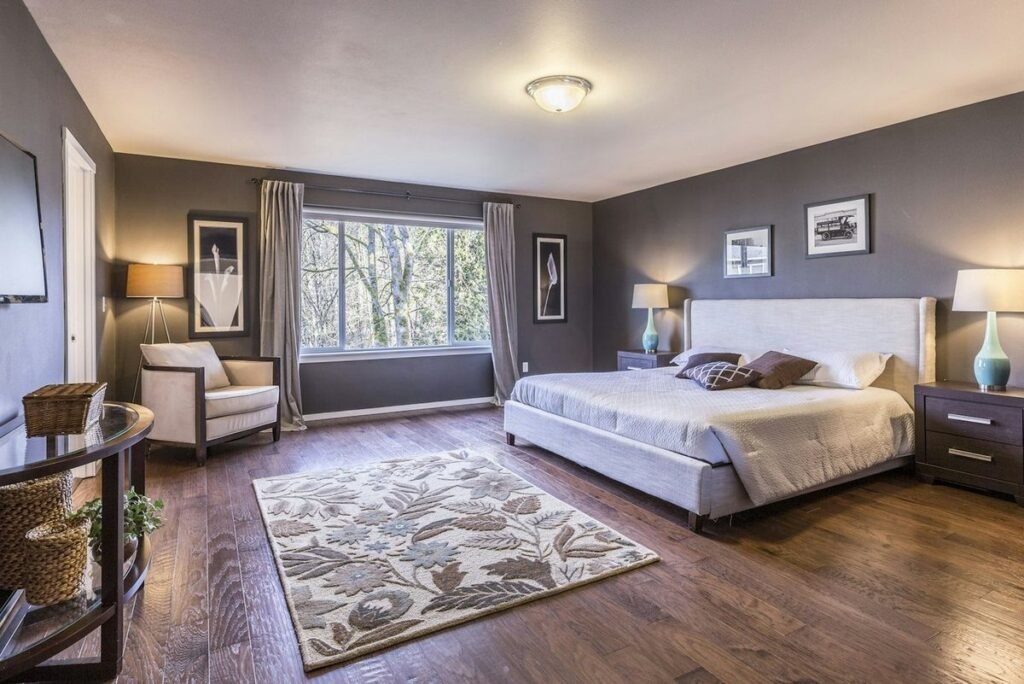
On hard floors, a rug makes the first step out of bed softer and frames the bed visually. For a queen or king bed, place a large rug horizontally under the lower two-thirds of the bed so it extends beyond both sides, as recommended in Revival’s bedroom rug guide. In smaller rooms, runners on each side work well.
6. Layer Soft, Warm Lighting
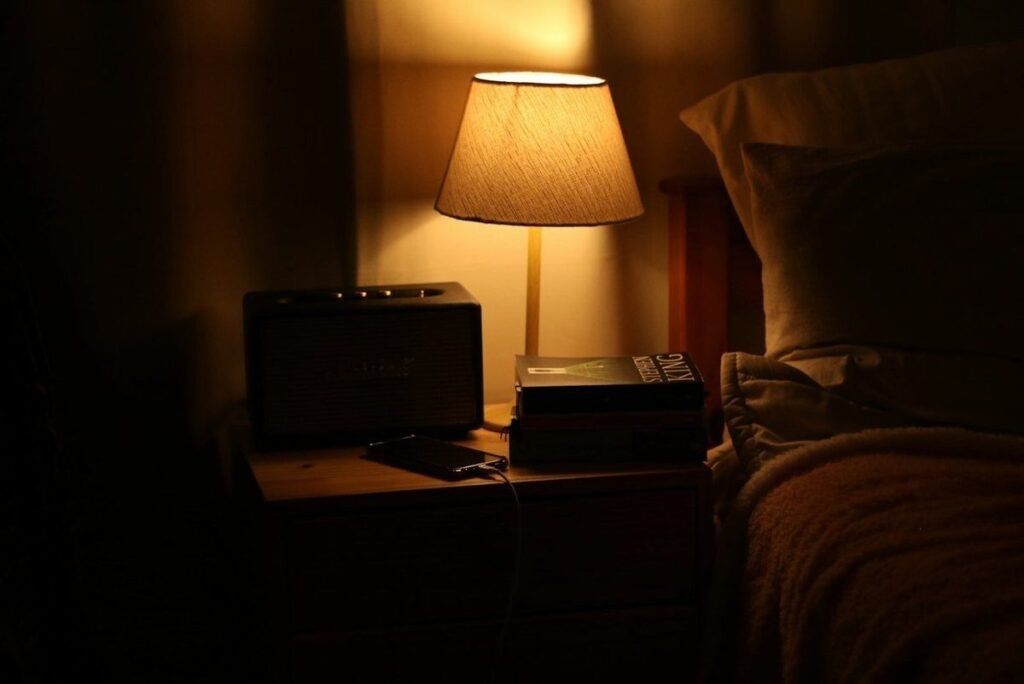
Avoid relying on one overhead light. Use bedside lamps or wall sconces for reading, and a dimmable ceiling light or floor lamp for general light. Warm 2700K bulbs suit bedrooms best; Feit Electric’s guide calls 2700K the best color temperature for bedrooms.
7. Hang Art Above the Bed (at the Right Size)
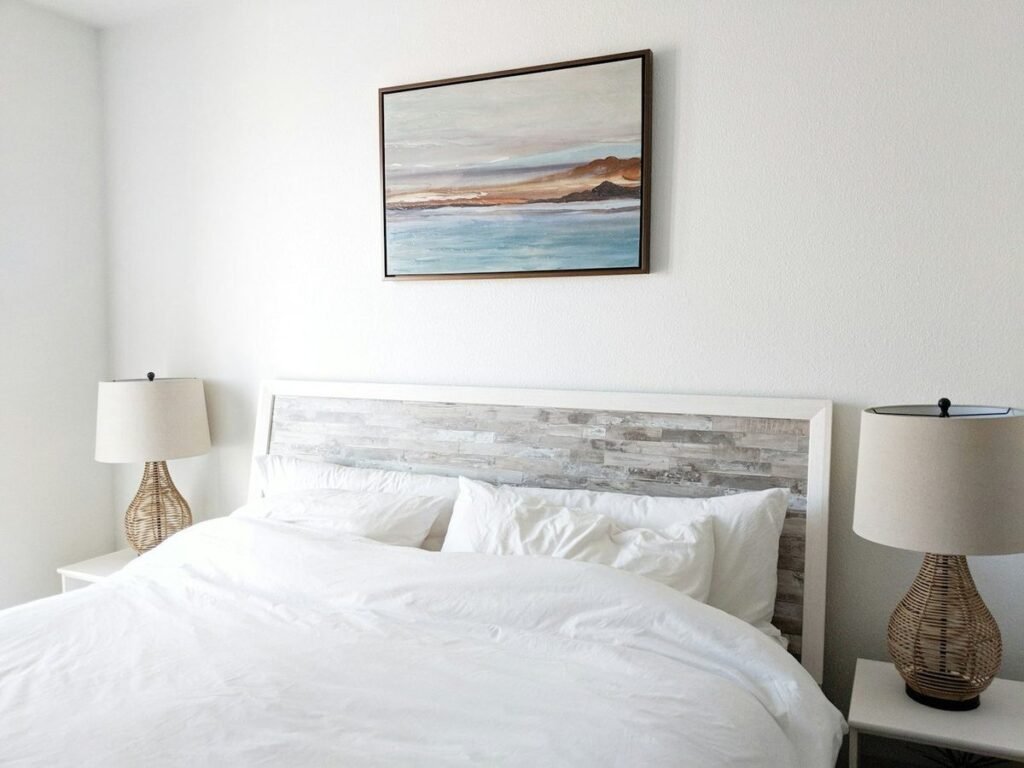
Art above the bed should be about two-thirds the width of the mattress, with the bottom of the frame roughly 8–12 inches above the headboard, according to Fine Art America’s guide. For more ideas, including shelves and textiles, read our bedroom wall decor ideas.
8. Dress the Windows

Curtains soften a bedroom and help you sleep. Choose lined or blackout curtains if you are sensitive to light, and hang them high and wide. Layering sheer curtains behind heavier ones gives privacy in the day and darkness at night.
9. Keep Storage Hidden

A calm bedroom has clear surfaces. Use a dresser or chest of drawers, under-bed storage boxes and baskets with lids. If space is tight, our small space storage ideas cover clever solutions.
10. Create a Small Sitting or Reading Spot

If you have room, add a comfy chair, a small side table and a lamp in a corner, or a bench at the foot of the bed. It gives you a place to sit while dressing and makes the bedroom feel like a retreat.
11. Bring in Plants and Natural Textures
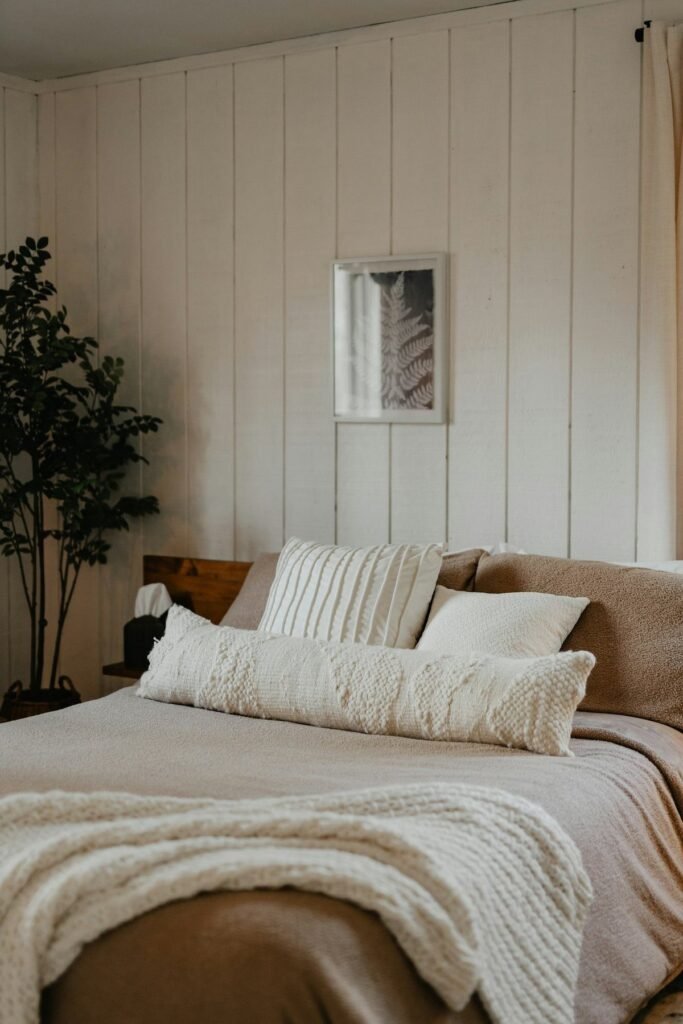
A plant on the windowsill or dresser, a wooden bedside table, a woven basket and linen bedding add warmth and life. Choose easy-care plants such as a snake plant or pothos.
12. Add Personal Touches

Finish with a few things you love: framed photos, a favorite book on the nightstand, a scented candle or a small tray for jewelry. Keep it edited, three to five pieces per surface is plenty.
Bedroom Decorating Mistakes to Avoid
- A bed squeezed against the wall with no space to walk around.
- Bright, cool-toned bulbs that make the room feel clinical.
- Art that is too small for the wall above the bed.
- Too much furniture; leave breathing room.
- Clutter on nightstands and dressers.
Frequently Asked Questions
How should I start decorating my bedroom? Place the bed first, choose a calming palette, then add bedding, nightstands, rug, lighting and decor in that order.
What colors are best for a bedroom? Soft, muted colors such as warm white, greige, sage, dusty blue and mushroom feel calm and restful.
How big should the rug be under a queen bed? Large enough to extend beyond both sides of the bed, usually placed under the lower two-thirds of the bed.
Final Thoughts
A calm bedroom is built on a few good decisions: a well-placed bed, a soft palette, layered bedding and warm lighting. Add a rug, the right-size art and hidden storage, then finish with plants and a handful of personal pieces. Keep surfaces clear so the room stays restful. Work through the steps one at a time and your bedroom will soon feel like a true retreat.
Explore our cozy bedroom ideas on a budget, small bedroom ideas, how to style a bed and bedroom wall decor ideas, or browse the whole Bedroom category. Decorating more than one room? Start with our living room decor ideas.




Leave a Reply