
When the days are short and cold, the living room becomes the heart of the home. A cozy winter living room is not about decorations for a single holiday. It is about warmth you can feel all season: soft light in the evening, thick textures under your feet and on the sofa, and small natural details that make the room feel alive in the darkest months.
These 12 cozy winter living room ideas work from December right through to the first days of spring, and most of them simply rearrange or layer what you already own.
The Three Rules of a Cozy Room
Almost every cozy room follows three simple rules:
- Warm light from low sources. Lamps and candles instead of one bright ceiling light.
- Layers of texture. Wool, knit, wood, linen and sheepskin, so the room feels soft to touch.
- A clear place to gather. Seats close enough for conversation, facing something worth looking at.
Keep these in mind as you work through the ideas below.
1. Layer Throws on Every Seat
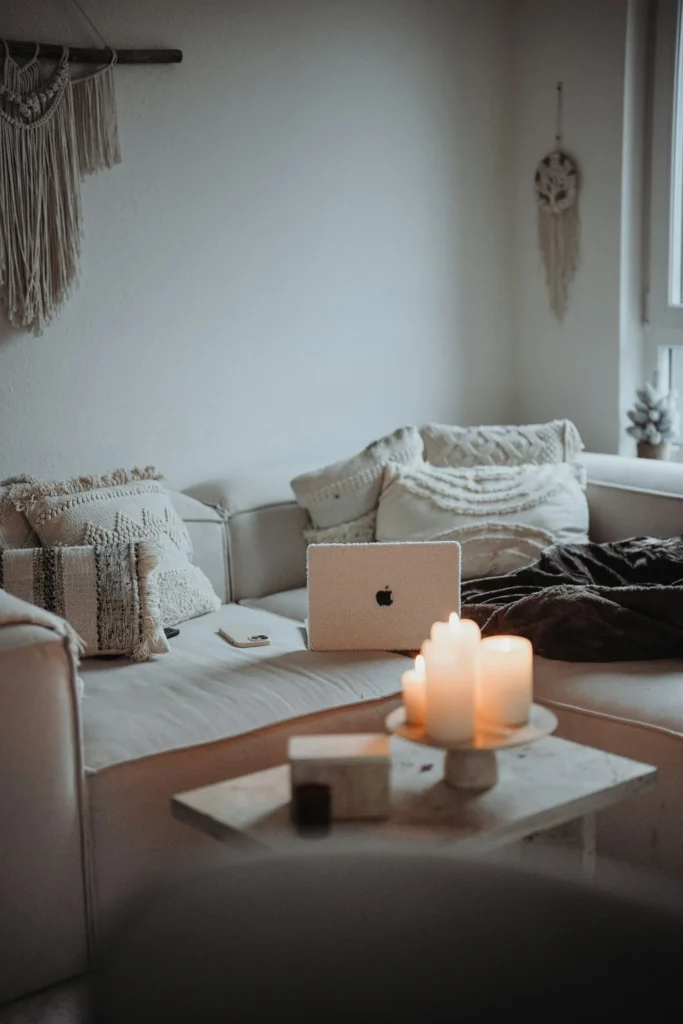
Throws are the quickest way to make a living room feel warm. Fold one over the sofa arm, drape another over an armchair and keep a spare in a basket. Mix weights and textures: a chunky knit, a wool plaid and a soft fleece or faux fur.
Keep them within reach of where people actually sit. A throw on the far side of the room rarely gets used.
2. Switch to Heavier Fabrics

Swap linen and cotton cushion covers for wool, velvet, bouclé or knit in winter. These fabrics look warmer and feel warmer to the touch. Deep, earthy colors such as rust, olive, chocolate and navy also make a room feel more enveloping than pale summer shades.
You do not need new cushions. Changing only the covers keeps costs and storage low.
3. Add a Thick Rug

Cold floors make a whole room feel chilly. Lay a thick wool or high-pile rug in front of the sofa, or layer a smaller sheepskin or shaggy rug on top of a flat-weave one. Make sure the front legs of the sofa and chairs sit on the rug so the seating area feels connected.
A rug pad underneath adds extra cushioning and stops the rug from slipping.
4. Light the Room With Lamps

In winter evenings, overhead lights can feel harsh. Turn them off and use three or more lamps at different heights: a floor lamp beside the sofa, a table lamp on a side table and a small accent lamp on a shelf. Choose warm bulbs (around 2700K) for a soft, golden glow.
Fabric or paper lampshades diffuse light more gently than clear glass. Plug-in timers can switch lamps on at sunset, so the room is already glowing when you get home.
5. Use Candlelight and Lanterns

Candlelight is central to the Scandinavian idea of hygge. Group candles of different heights on a tray on the coffee table, put lanterns in the fireplace or on the windowsill, and use flameless LED candles anywhere you might forget them.
Never leave real flames unattended, and keep them away from throws and curtains.
6. Make the Fireplace the Focal Point

If you have a fireplace, arrange the seating to face it and style the mantel simply with greenery, candles and a stack of logs. No fireplace? Create a similar focal point with a cluster of candles in a non-working fireplace, a console table with lanterns, or an electric fireplace insert.
A basket of logs beside the hearth looks warm even when the fire is not lit.
7. Keep Winter Greenery

After Christmas, keep the greenery and lose the red. Pine, cedar, eucalyptus, bare branches in a tall vase and potted evergreens all feel wintry without looking like leftover holiday decor. For more ways to transition, see our ideas for January decorating.
Houseplants also lift the mood in dark months. Place them near the brightest window.
8. Create a Reading Corner
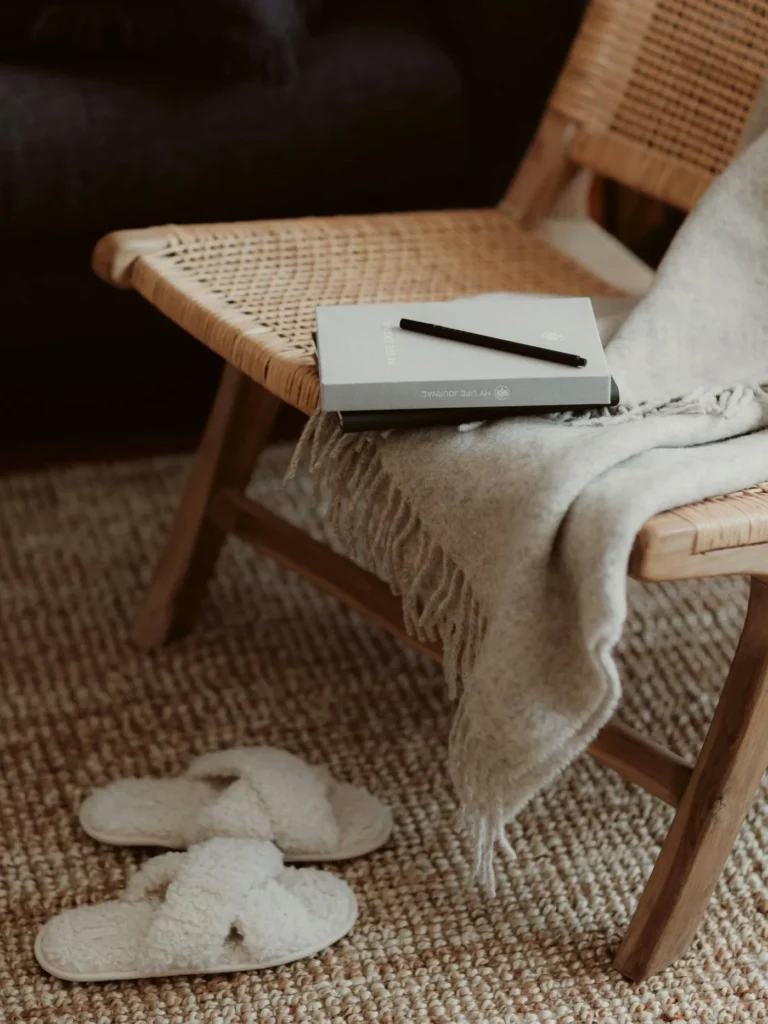
Winter is the season for long evenings with a book. Place an armchair near a window or lamp, add a footstool, a throw and a small side table for a hot drink. A basket of books or magazines nearby completes the corner.
Position the lamp slightly behind and to the side of the chair, so light falls on the page without glare.
9. Bring In Natural Textures

Wood, wool, linen, sheepskin, rattan and stone all add warmth. A wooden tray, a woven basket for logs or blankets, and a chunky ceramic vase make a room feel layered and lived in.
Natural textures also help a neutral room avoid looking cold in grey winter light.
10. Warm Up the Window

Heavier curtains in wool, velvet or lined linen keep warmth in and make the room feel enclosed and snug at night. Close them as soon as it gets dark.
Hang curtains wider than the window, about 6 to 10 inches past the frame on each side, so they cover the glass fully when closed. A row of string lights along the curtain rail or small lanterns on the sill add a soft glow from outside too.
11. Add Comforting Scents

Scent changes how a room feels. A simmer pot of orange peel, cinnamon and cloves on the stove, a reed diffuser with cedar or a beeswax candle can make the living room feel warmer. Keep scents subtle so they comfort rather than overwhelm.
Use one scent at a time. Several competing fragrances in one room feel heavy.
12. Make Room for Gathering
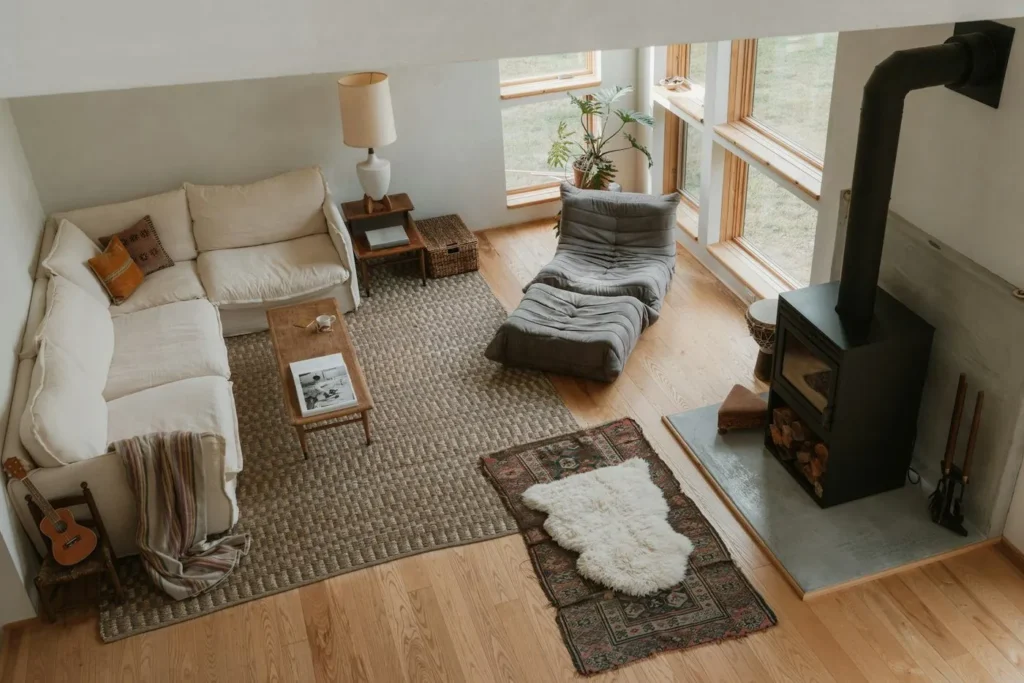
Winter is a time for being together. Pull seating a little closer around the coffee table, add floor cushions or poufs for extra seats, and keep games, puzzles or a stack of favorite films within reach.
A room arranged for conversation always feels warmer. Seats facing each other across a coffee table work better than a sofa that faces only the TV.
Cozy Winter on a Budget
You do not need to buy much. Move throws and cushions from other rooms, change your light bulbs to warm white, rearrange seating closer together and bring in branches from the garden. These four changes alone transform a living room for the cold months.
Common Mistakes That Make a Room Feel Cold
- One bright ceiling light. Use lamps at different heights instead.
- Bare floors. Add a large, soft rug.
- Only smooth surfaces. Mix in knit, wool and wood.
- Furniture pushed against the walls. Pull seating closer together.
Frequently Asked Questions
How do I make my living room cozy in winter?
Layer throws and cushions in warm fabrics, add a thick rug, use several lamps with warm bulbs instead of the ceiling light, and bring in candlelight and natural greenery.
What colors make a living room feel warm?
Earthy tones such as rust, terracotta, olive, chocolate and camel feel warmer than cool greys and stark white. Warm white lighting makes any palette look cozier.
How do I decorate after Christmas so the room doesn’t feel empty?
Keep the greenery, lights and candles, remove the red and obviously festive pieces, and add more texture with throws, wool and wood.
What is hygge?
Hygge is a Danish idea of comfort and contentment, often linked with candlelight, warm drinks, soft textures and time with people you love.
Which bulbs are best for a cozy room?
Warm white bulbs of around 2700K give a soft, golden light. Avoid cool white or daylight bulbs in the evening.
Final Thoughts
A cozy winter living room is built on warmth you can see and feel: soft lamps, layered textiles, natural textures and a little candlelight. Make these changes once and enjoy them all season. For more ideas through the year, explore decorating through the seasons and our living room decor ideas.




Leave a Reply