A dining table looks unfinished when it is completely bare, but it also needs to work every day for meals, homework and laptops. An everyday centerpiece should be simple, low enough to see over and easy to move when you need the space.
These 12 everyday dining table centerpiece ideas follow a few easy rules, so they look good on round, square and rectangular tables, and change easily with the seasons.
Centerpiece Size and Height Rules
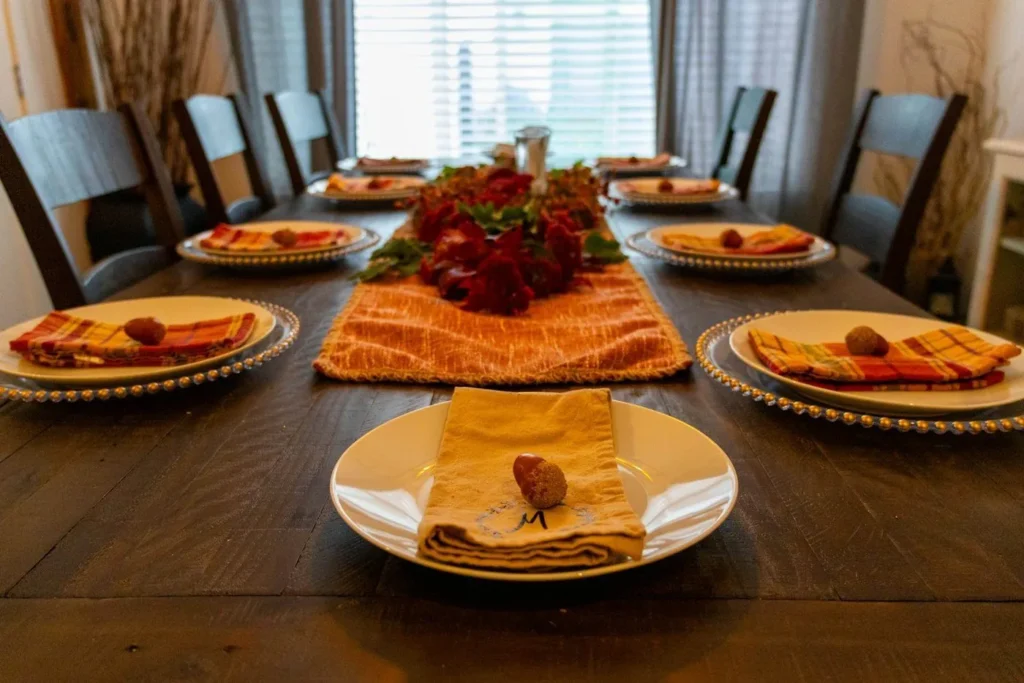
- Length: on a rectangular table, a centerpiece or runner group about one-third of the table’s length looks balanced.
- Height: keep arrangements low, roughly under 12 inches, so people can see each other. Slim candlesticks or a single tall branch can go higher because they do not block the view.
- Odd numbers: groups of three or five items look more natural than pairs.
- Easy to move: use a tray or bowl so the whole centerpiece lifts off in one go.
1. A Bowl of Seasonal Fruit

A large bowl of lemons, apples, pears or oranges is colorful, practical and changes naturally through the year. Choose a wide, shallow bowl in wood, ceramic or stone for the most impact.
Fruit that keeps well at room temperature, such as citrus, apples and pears, lasts longest. Check the bowl every few days and eat or replace anything that starts to soften.
2. A Trio of Bud Vases

Three small vases of different heights, each with one or two stems, are simple and elegant. Use garden clippings, supermarket flowers or greenery. They are easy to refresh and never block anyone’s view.
3. Candles on a Tray
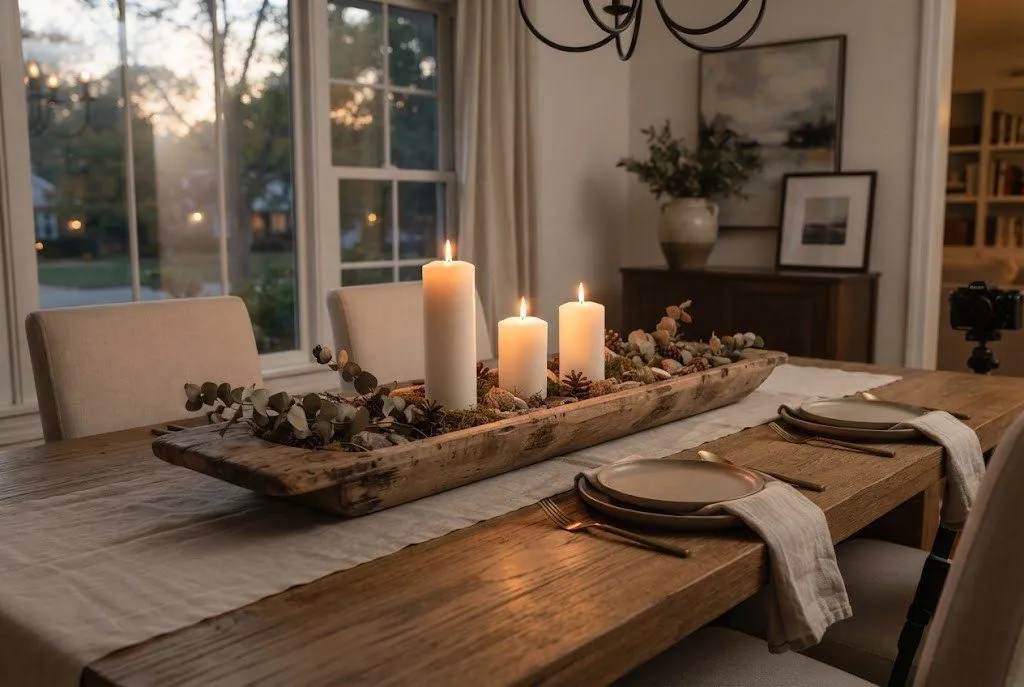
Group three pillar candles or a mix of candlesticks on a tray for a warm, calm look. Use flameless candles if the table is used for homework or by children, and light real candles only when someone is at the table.
4. A Wooden Dough Bowl
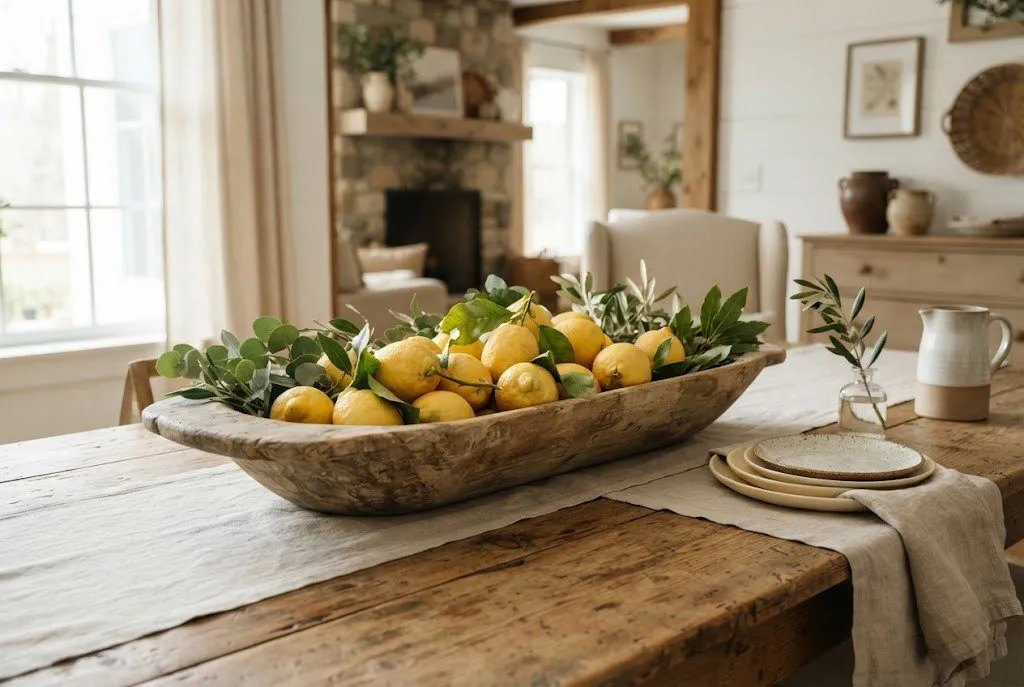
A long wooden dough bowl suits farmhouse and rustic dining rooms. Fill it with pinecones in winter, fruit in summer or moss and small candles all year round. Its long shape works especially well on a rectangular table.
5. A Single Branch in a Tall Vase

One sculptural branch in a heavy vase makes a striking centerpiece, especially on a round table. Olive, eucalyptus, cherry blossom or autumn leaves all work. Keep the vase slim so it does not block the view.
6. A Potted Plant
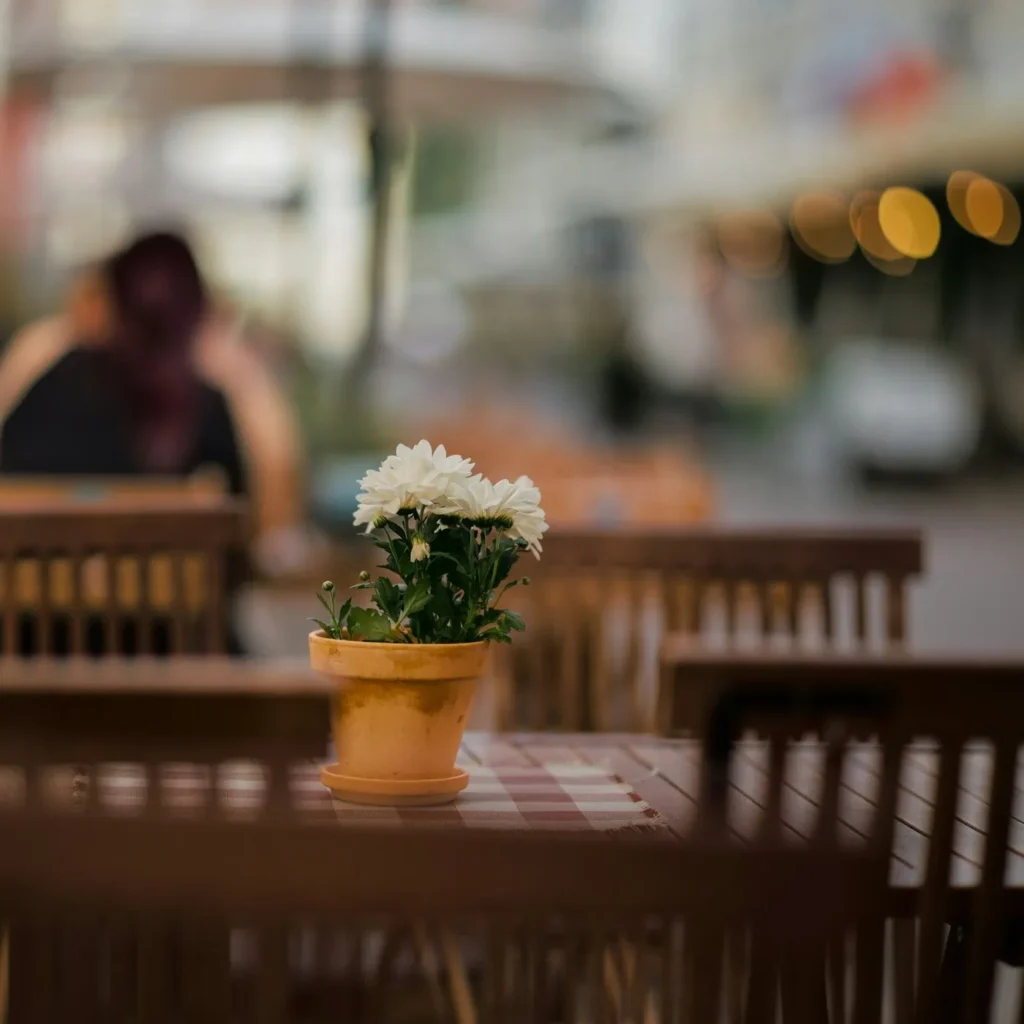
A small potted plant, such as a herb, a fern, a pothos or an orchid, is a long-lasting centerpiece. Choose a pot that suits your table, and put a saucer or tray underneath to protect the surface.
Low-light plants such as pothos and ZZ plants cope with dining rooms away from windows. Orchids last for weeks in flower and suit a more formal table.
7. A Runner With One Feature

A linen or woven runner down the middle of the table gives structure. Add one feature on top, such as a bowl or a single vase. The runner frames the centerpiece and protects the table at the same time.
8. A Low Floral Arrangement
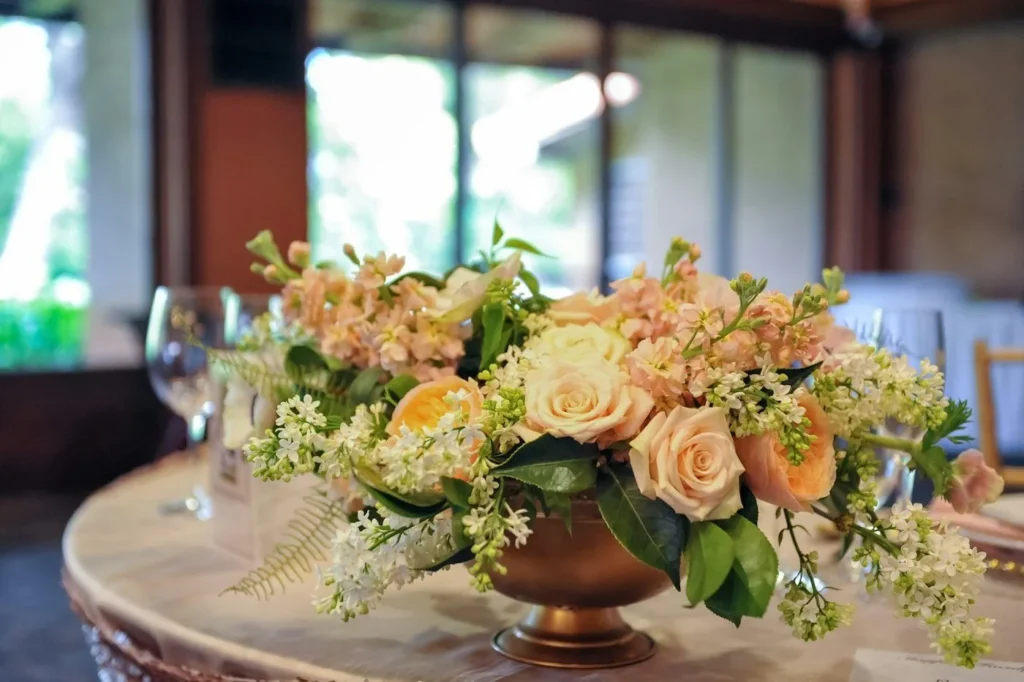
For a special touch, arrange flowers low in a wide bowl or a short pitcher. Cut stems short so the arrangement sits just above the rim. Low arrangements look generous without getting in the way of conversation.
9. A Round Table Centerpiece
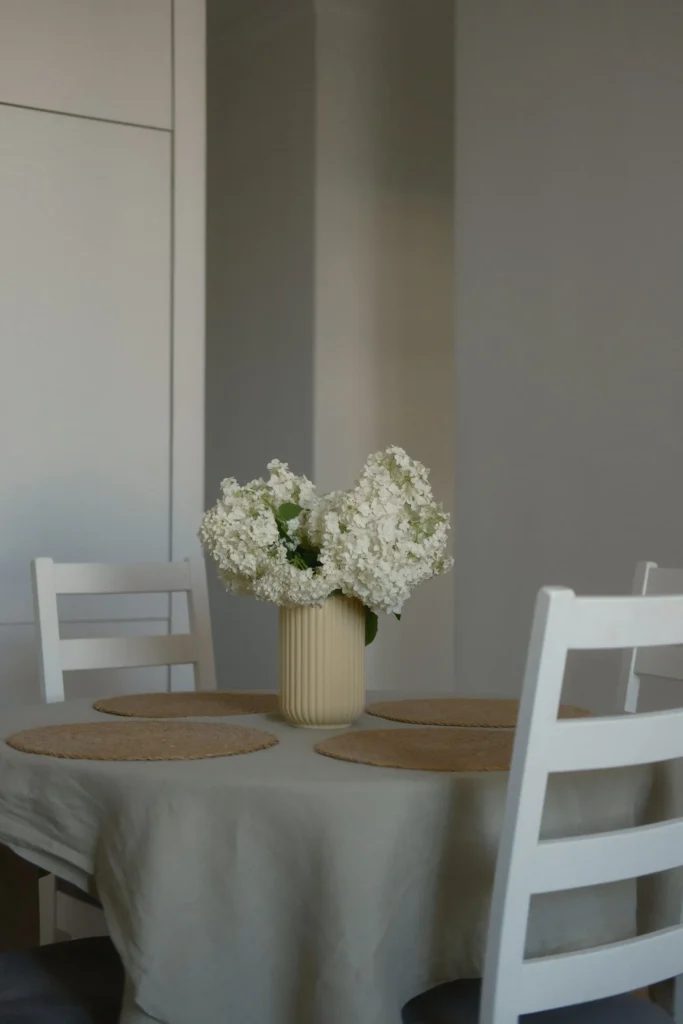
On a round table, keep the centerpiece compact and round so it echoes the table. A single round bowl, a small cluster of three items or a lazy Susan with a plant and candles all work well.
10. Use What You Have
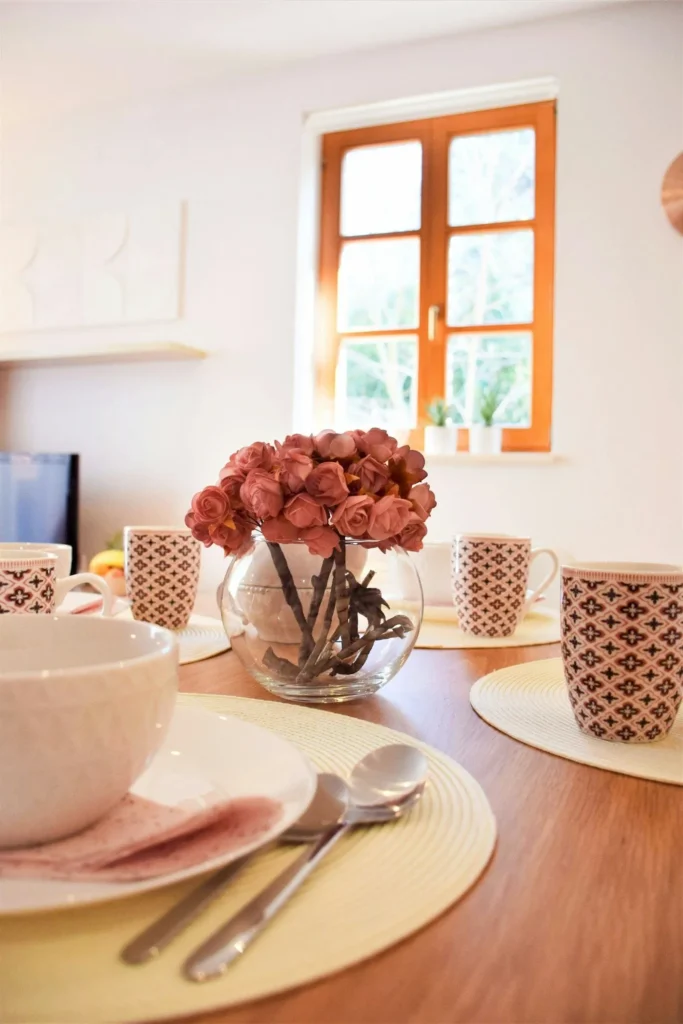
A stack of two cookbooks with a small plant on top, a jug of wooden spoons or a pretty teapot can all be a centerpiece. Everyday objects you love feel personal and cost nothing.
11. Swap With the Seasons

Keep one base, such as a tray or runner, and change the main element through the year: tulips in spring, lemons in summer, small pumpkins in autumn and pinecones in winter. For special occasions, see ideas for a Thanksgiving table and a Christmas table.
12. Keep It Practical
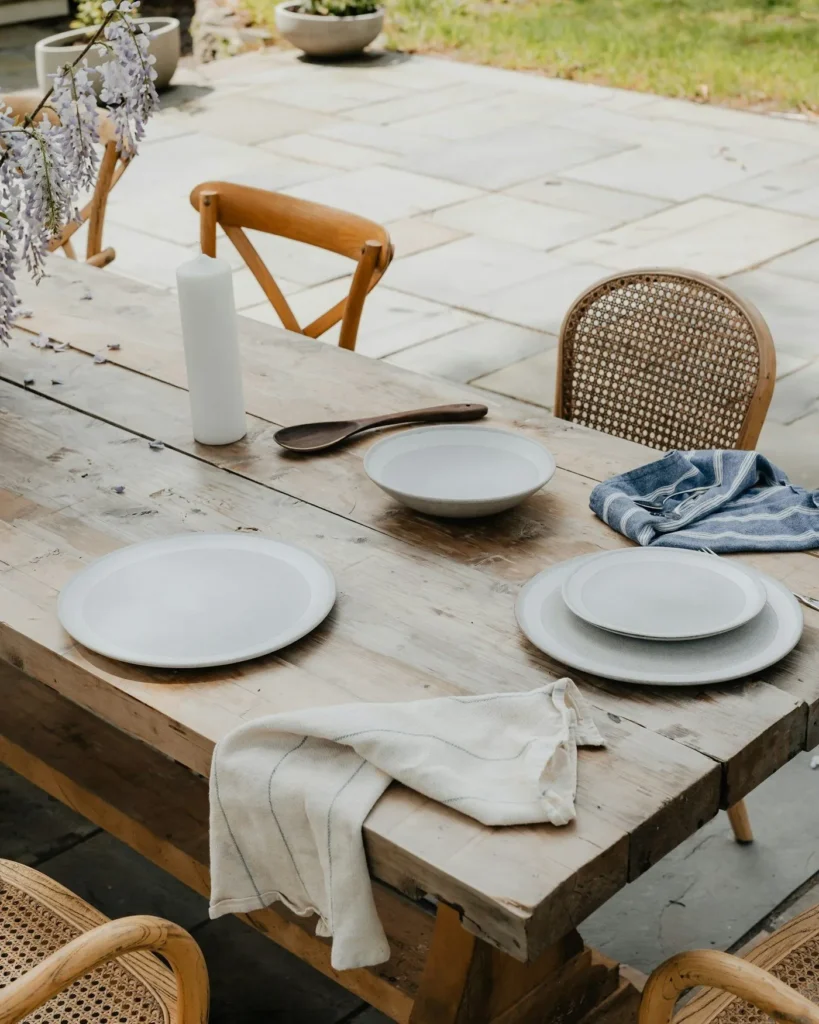
If the table is used for work or homework, choose a centerpiece that moves in one piece and lives on a nearby sideboard when you need space. A tray with handles is the most practical option for busy tables.
Centerpiece Ideas by Table Shape
- Rectangular: a runner with a long tray or dough bowl, or a row of three bud vases.
- Round: a single round bowl, a compact cluster or a lazy Susan.
- Square: one low, square or round arrangement in the center.
- Oval: a long, low arrangement that follows the curve of the table.
Centerpiece Mistakes
- Too tall. Guests should be able to see each other.
- Too many small items. Group them on a tray so they read as one.
- Strongly scented flowers. They can clash with food.
- Hard to move. Choose something you can lift off in one go.
Frequently Asked Questions
What should I put in the middle of my dining table every day? A bowl of fruit, a trio of bud vases, candles on a tray, a potted plant or a single branch in a vase all work well every day.
How big should a dining table centerpiece be? About one-third of the table length on a rectangular table, and low enough, roughly under 12 inches, that people can see each other.
What is a good centerpiece for a round dining table? A single round bowl, a compact cluster of three small items or a lazy Susan with a plant and candles.
What can I use instead of flowers for a centerpiece? Fruit, candles, a potted plant, a branch in a vase, a wooden dough bowl or a stack of cookbooks with a small object on top.
How do I keep a centerpiece from looking cluttered? Use a tray, keep to three or five items and leave space around the arrangement.
Final Thoughts
The best everyday centerpiece is simple, low, easy to move and changes with the seasons. Start with a tray, bowl or runner, add one living element and keep the rest of the table free for daily life. For more ideas, see our guide to decorating a dining room and our kitchen styling guide.

Leave a Reply