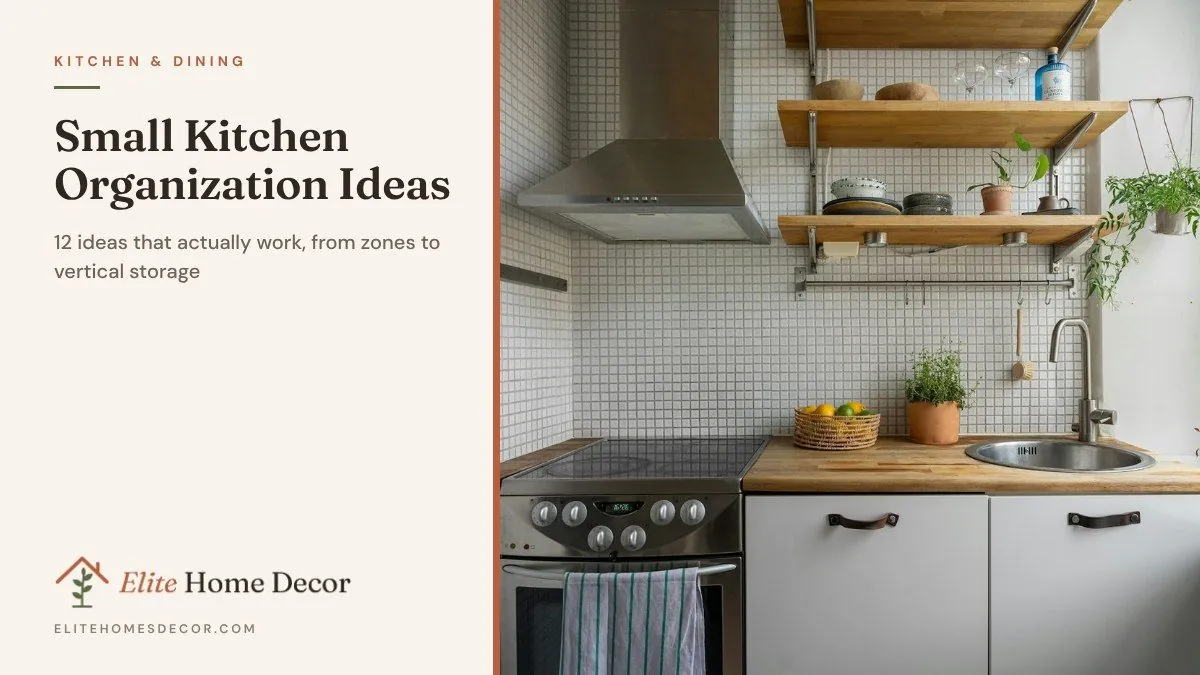
In a small kitchen, every cupboard and inch of counter counts. Good organization makes cooking easier and keeps the kitchen looking calm. These 12 small kitchen organization ideas focus on simple, affordable fixes that work in rentals too.
Start with the problem that annoys you most, such as a jammed cutlery drawer, a cupboard of mismatched containers or a counter covered in appliances. Fixing one problem at a time is easier, cheaper and more likely to last than reorganizing the whole kitchen in one day.
1. Declutter First

Before buying organizers, empty one cupboard at a time. Donate duplicates, gadgets you never use and chipped dishes. You will need fewer containers than you think.
A good rule: if you haven’t used something in the last year, and it isn’t seasonal, it can go. Keep one of each tool you need, and check the pantry for expired food at the same time.
2. Create Zones

Store things where you use them: pans near the stove, mugs near the kettle, knives and boards near the prep area, and cleaning supplies under the sink.
Typical zones in a small kitchen are prep (knives, boards, mixing bowls), cooking (pans, oils, spices), cleaning (dish soap, towels, bins), storage (food and containers) and a drinks or coffee zone.
3. Use Vertical Space

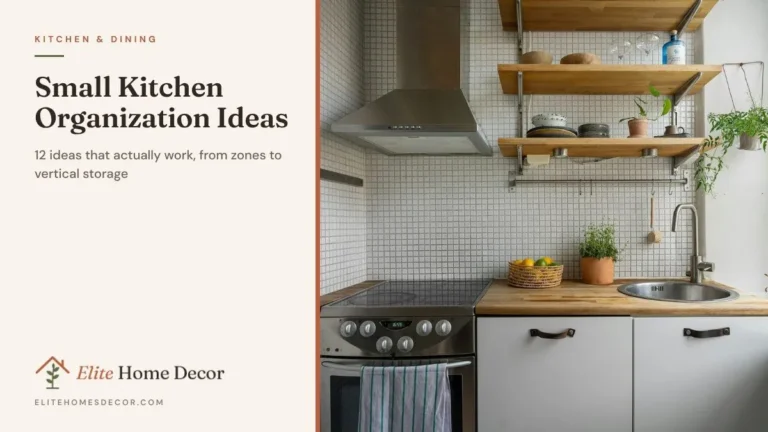
Add a shelf above the counter, a rail with hooks for utensils, or a magnetic knife strip. Walls are the most underused storage in small kitchens.
A magnetic strip can also hold spice tins. Rails with S-hooks hold ladles, mugs and small baskets for sponges or herbs.
4. Add Shelf Risers in Cabinets

Wire or bamboo risers double the usable space inside cupboards, so plates and bowls are no longer stacked in unstable towers.
5. Decant Dry Goods Into Clear Jars
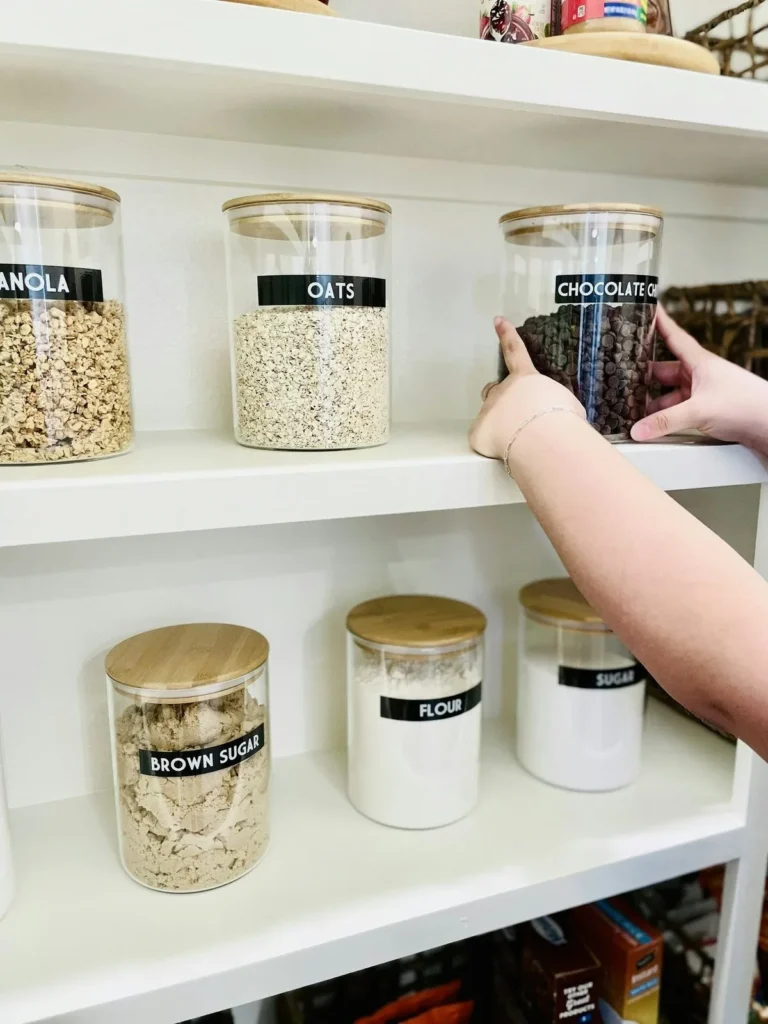
Square or rectangular jars stack better than round ones and make it easy to see what needs restocking.
Write the expiry date on the back of each jar or on a small label, and store the oldest food at the front.
6. Use Drawer Dividers
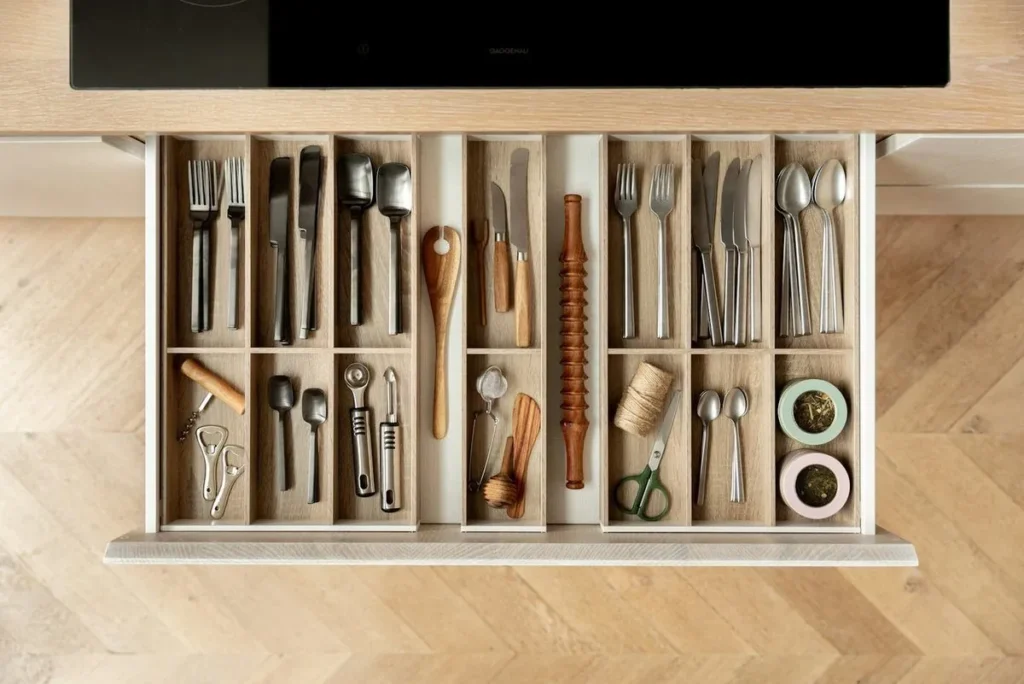
Dividers stop cutlery and utensils turning into a jumble. Use the deepest drawer for pots and lids with an upright lid organizer.
Expandable bamboo dividers fit most drawers and are easy to adjust. In the spice drawer, an angled insert lets you read every label at a glance.
7. Hang Mugs and Cups
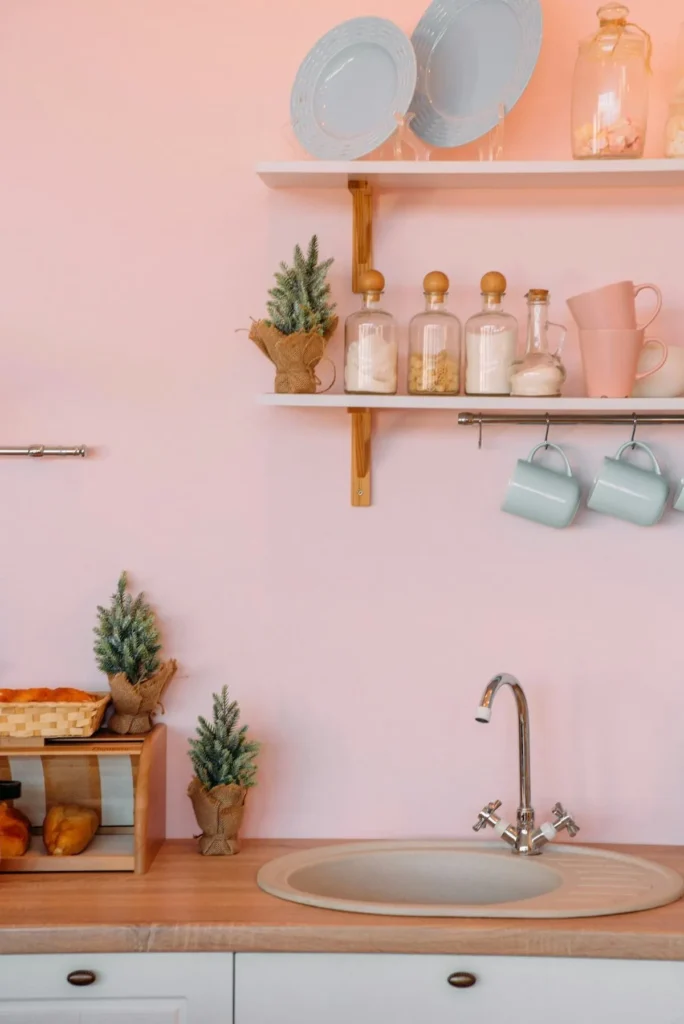
Hooks under a shelf or a mug rack free up a whole cupboard and look charming.
8. Store on the Inside of Doors
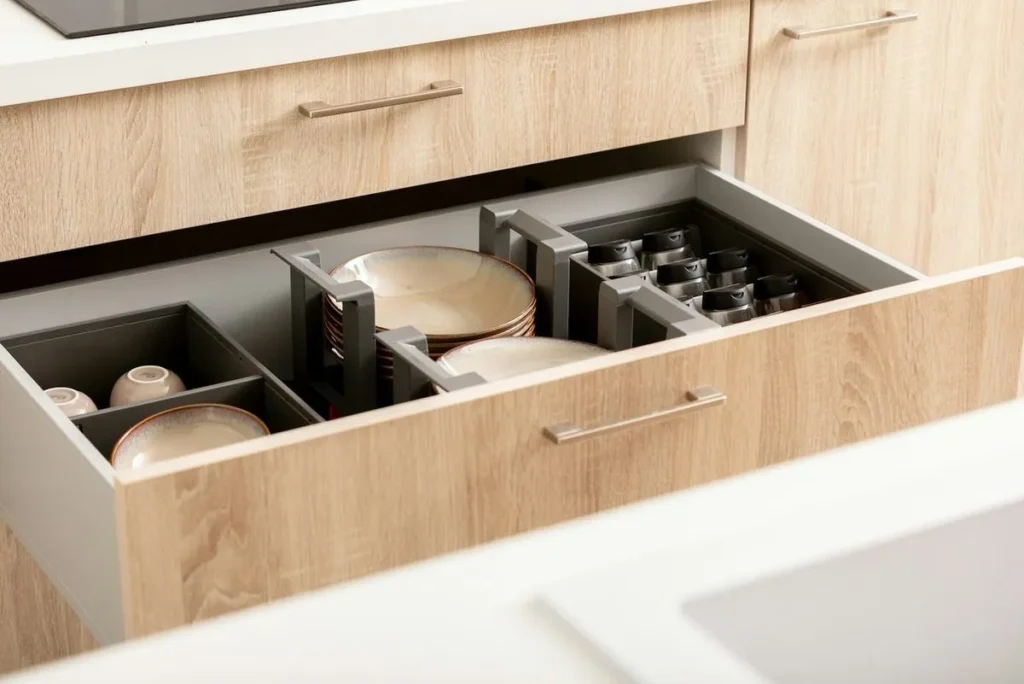
Over-door racks and adhesive hooks inside cabinet doors hold foil, wraps, cleaning cloths and measuring spoons.
9. Add a Rolling Cart
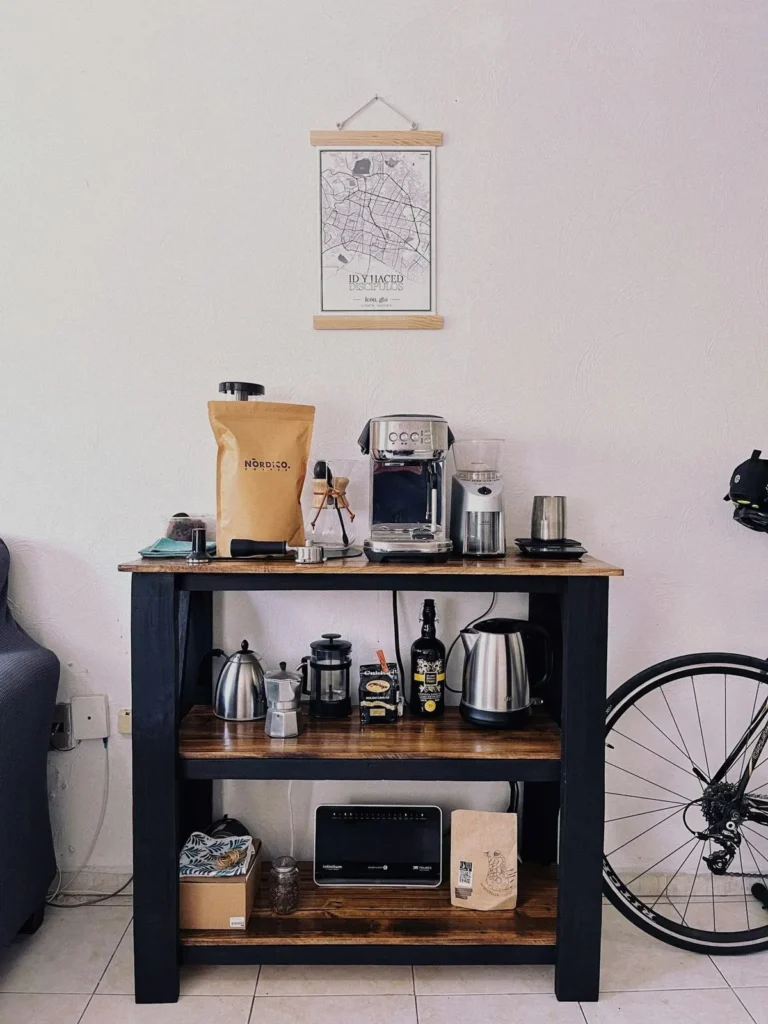
A slim cart can slide into the gap beside the fridge or act as extra prep space, then roll away.
Slim carts of 5 to 7 inches wide fit beside the fridge or between the counter and the wall, a space that is usually wasted.
10. Keep Counters for Daily Items Only
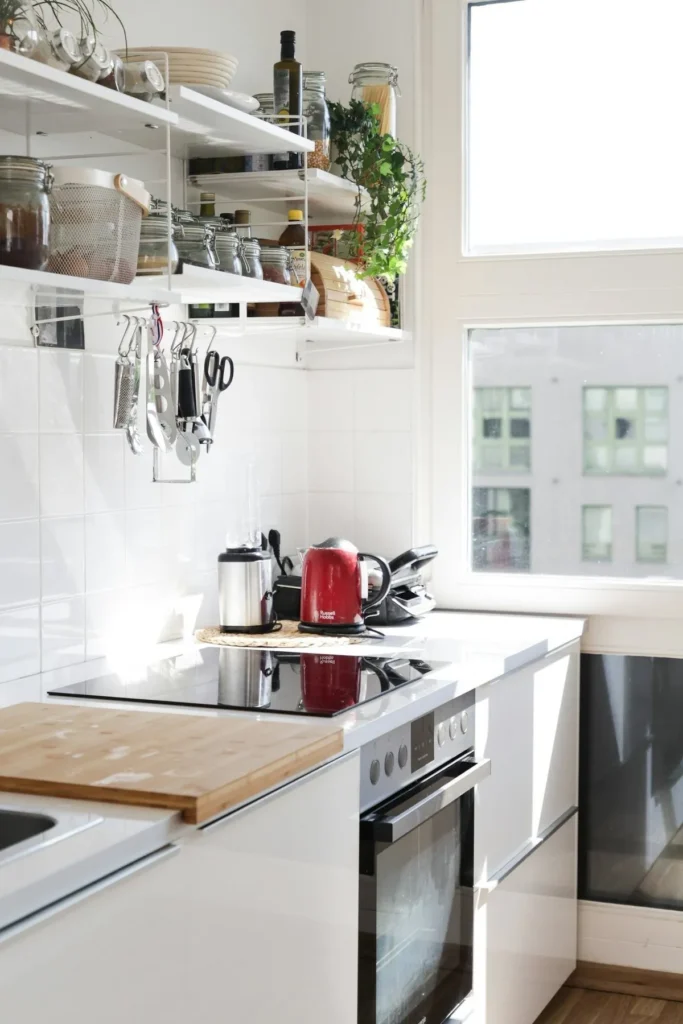
Leave out only the things you use every day, such as the kettle and a utensil crock. Everything else goes in a cupboard.
11. Use Baskets on Top of Cabinets
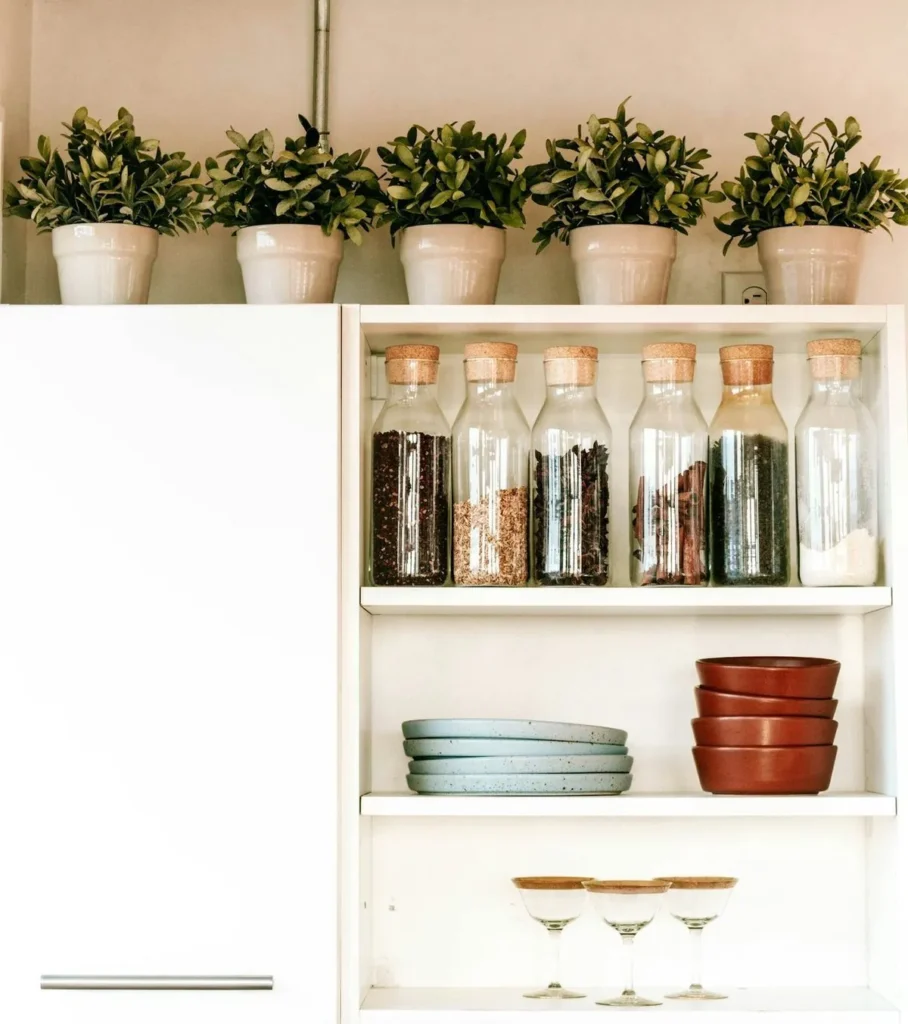
Lidded baskets on top of cabinets store seasonal items and look neat from below.
12. Use a Pegboard

A painted pegboard wall holds pans, utensils and baskets, and you can rearrange it anytime.
Under-Sink Organization
The cupboard under the sink is often the messiest in the kitchen. Use a two-tier organizer that fits around the pipes, a tension rod to hang spray bottles and a small bin for sponges and cloths. Keep a tray at the bottom to catch drips.
Pantry and Spice Storage
- Use turntables in deep cupboards so nothing gets lost at the back.
- Store spices in matching jars on a tiered rack or in an angled drawer insert.
- Group pantry items by type: baking, breakfast, pasta and grains, tins and snacks.
- Keep heavier items on lower shelves and lighter items higher up.
Small Kitchen Organization Mistakes
- Buying organizers before decluttering. You’ll buy more than you need.
- Round containers. They waste space; square and rectangular ones stack better.
- Ignoring the walls and doors. They are free storage space.
- Keeping appliances on the counter. Store those you don’t use daily.
For a more attractive kitchen once it is organized, see kitchen counter decor ideas and how to style open kitchen shelves.
Frequently Asked Questions
How do I organize a small kitchen with no pantry? Use clear jars on an open shelf, baskets on top of cabinets, a rolling cart and the inside of cupboard doors.
What is the best storage for a small kitchen? Vertical storage: wall rails, shelves, hooks and cabinet risers.
How do I stop my kitchen counter getting cluttered? Give every item a home in a cupboard and keep only daily-use things out.
How do I organize pots and pans in a small kitchen? Store them upright with a lid organizer in a deep drawer, nest them by size or hang them from a rail or pegboard.
How can I add storage to a small kitchen without drilling? Use a rolling cart, shelf risers, over-door racks, tension rods and freestanding shelves. See renter-friendly kitchen upgrades.
Final Thoughts
Organizing a small kitchen is about doing things in the right order: declutter first, set up zones, then add the tools that make the most of every inch, such as risers, dividers, rails and a slim cart. Keep only daily items on the counter and give everything else a clear home. Start with one cupboard or drawer and you will feel the difference straight away.
For whole-home tips, see small space storage ideas. Back to the main guide: kitchen decor ideas.
Leave a Reply