
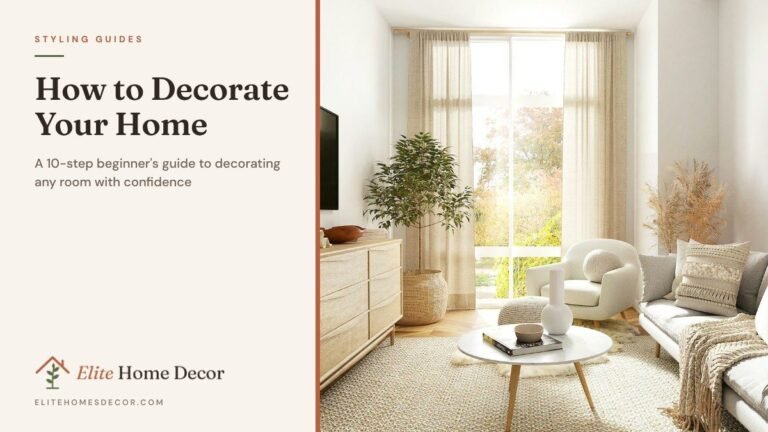
Decorating feels overwhelming when you don’t know where to start. There are thousands of products, endless photos online and plenty of conflicting advice. The good news: there is an order that works in every room. Follow these 10 steps and each decision makes the next one easier.
This guide is written for beginners, renters and anyone moving into a new home. It covers the basics designers use every day, with simple measurements you can follow without hiring anyone.
Before You Start: Measure and Set a Budget
Two things save more money and frustration than anything else.
Measure every room. Write down the length and width of the room, the ceiling height, the size and position of windows and doors, and where the sockets and radiators are. Keep the measurements on your phone, so you can check them when you shop.
Set a budget and split it. As a rough guide, spend the most on the pieces you use every day and that are hard to replace, such as the sofa, the bed and the mattress. Spend less on accessories, which are easy to change later.
1. Decide How You Want to Use the Room

Who uses it, when, and for what? A family living room needs durable fabrics and storage; a guest room needs a bedside lamp and space for a suitcase.
Make a short list of the activities the room must support, such as watching TV, reading, working, eating or playing. Every decision that follows should make those activities easier.
2. Find Your Style

Save photos you love on Pinterest and look for patterns: colors, woods, shapes. Our interior design styles guide helps you name it.
Knowing your style stops you buying pieces that look good in the store but don’t go together at home. Most people blend two styles, such as Scandinavian and boho, or modern and farmhouse.
3. Plan the Layout
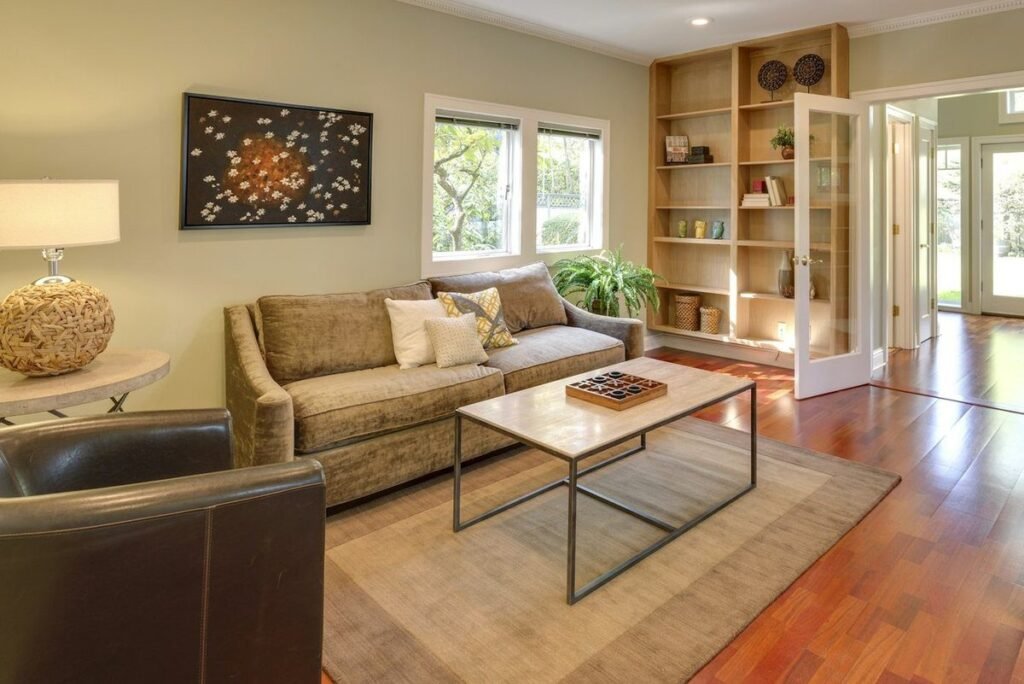
Choose a focal point, place the largest furniture first and keep walkways 30 to 36 inches wide. The focal point might be a fireplace, a window with a view, or the TV.
Useful measurements:
- Leave about 14 to 18 inches between the sofa and the coffee table.
- Allow at least 36 inches behind dining chairs so people can get up easily.
- Keep about 24 inches on each side of a bed if you can.
See how to arrange living room furniture for layouts for every room shape.
4. Choose a Color Palette

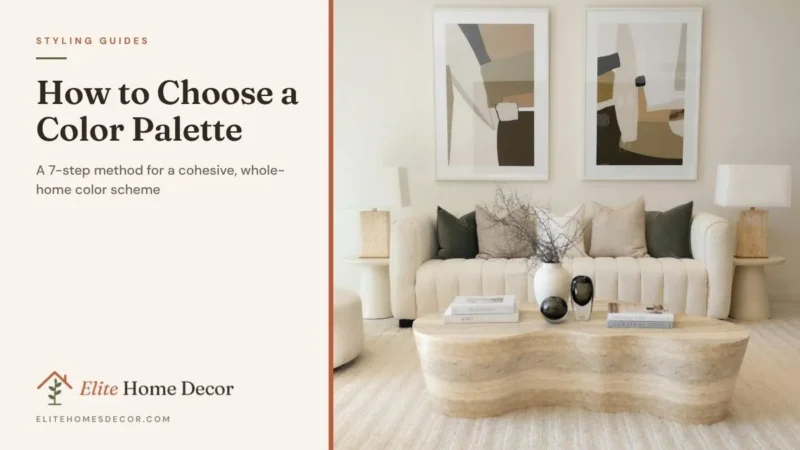
Pick three colors in roughly a 60-30-10 split: about 60% main color (walls and large pieces), 30% secondary color (furniture, curtains or a rug) and 10% accent color (cushions, art and accessories).
Test paint colors on the wall before you commit, and look at them in morning and evening light. See how to choose a color palette for your home.
5. Size Your Rugs Correctly
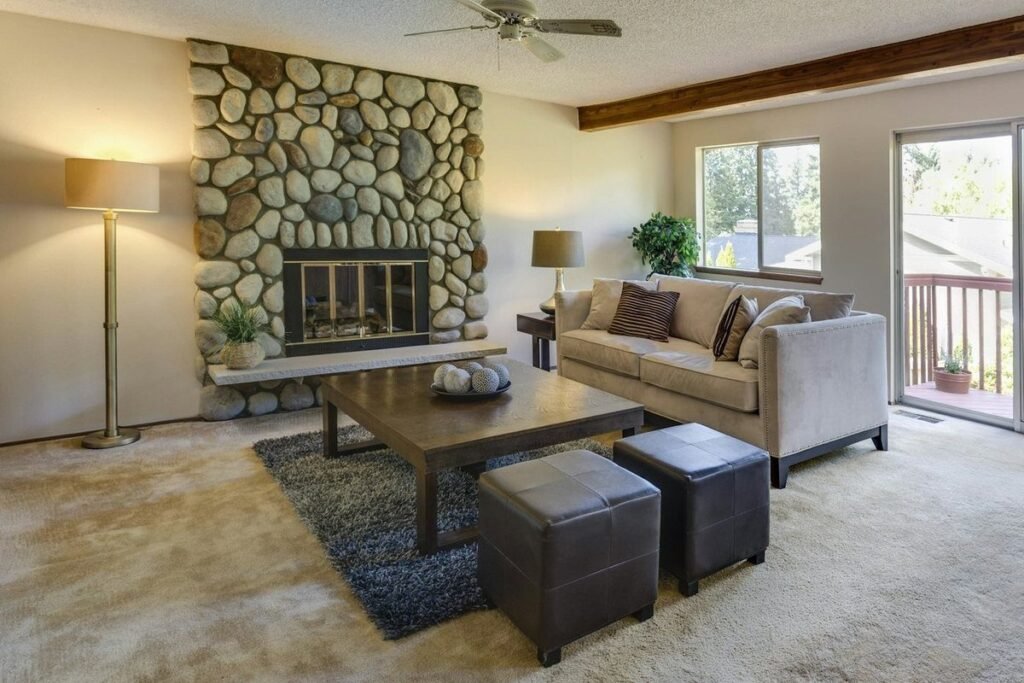
A rug that is too small is one of the most common decorating mistakes. At least the front legs of all the seating should sit on the rug, so the furniture looks connected.
In most living rooms that means a rug of 8 by 10 feet. Under a dining table, the rug should extend at least 24 inches beyond the table on every side. See our rug size guide.
6. Layer the Lighting
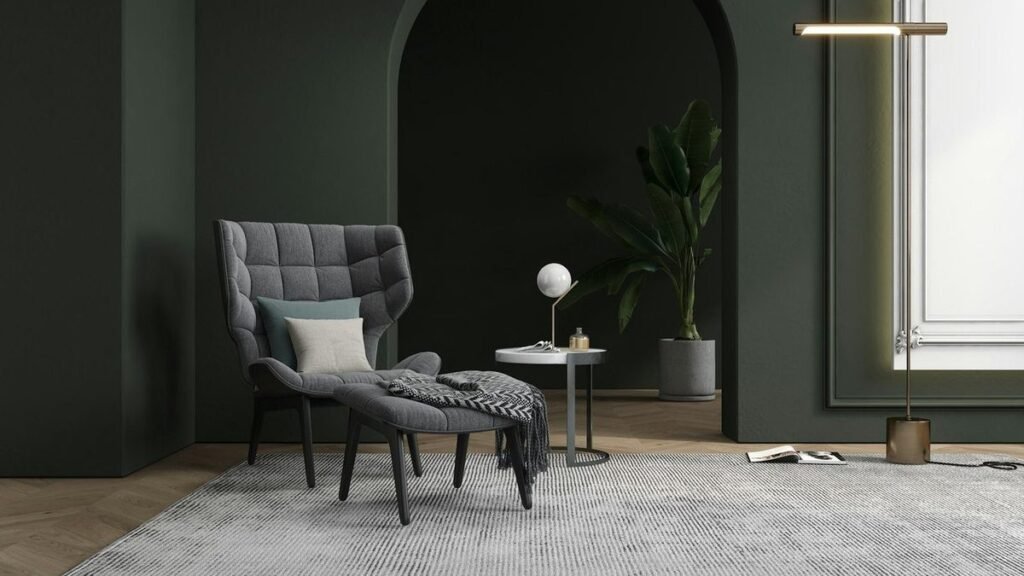
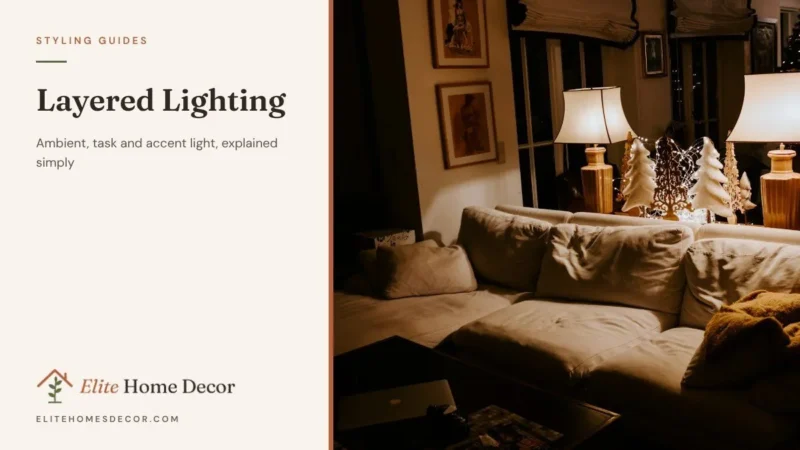
Combine overall, task and accent lighting with warm bulbs.
- Ambient light lights the whole room: a ceiling light or pendant.
- Task light helps you read, cook or work: a desk lamp, reading lamp or under-cabinet light.
- Accent light adds atmosphere: table lamps, picture lights and candles.
Aim for at least three light sources in each living space. Warm white bulbs around 2700K feel the coziest. See layered lighting for more.
7. Hang Curtains High and Wide
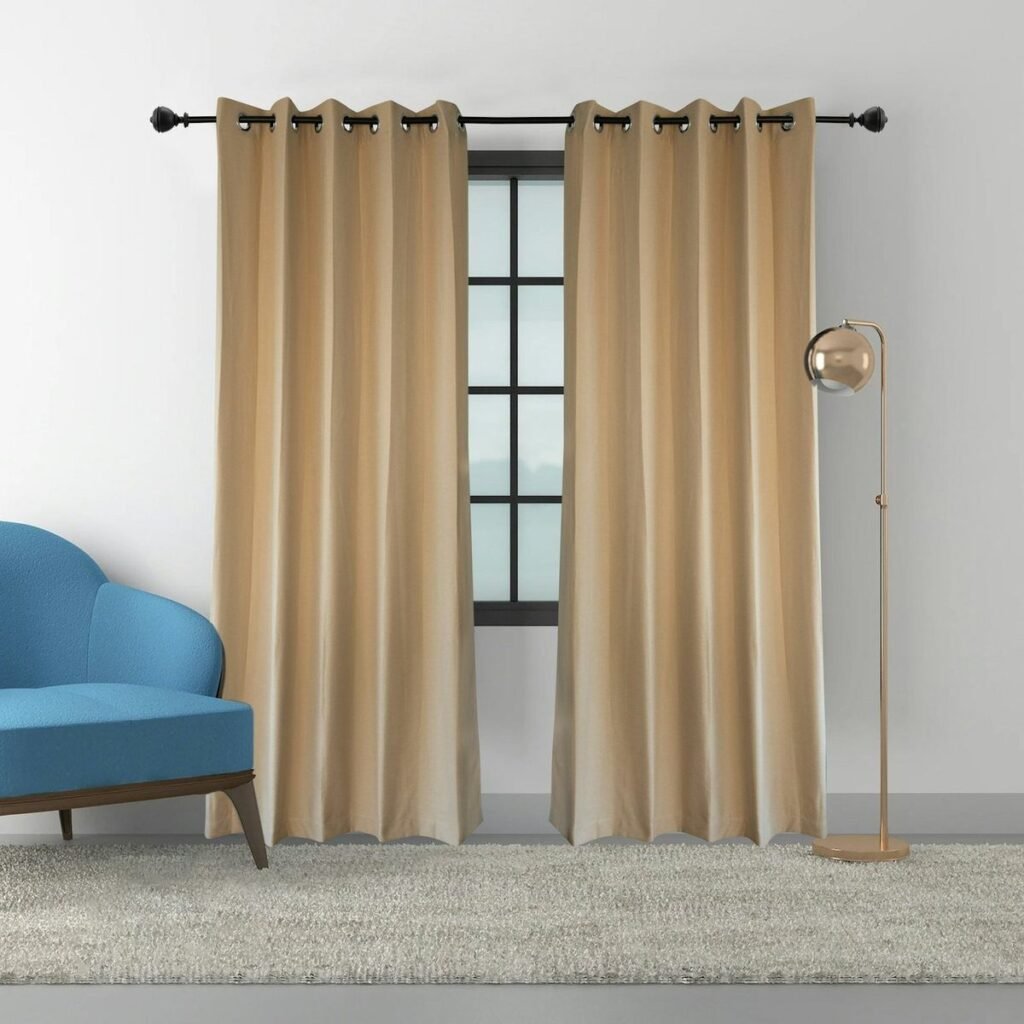
This makes windows look larger. Hang the rod about 4 to 6 inches above the window frame, or halfway between the frame and the ceiling, and extend it 8 to 12 inches past the frame on each side.
Curtains should just touch the floor or hover about half an inch above it. Follow our how to hang curtains guide.
8. Hang Art at the Right Height

Center art around 57 to 60 inches from the floor, or 8 to 10 inches above furniture. Above a sofa, choose art or a group of frames that is about two-thirds the width of the sofa.
See how to hang wall art for gallery wall layouts and spacing.
9. Mix Textures

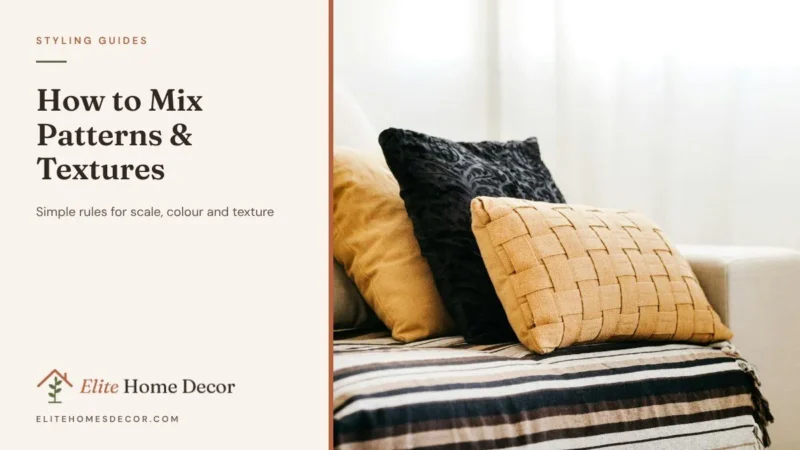
Combine wood, linen, wool, metal and ceramic so the room feels layered. Rooms with only smooth surfaces can feel cold, even when the colors are warm.
A simple approach is to include at least one soft texture (wool or linen), one natural texture (wood or rattan) and one shiny texture (metal or glass) in every room. See how to mix patterns and textures.
10. Accessorize Last

Add cushions, plants, books and objects in groups of three, leaving space around them. Group items of different heights, and repeat your accent color in a few places around the room.
Leaving some surfaces empty is just as important as filling others. Empty space lets the room breathe.
Common Beginner Mistakes
- Buying accessories first. Start with the layout and big pieces.
- Rugs that are too small. Size up whenever you can.
- Art hung too high. Keep the center at eye level.
- One overhead light. Add lamps at different heights.
- Pushing all furniture against the walls. Float seating to create a conversation area.
- Matching everything. Coordinated rooms look more interesting than matching sets.
Frequently Asked Questions
Where do I start when decorating a house?
Decide how you’ll use each room, find your style, then plan the layout before buying anything.
What is the 60-30-10 rule?
About 60% main color, 30% secondary color and 10% accent color.
How do I decorate on a budget?
Spend on the pieces you use every day, shop secondhand for furniture and save on accessories. See home decor ideas on a budget.
How long does it take to decorate a room?
A simple refresh can take a weekend. Decorating a room from scratch often takes a few weeks or months, because good pieces are worth waiting for.
Should all rooms in a house match?
They don’t need to match, but they should feel connected. Repeat a few colors or materials from room to room.
Final Thoughts
Decorating is easier when you follow an order: decide how the room will be used, find your style, plan the layout, choose a palette, then size the rug, layer the lighting and hang curtains and art correctly. Accessorize last. Follow these steps room by room and your home will feel cohesive and personal.
Living room · Bedroom · Kitchen · Bathroom · Entryway. Browse all Styling Guides.
Leave a Reply